
CASE STUDIES / SOCIAL MEDIA STRATEGY
A feed is not a strategy.
Posting more is easy. Knowing what to post, where, for whom and what to stop doing is the work. Here are three food and beverage brands where the plan came first: one over ten years, one in a turnaround, one launching in a new country.
CASE STUDY 1
TOPO CHICO / SPARKLING MINERAL WATER / 2013 TO 2023
From zero followers to a brand Coca-Cola wanted.
The situation:
In 2013 Topo Chico was a regional mineral water with a loyal Texas following and no US social presence at all. Instagram was small. Every brand's money was on Facebook.
What I did:
I launched the brand's US accounts from zero and ran them for ten years. I was the only person creating content and answering fans for most of that time.
Picked one network and one scene. Instagram before it was the obvious choice, and music before anything else.
Posted like a fan, not a marketer. No selling. Fans' photos went up as often as ours.
Kept the brand slightly out of reach, so finding it felt like a discovery.
Answered every message by hand.
Sent the client a numbers report every week, starting in month one, so nobody had to take social on faith.
What happened:
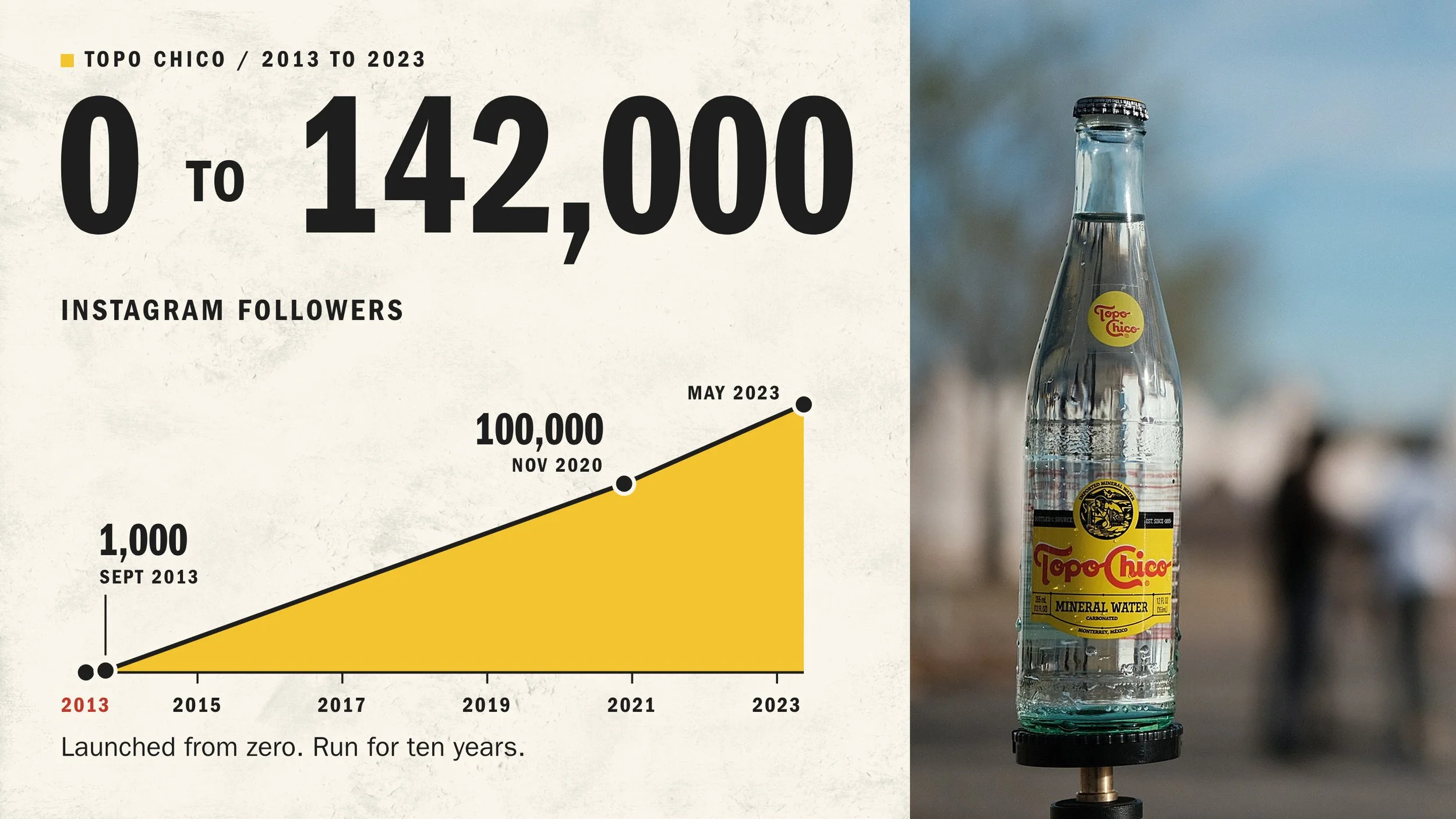
September 2013: 1,000 Instagram followers, three months in. The client asked if we should celebrate. I made a graphic.
November 2020: follower number 100,000. We picked him at random and field marketing delivered ten cases to his door.
May 2023: 142,000 on Instagram, 61,000 on Facebook, 13,000 on Twitter.
In 2017, Coca-Cola bought the brand for a reported $220 million.
What it means for you:
The rules I wrote down in 2015 are the same ones that were working in 2023. A brand account that behaves like a fan club compounds for years. One that behaves like an ad slot has to be paid for every month.
CASE STUDY 2
TACO BUENO / TEX-MEX RESTAURANTS / 2019 TO 2020
One Super Bowl vote, nearly two million engagements.
The situation:
A Dallas restaurant chain in a turnaround restarted its social media in September 2019. It had about 375,000 followers, years of angry comments under every post, and an audience that had stopped reacting. By mid-December my own weekly report showed engagement falling, and I told the client why: the promo posts had become repetitive and people were tuning them out.
What I did:
Cleaned up the comment sections first. A moderation list that grew to more than 500 words held abusive comments for review, 347 repeat abusers were blocked, and real complaints were answered by direct message and moved to a support form.
Reported every week, with the bad weeks in writing.
Pitched simple contests for a month, then ran one in Super Bowl week: fans voted for who they thought would win.
What happened:
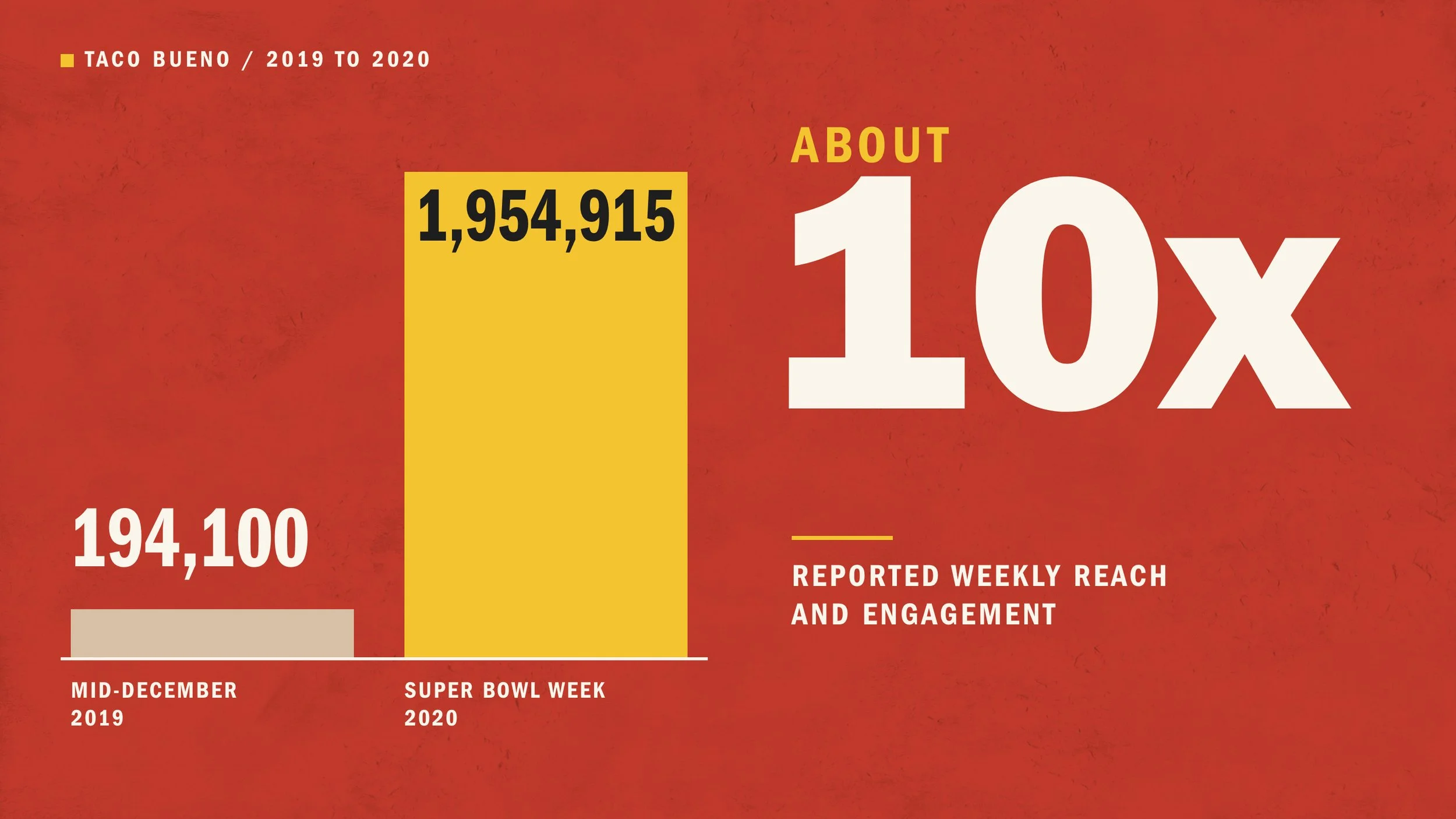
Reported organic reach and engagement for the week went from 194,100 in mid-December to 1,954,915 in Super Bowl week. That's about ten times.
Followers rose by 8,366 in that one week, to 425,966.
When the work was paused in November, I sent the CEO a list of what had been built. His reply: "We could keep doing this."
One month into the restart, on National Taco Day, the chain sold 56,000 party tacos against about 9,000 on a normal day. The VP credited "the Marketing Team that got the message out." Social was one part of that team.
What it means for you:
If your comments are hostile, fix that before you buy reach. And when the numbers dip, you want the person running your social to be the one who tells you first.
CASE STUDY 3
BISCOLATA USA / CHOCOLATE BISCUITS / 2021
When followers stalled, we stopped posting at people and started mailing them cookies.
The situation:
Biscolata is a big chocolate biscuit brand in Turkey with almost no name in the United States. I ran its US accounts from Dallas for a team in Istanbul. The target was 25,000 US followers, the number at which creators start saying yes.
What I did:
Rebuilt the accounts for an American audience, knowing overseas followers would drop off as US followers arrived.
Hit the first target, and then watched the count stop at about 25,000.
Changed the plan. In August 2021 I moved three quarters of my time from posting to direct outreach: creators and independent coffee shops, one city at a time, Dallas first.
Built a request form and a shipping queue so anyone who wanted product could get it.
What happened:
May 2021: account reach up 220 percent and interactions up 430 percent month over month, against an expected 30 percent.
June to July 2021: nearly 21,000 followers, then 25,000.
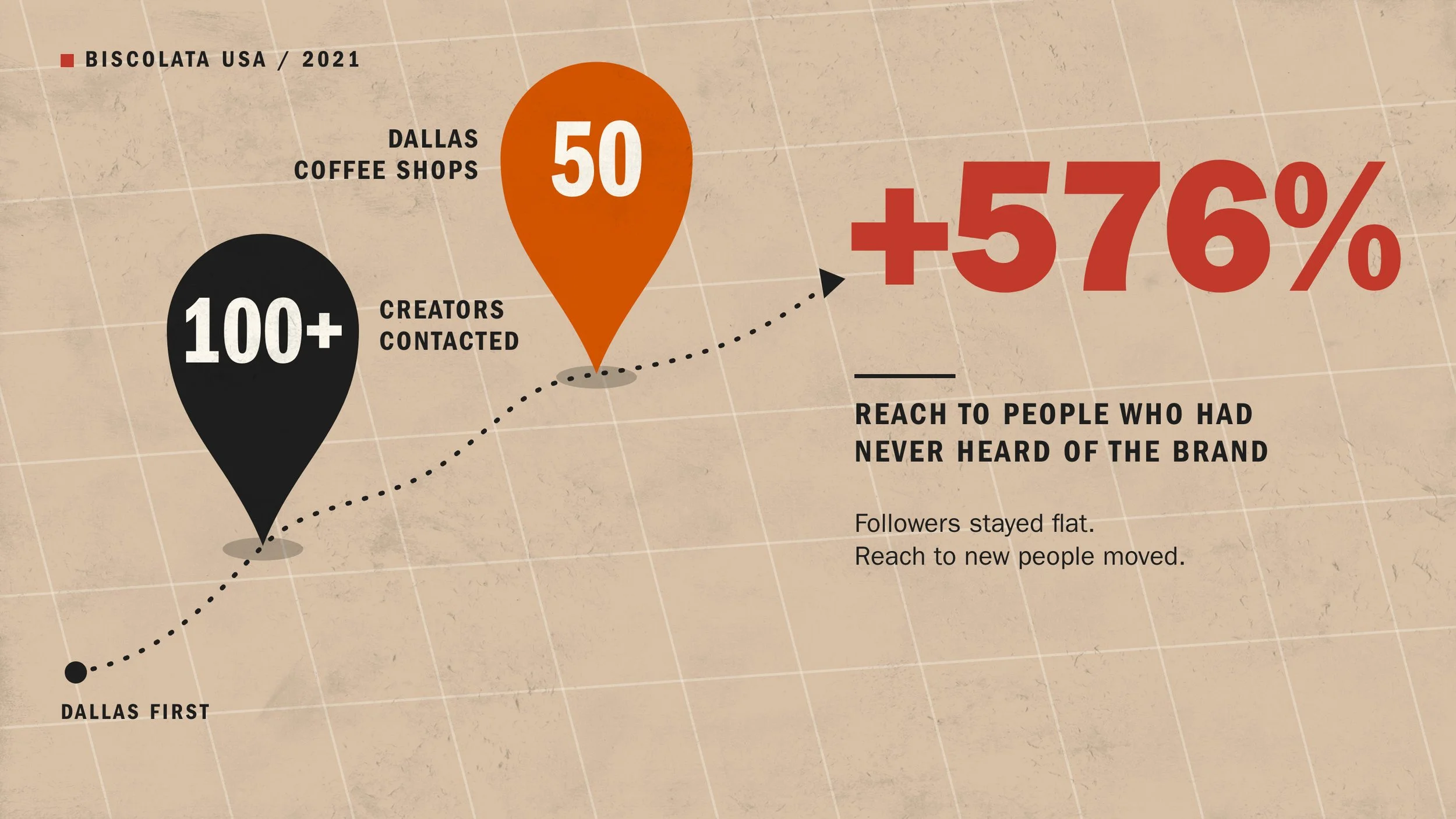
By September 2021: more than 100 creators and 50 Dallas coffee shops contacted, and more than 20 posts from 11 creators.
Reach to people who had never heard of the brand: up 576 percent, per Instagram's own stats.
What I'd tell you straight:
The follower count stayed flat through all of it. Reach to new people is what moved. For a brand nobody has heard of yet, that is the number that matters first.
What it means for you:
When a number stops moving, the answer is rarely more of the same post. Put the product in real people's hands, in one city, and measure who sees it for the first time.
The plan comes first.
I've done this for brands with ten people and brands with ten agencies. If you want someone to look at your social the way I looked at these, start with a conversation.