
The SYSTEM: A High Output CREATIVE Generative AI Infrastructure Stack for Lean Brand Teams
Most agencies carry massive overhead. Expensive studios, heavy crews, slow workflows. You end up paying for their rent instead of your results.
My stack is tuned for one thing: speed to market without losing the soul of the work. I stripped out the vanity of high-end cinema rigs in favor of a mobile, AI-integrated system. It lets me capture, edit, and ship while your competitors are still sitting in a production meeting.
Story over Specs
20 years in the trenches taught me that nobody ever bought a product because of the camera it was shot on. They buy because the story made them feel something.
Gear is the hammer. The story is the house. I use tools that are reliable, mobile, and invisible, so I can spend my attention on strategy and trust instead of fumbling with cables.
1. Capture
I shoot primarily on a dual-redundant iPhone 17 Pro Max setup.
Why this matters for your brand. You do not need a 10-person crew to capture organic content that converts. This setup shoots quietly in the field, which is exactly what CPG brands need when the content has to feel real instead of staged.
The fail-safe. I carry identical backup hardware so the shoot never stops, including in 100-degree Texas heat. K&F Black Mist and variable ND filters keep a cinematic look on a mobile footprint. I also shoot 35mm film on a Canon AE-1 Program and a Minolta Hi-Matic S when a campaign calls for it.

2. Post-Production Command Center
A high-output system needs an environment with nothing in the way. I built a redundant, high-speed editing and AI authoring suite that moves from raw capture to delivered asset in hours instead of weeks.
Studio base. My primary edit station is an Apple M4 iMac with a Samsung T9 4TB SSD for media, backed by the production fleet described in section 6 for anything that renders or generates at volume. Quiet, dongle-free, high bandwidth.
Mobile command. Apple M1 MacBook Air, 16GB RAM, 1TB SSD. Field editing, real-time uploads, and on-location strategy changes.
Storage and redundancy. A 12TB iCloud plan syncs across devices and a Western Digital Red Pro NAS handles long-term archiving locally. Your brand assets are never sitting on one vulnerable drive. They are mirrored, synced, and secured.
3. Authoring and Editing
I do not just edit content. I build it, using industry-standard tools plus AI where AI actually helps.
Video and motion. Final Cut Pro X for narrative precision, CapCut for high-tempo social-first work.
Visual and photo. Luminar Neo for AI-assisted color science and lighting, so iPhone captures hold up next to editorial photography.
Audio. Audacity for clean narration. Custom SFX and scores sourced or built through Audiio, Lens Distortions, and Suno AI, so your brand does not sound like a stock library.
4. The Field Basecamp (The Yellow Rig)
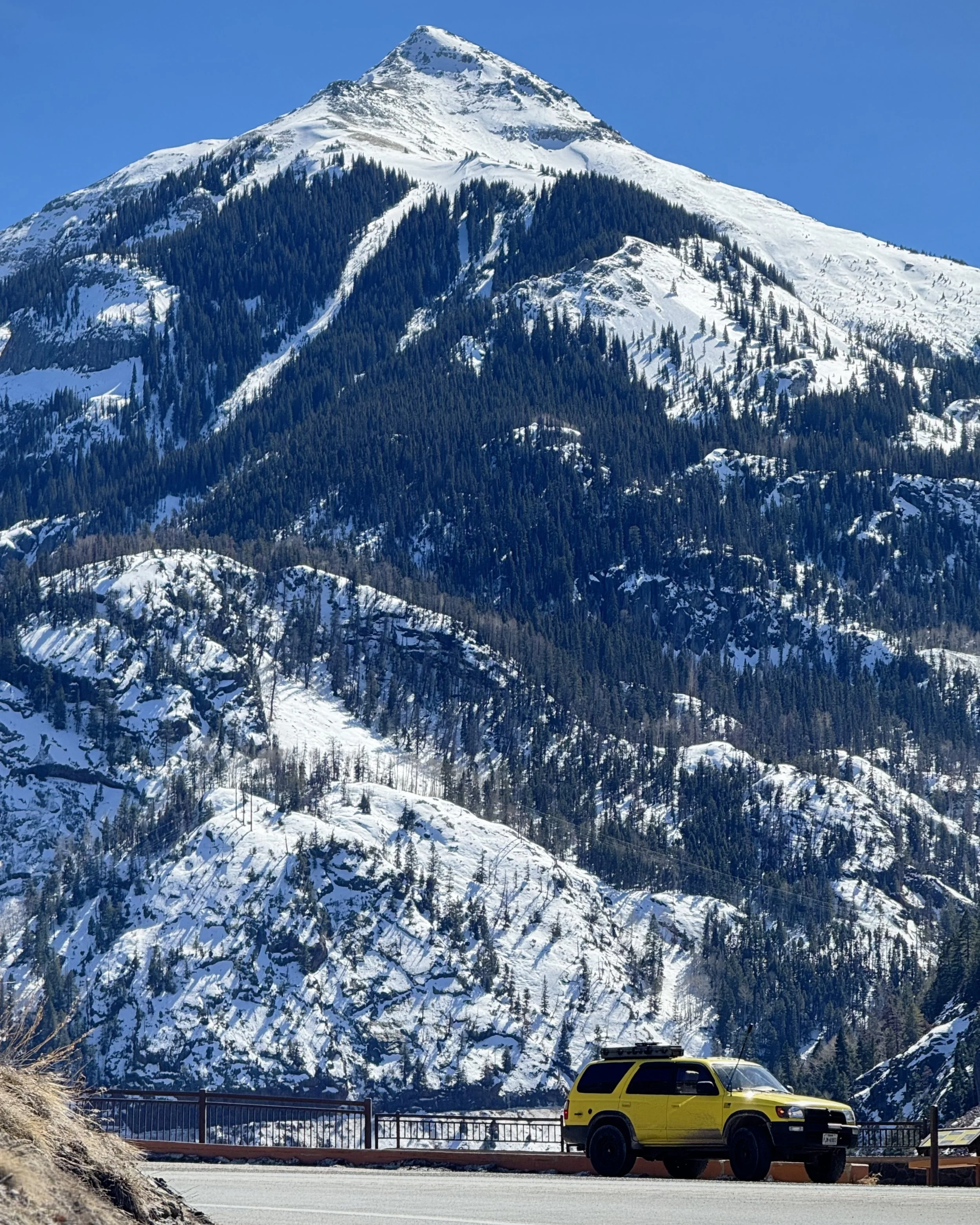
My 1997 Toyota 4Runner is a mobile production office and gear hauler. It gets me into the canyons, onto the trails, and into the places your customers actually spend their time.
The rig is supported by gear and sponsorship partners who build things that survive real use. These are product and sponsorship relationships, not client engagements: ATOTO Car Stereos, Atturo Tires, Blue Ridge Overland Gear, Bodega Coolers, Devos Outdoor, Discount Tire, Fittipaldi Wheels, Maaco Auto Body, onX Offroad, Pelican Cases, RAM Mounts, Renogy, Rotopax, and Topo Designs.
5. The Cast
This is the part of the system you cannot buy anywhere else.
I own and operate a roster of 16 virtual creators. Trained likenesses, voice models, backstories, and documented persona voice guidelines. They are not stock characters and they are not one-off prompt output. They are built assets, developed over years and refined shoot by shoot.
What this means for your brand. You get talent continuity without talent overhead. No day rates, no scheduling, no usage windows quietly expiring, no reshoot because someone changed their hair. The creator who introduced your product in March looks and sounds identical in November, and in the November after that.
How they work. The cast operates like any professional talent. They appear in content for multiple brands across multiple categories at the same time, which I disclose up front rather than letting anyone discover it later. Category and term exclusivity are available as a separately negotiated arrangement.
Who owns them. I do, permanently. When I publish content for you, you automatically receive a license to use that published work in your marketing, pr, and social media for as long as you want it. Ownership of the creators themselves stays with me and is not for sale. The terms are public and specific, so nobody has to guess: [ownership and licensing].
[Meet the cast →](/the-cast)
6. The Generative AI Stack
Most shops describe their AI stack by listing the subscriptions they pay for. That is not a stack, that is a bill. What follows is the infrastructure underneath it.
the fleet
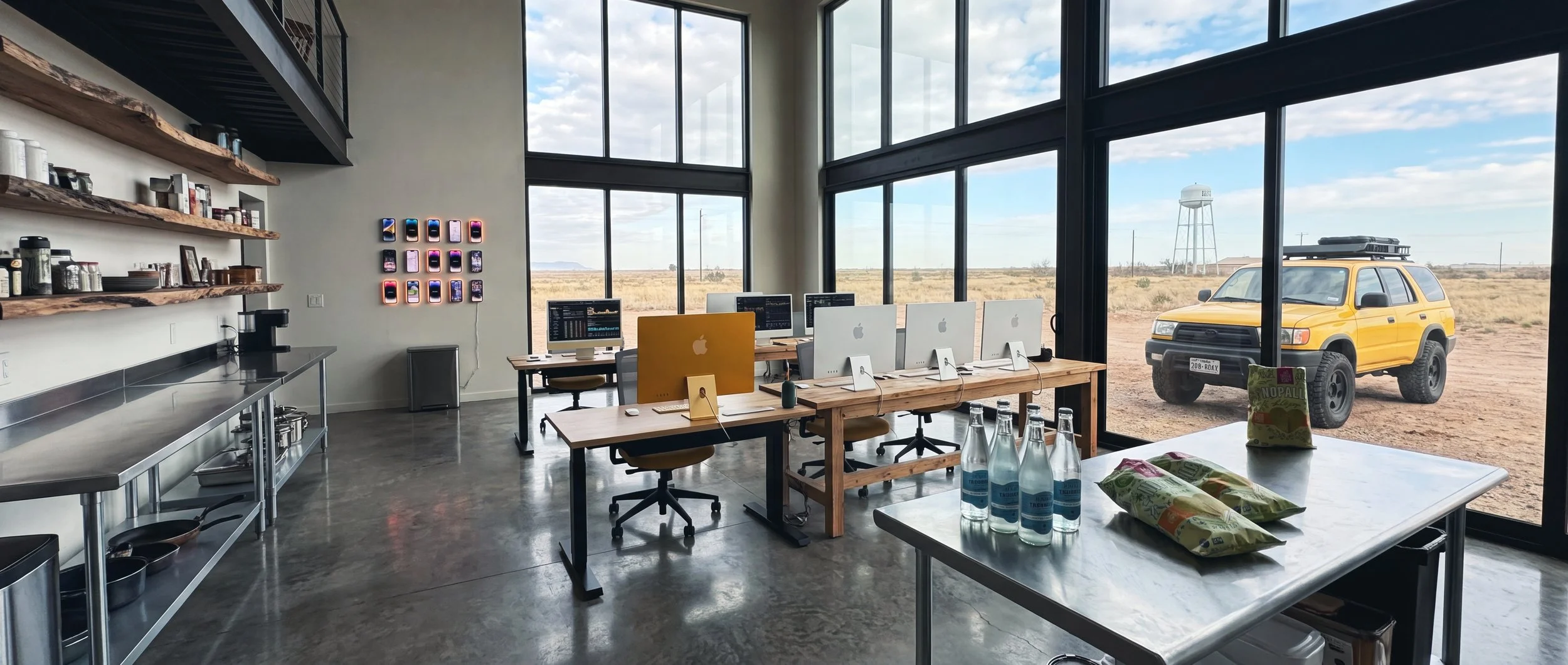
gallucciNET Studios runs on a fleet of 8 Apple iMacs. M4 silicon, 32GB RAM, 1TB SSD each. They handle office operations and production together, and they are the reason this system produces at the volume it does.
Why 8 machines and not one. Generative work is not a single task waiting on a single processor. It is dozens of jobs running at once. Renders, voice synthesis, image generation, transcription, research passes, scheduled publishing, and monitoring. On one workstation those jobs queue up behind each other and your campaign waits. Across a fleet they run in parallel. A batch that would take a day on a single machine finishes in an afternoon.
Why it is owned and not rented. Every machine is hardware I own, sitting in rooms I control. Nothing in the core production path depends on a cloud vendor staying in business, holding its pricing, or keeping a model available. When a service raises rates 4x or deprecates the model your brand voice was built on, and both happen regularly in this industry, it does not touch your work.
Why it matters for your data. Client assets, voice models, and the cast's underlying files are processed on my hardware. They are not uploaded to a third party's servers, not subject to somebody else's terms of service, and not sitting in a training set. If your legal team asks where your brand's likeness and voice data live, the answer is a specific machine in Texas, not a vendor's data center under a EULA that changes quarterly.
the tools
I use these to stress-test your strategy and scale your output. I do not use them to replace your brand's voice.
Strategy and research. Google Gemini, Grok, and Answer the Public, to find out what your audience is actually searching for.
Visual expansion. MidJourney and Higgsfield for continuity, scale, and concept development.
Voice. A local text-to-speech engine running on the fleet rather than a cloud service. Voice assets are generated in-house, they are not exposed to a vendor's pricing or policy changes, and client voice data never leaves my infrastructure. Quillbot handles written cadence and rhythm.
The pattern across all of it: cloud tools where they are genuinely better and the stakes are low, owned hardware everywhere the work has to be repeatable, private, or permanent.
7. The Distribution Stack
Content is only an asset if it is managed properly. I run a quiet back office for scheduling, listening, and reporting.
Infrastructure. Zapier and Buffer for automated, reliable delivery.
Intelligence. Brand24 for real-time sentiment and community listening.
the bottom line
I am not asking you to buy into a gear list. I am asking you to buy into a system that replaces a $20k/month agency retainer with a high-output, AI-accelerated workflow, and into a roster of talent that no competitor can license out from under you.
*Updated 08/17/2026