
Trader Joe's should put the Fearless Flyer on video
Trader Joe's has 661 stores as of August 2026, a fan base that drives hours to shop, and an owned social feed that mostly posts polite product photos. The brand's funniest asset, the Fearless Flyer, still lives on paper. My call for food brands: copy the voice and the store, never the silence.
Listen to this episode of Shelf-Life, then use the piece below.
Data current as of November 10, 2026.
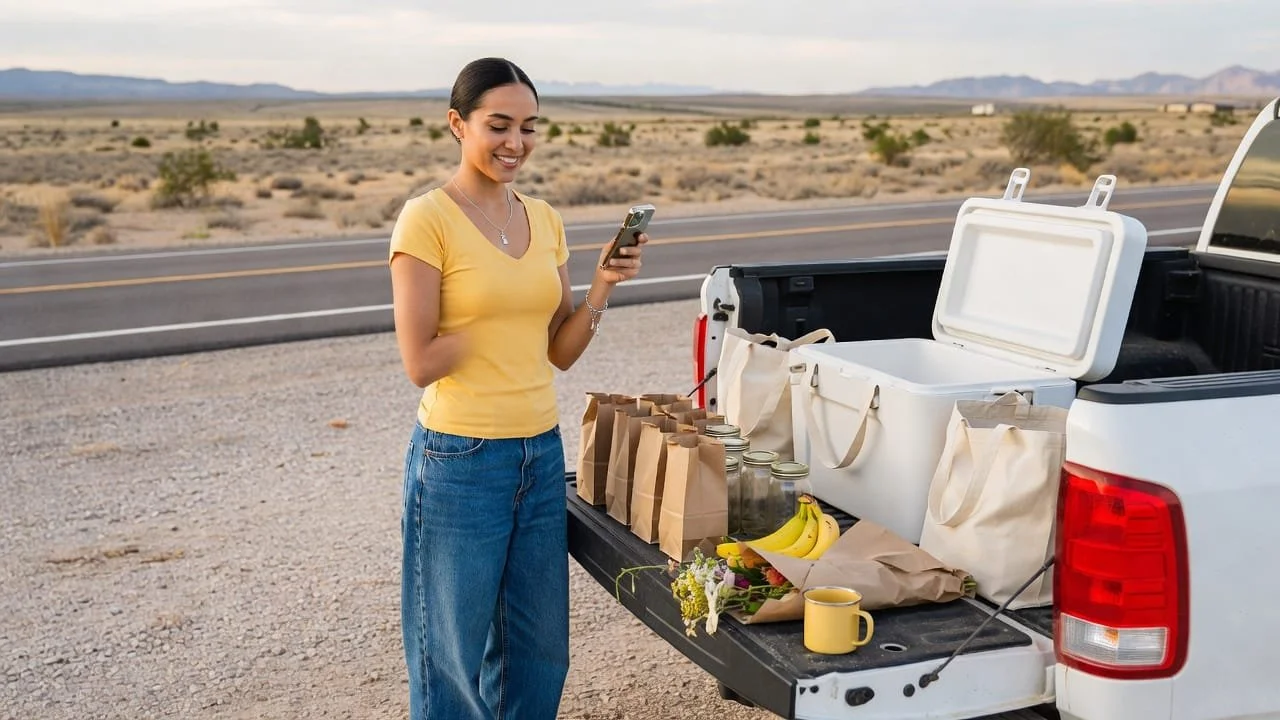
Alexis Parker showed up to this week's taping with a paper grocery bag and a story about a three-hour drive. There's no Trader Joe's anywhere near Marfa, so when she goes she brings a list, a cooler, and orders from four friends. People treat a discount grocery run like the merch table at a concert. That's the whole teardown in one errand.
Who is Trader Joe's, and why does a grocery store get a Shelf-Life teardown?
Because it's the most talked-about grocery brand in America, and the company itself says almost nothing on social. Trader Joe's is a private grocery chain based in Monrovia, California, that sells mostly its own private-label food in neighborhood stores. Joe Coulombe opened the first one in Pasadena in 1967. The chain had 661 locations as of August 18, 2026, and still runs no online store and no delivery.
Coulombe didn't stumble into the fandom. He wrote in his memoir that "we deliberately tried to make it a cult once we got a handle on what we were actually doing," as Business Insider quoted it. The main tool for that, for more than fifty years, has been the Fearless Flyer, a free pamphlet published roughly eight times a year whose boxed, numbered layout Coulombe lifted from David Ogilvy's 1963 book on advertising.
The numbers behind the noise
- 661 stores as of August 2026, with no e-commerce, no delivery and no curbside.
- Trader Joe's List started in 2008 as one woman's blog for her roommates.
- Inside Trader Joe's launched May 2018 as a five-part podcast and passed 100 episodes.
- The $2.99 mini totes drew eBay bids past $600 for a set of eight in March 2024.
- Shoppers voted in the 17th annual Customer Choice Awards, announced January 26, 2026.
Who stops the thumb, the brand or the fans?
The fans, by a mile. When Trader Joe's shows up in a feed, it's almost never Trader Joe's posting it. It's somebody in a parked car holding up a bag of dumplings. The product is built to be talked about: odd names, seasonal runs, things that show up for six weeks and vanish. Each of those is a reason to grab a phone in the parking lot.
The biggest fan account, Trader Joe's List, began in 2008 when Natasha Fischer started a blog about the products. It isn't affiliated with the company. She now puts her community at over 2 million people across platforms. One person with a hobby has stopped more thumbs for Trader Joe's than Trader Joe's has.
So the grade splits. The earned hook is an A. Nobody in grocery comes close. The owned hook is a C. Their own feed is a nicely lit product and a caption. Pleasant doesn't stop anybody.
The fix sits in a drawer at headquarters. The Fearless Flyer reads like a funny uncle who's been to forty countries and has opinions about cheese. Put that voice on video. Open on the product, make the first line the flyer's punchline, and be done in five seconds. They've had the best grocery copywriting in the country since the sixties, and the feed gets the catalog photo.
What formats should a grocery store be on?
The haul video, first. Somebody fills a cart, comes home, lines it all up on the counter and rates every item. That format could have been invented for Trader Joe's, and the brand doesn't make one. Customers make better ones anyway, because they say what's overrated. I'm not asking the company to compete with that. I'm asking it to stand next to it.
The podcast is the smart format they already pay for. Inside Trader Joe's launched in May 2018 as a five-episode series, and the hosts say on its own feed they're now past 100 episodes. Two company people, a little nerdy about cheese, explaining why a product exists. It fits the voice perfectly and it lives where nobody scrolls. Every episode has three or four forty-second moments that would cut straight to vertical clips, captioned, product in frame.
Then there are the signs. The chalkboards and shelf tags are drawn by crew members who work as sign artists in each store, and those crew members already post their own process videos under the sign-artist hashtag. The best format asset in the building is on camera, just not on the company's camera. Format grade: B minus. Right instincts, wrong address.
How often does Trader Joe's post, and does it hurt them?
The company posts at the speed of its product calendar: seasonal drops, holiday lineups, a few spotlights. Steady and a little sleepy. The fan accounts post every day, some of them several times. So the cadence of the Trader Joe's conversation is set by people who don't work there.
That's fine until the conversation turns. When a favorite gets pulled and fans are angry, the fan accounts set the tone and the brand shows up late with a statement. Post on a schedule and people expect to hear from you. Post when you feel like it and every post is an event, and some events are damage control. I'd give them one standing weekly slot: same day, same time, a crew member holding up what just landed. Cadence grade: C plus.
What did the $2.99 tote teach every food brand?
That a cheap, useful object with your name on it can become a fan club. In early March 2024 Trader Joe's put out mini canvas totes for $2.99 in red, yellow, blue and green. Shoppers' TikToks of crowds swarming the display went viral, and within days resellers had eBay listings running into the hundreds. One eight-bag lot drew bids past $600, per CNBC.
Matt Sloan, the company's vice president of marketing product, said on the podcast that "we had no inkling that they would be this exciting, this quickly, for so many customers." I believe him. That's what makes it instructive. The mechanic was older than the hype: a limited run, a low price, a logo people are proud to carry. And it keeps working. A lavender tote went viral again this spring.
Add the Customer Choice Awards, where shoppers vote their favorites every January, and you've got two fan rituals most brands would pay a consultant to invent.
Where they lose points is the comments. Read the replies on their own posts. Fans asking if a discontinued item is coming back, people tagging friends, people posting their own hauls, and almost nobody from the company answering. That's a stadium chanting your name while the brand waves from the parking lot. Community grade: A minus for building it, C for showing up to it. Call it a B.
Why is the store-to-feed loop the best in grocery?
Because there's only one way to buy the thing in the video. No online store, no delivery, no curbside. Every haul video does one job, which is put a car in the parking lot. Most food brands have a broken loop: a stranger sees the product, wants it, and then has to work out which chain carries it, if any chain does. Here the answer is always the same store.
And the store is built to be filmed. Bright signs, weird names, a seasonal endcap, a crew member in a loud shirt. You walk out with content whether you meant to or not. Loop grade: A. The crack is that they don't steer it. If fans ever get bored, there's no owned audience trained to hear from the company directly.
What's the mistake every snack founder is about to copy?
The "we don't market" myth. Every founder has read some piece about how Trader Joe's built an empire without advertising, and plenty have decided they can skip social and let fans do the posting. That's the wrong lesson. Trader Joe's has 661 stores people walk into every week, a product line built to be filmed and a flyer with fifty years of personality behind it. Their fans post because the store hands them something to post about.
A brand on one shelf in one chain, with no stores of its own, copies the silence and disappears. The silence is a luxury, and you pay for it with a store people love to film. Everybody else has to show up and talk. (Monday's piece on posting the empty shelf is what showing up looks like at that size.)
What should your brand post this week?
Take the one thing Trader Joe's gets wrong and do it right at your size: put your written voice on video, on a schedule, with a human face. If you've got a newsletter, a back-of-box story or a founder who writes funny product descriptions, that copy is your Fearless Flyer. Read it out loud on camera once a week. Last week's Shelf-Life made the case for a recurring character on a weekly slot. This is the cheaper version: no character, just your best sentence and a person holding the product.
Then answer the comments in that same voice, with a first name on every reply. If you haven't decided who answers and how fast, start with the ten-word playbook from Red Baron.
Caption you can paste today (swap in your own product and line):
From our product notes, read out loud for once: "[your best line about this product]." We wrote that about [product] in [year]. Still true. New batch on the shelf at [store] this week. Tell us what we got wrong and a real person named [first name] will answer.
The still. Your product on a kitchen counter, shot from straight above, next to the printed page or box panel where the line first ran, with the sentence underlined in pen. Window light, no flash, a coffee ring on the paper is fine. One hand in frame holding the pen. No glamour lighting, no styled props.
The 20-second video, shootable this afternoon:
- 0 to 3 seconds: the product in one hand, close, already open. No logo card, no intro.
- 3 to 10 seconds: a crew member or the founder reads your best written line straight to camera, deadpan.
- 10 to 16 seconds: cut to the printed page with the line underlined, then back to them taking a bite.
- 16 to 20 seconds: on-screen text with the store, the aisle and the first name of whoever answers the comments this week.
Shoot it on a phone in the room where you pack orders. Post it the same day every week, and reply to the first ten comments within the hour.
The show is the briefing and this piece is the extension. Subscribe to The Daily Trend Report on Apple Podcasts or Spotify, where Shelf-Life runs every Tuesday. Alexis still has the cooler in the truck.
If your comments are full and your replies are empty, message me on LinkedIn.

adage, emmy, telly & webby award-winning digital marketing consultant for purpose-driven food & beverage brands.