
Kirkland can copy your label for 83 cents a can. Show them the kettle.
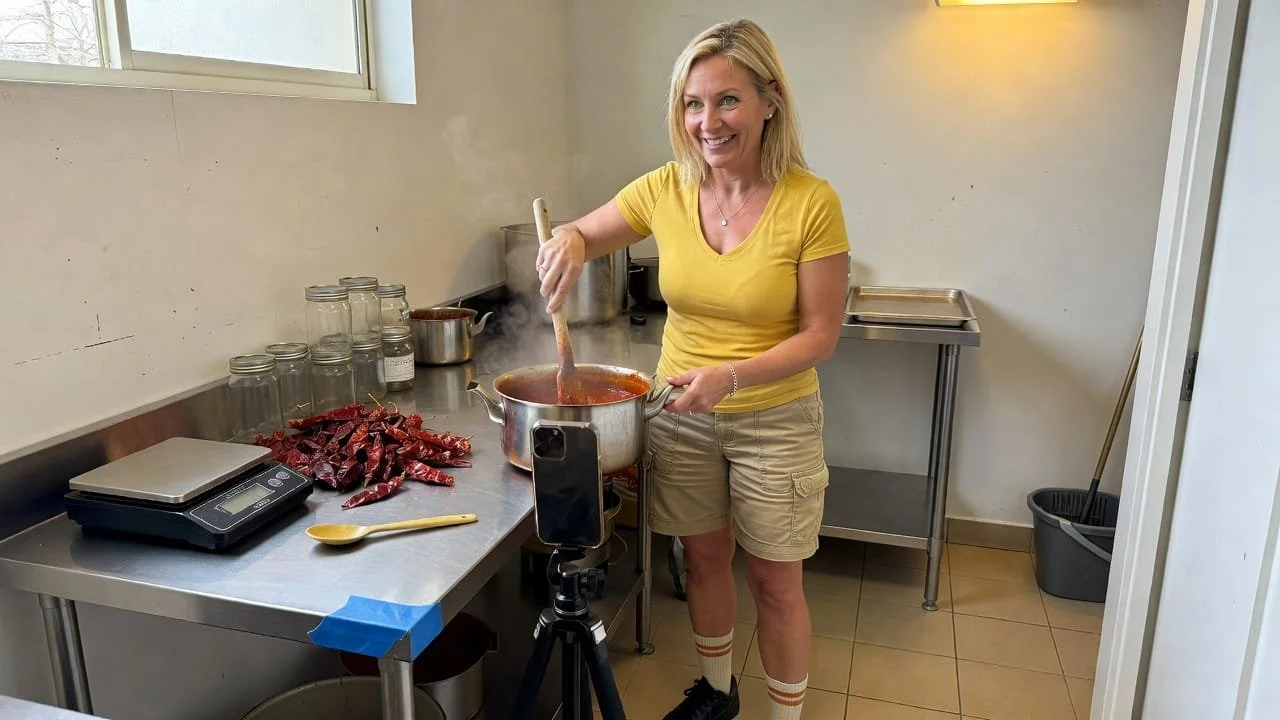
Costco is selling 18 cans of Kirkland Signature prebiotic soda for $14.89, about 83 cents a can, with the same 6 grams of fiber and 5 grams of sugar the category leaders built their whole feed on. As of November 14, 2026, a giant can copy your label in a quarter. It can't copy the person standing over the kettle, so put that person in every post.
Listen to this episode of The Weekend Trend Report, then use the piece below.
Data current as of November 14, 2026.
Rachel and I ran four trends on the show this morning: two from social, two from the food and beverage aisle. They came from four different places (a newsletter, a beer brand, a drinks analyst, an investor day) and they all land on the same spot. The output is getting cheap to copy. The process isn't. Here's each one, and then one shoot day that covers all four.
- Kirkland Signature prebiotic soda: 18 cans for $14.89 at Costco in November 2026, versus $23.99 for 15 cans of Olipop on Costco's own site.
- Unilever now works with 500,000 creators, up from 300,000, per its November 4, 2026 investor event.
- Spirit-based canned cocktails and long drinks grew 53% in US volume in 2025, while total ready-to-drink fell 1%.
- Canned whiskey sours grew more than 1,500% in 2025 and are about two-thirds of whiskey RTD volume.
- Kraft Heinz has committed $700 million to marketing and innovation and expects sales growth in the second half of 2027.
Why is the making-of post beating the campaign?
Because people want proof a person with taste made the calls, and the behind-the-scenes post is that proof. Rachel Karten, who writes the Link in Bio newsletter and ran brand social accounts before she wrote about them, put it in "Context is king" on November 12. She first pitched "proof of reality" posts over a year ago as a defensive move: keep the receipts in case somebody accuses you of faking the campaign with AI. Then the receipts started outperforming the campaigns they documented. Her name for planning around that from day one is "context loops," and she walks through Rare Beauty, Microsoft and Birkenstock as examples.
The cleanest example this week came out of skincare. Sonsie, the vegan skincare brand Pamela Anderson took majority ownership of in 2024, put out its first holiday film: 83 seconds of stop-motion, Anderson shrunk down inside a papier-mâché garden, made by 23 creators over eight months, per Adweek. Her son Dylan Jagger Lee, the chief brand officer, came up with it and produced it. Nobody writes a story about a skincare brand dropping a holiday spot. They write about 23 people gluing a garden together for most of a year. Same thing with Grace Wells, the creator known for fake epic commercials about random objects: Digiday reports one of her branded videos takes about 100 hours, brief to delivery. That's two and a half work weeks for something people watch in thirty seconds.
Karten won't call it an anti-AI trend, and I agree with her. I make a lot of content with AI. What the audience wants to see is who picked the shot, who tasted the batch, who said no to the first version. For a food brand that's the easy part. Somebody is standing over a kettle at five in the morning. Somebody threw out a batch because it came out wrong, and the batch you threw out is better content than the batch you sold, because it has a decision in it.
The move: on every shoot, hand one person a phone and make filming the shoot their only job. Post that footage two or three days before the finished piece. Put one number from the work in the first line of the caption: forty batches, eight months, four hundred pounds of peppers.
Why is Guinness going slow on creators while Unilever signs 500,000?
Because Guinness drinkers already make its content, and a soap company with dozens of brands to feed has to pay for volume. Guinness, the Irish stout owned by Diageo, is in no hurry to sign creators en masse, global marketing manager and head of sport Paddy Carberry said on a live recording of the Unofficial Partner podcast, as Digiday reported November 13. His reason is the best line a beer marketer has said all year:
"The minute we start getting involved in trends and social media stuff, all of a sudden we become the dad dancing at the disco." Paddy Carberry, global marketing manager and head of sport, Guinness, via Digiday
Guinness can say that because of Split the G. You take a sip and try to land the foam line right in the middle of the G on the glass. Digiday notes it has been going around pubs since at least 2018, when it got an Urban Dictionary entry, and nobody at Diageo invented it. Singing Pints, the 2023 campaign Guinness brought back this summer, came straight out of a TikTok trend where drinkers blew across the foam to make it look like a mouth singing. Carberry called it one of the most successful pieces of content in ten years. Digiday's read is that the brand's focus is moving to community management: watch what drinkers do, then turn up the volume.
Now the other end. Unilever, the maker of Dove and Vaseline, told investors on November 4 that it relies on 500,000 creators, up from 300,000, and about 20,000 before CEO Fernando Fernandez took over. It says it makes twelve times the content it made in 2024 at 90% lower cost, and that video returns go negative after about four days. Four days. That's a carton of strawberries. You can run that treadmill with a Unilever budget. A small food brand that copies it buys a thin slice of a crowd Unilever is already paying. Business Insider ran the same week with creator marketers rethinking hauls and unboxings, the ten-brands-in-sixty-seconds pile on the bed that people now scroll right past.
The move: cut the gifting list in half and sign three creators who already post about your category, for six months. Then go read a month of your tagged posts and reviews and find the thing customers do with your product that you never asked for. Name it, do it yourself on camera, and reshare every person who copies it. I wrote about digging that out of the comments in your customers already wrote the copy.
What's actually growing in canned cocktails?
Cans with real spirit in them, and mostly ones that were already on the shelf. Food Dive wrote up new numbers from IWSR, the drinks market research firm, on November 12. US ready-to-drink volume fell 1% in 2025 and hard seltzer fell 8%. RTD cocktails grew 17%. Spirit-based cocktails and long drinks were up 53%, and only 2% of that growth came from new launches. Canned whiskey sours grew more than 1,500% and now make up about two-thirds of whiskey RTD volume, while whiskey RTDs as a whole fell 11%.
That whiskey sour number is the social lesson. It's a drink everybody already knows how to order, so the shopper can picture the bar version before cracking the can. If people can't picture your product in one second, your video has to work twice as hard. The money is following: White Claw's owner bought Finnish Long Drink, Constellation bought the hard sports drink SpikedAde, and Boston Beer and Sazerac are in. IWSR's Susie Goldspink flagged a wave of vodka RTDs borrowing sports drink cues like electrolytes and "ade" flavors. I'd watch it, but I wouldn't build a brand on it. That one's a trend about the label. Real spirit is a trend about the drink, and drink trends last longer.
The move: a small distillery has what White Claw can't buy, which is a bartender, a still and a back bar. Have the bartender build the cocktail the long way, then crack your can next to it and pour it into the same glass. Same color, same garnish, no narration. Then turn the can around and read the back label out loud. Keep everyone on camera over 21 and keep the targeting 21 and up, because the platforms enforce alcohol rules hard.
What do you post when Big Food sells your idea back to your customers?
Everything a store brand can't fake: the founder, the town, the date you started, the person who drives the tomatoes in. Kraft Heinz, the 157-year-old maker of Heinz ketchup and Philadelphia cream cheese, told investors this week that sales growth returns in the second half of 2027, per Food Dive on November 13. Its proof points were Heinz Simply and Heinz Zero, the simpler and no-sugar ketchups, both growing double digits. Nearly half its pipeline is health and wellness, Kraft Mac and Cheese moved into a protein group, and $700 million is going behind marketing and innovation. Less sugar and a shorter label is what small condiment brands have been proving for years. Now it has $700 million behind it.
Then Costco Wholesale, the members-only warehouse club, put out its own prebiotic soda. Inc. reports 18 Kirkland Signature cans for $14.89 in strawberry lemon, orange and cherry lime, each with 6 grams of fiber, 5 grams of sugar and 35 calories. A 15-count Olipop pack is $23.99 on the same site. Customers spotted the pallets in stores and posted pictures before most of the coverage ran. I wrote in September about a fiber soda that won on nine grams of fiber and a date on the calendar. The fiber half of that is now a store brand. The date half isn't.
If every post you've made is the nutrition panel, Kirkland just cloned your feed. A store brand can't show you the founder sitting in a parking lot after the first buyer said yes. You can, and that video will beat anything with a panel on it. (Getting into the warehouse yourself is a different game, and here's how one brand filmed it.)
The move: count your last 30 posts. If more than a third are the label, the grams or the claims, replace half of them with people. Say your launch date on camera. Then run a blind taste test against the store brand with real people and post every result, including the round you lose and what you're changing because of it.
Can one shoot day cover all four?
Yes. Book one morning at the kitchen, the plant or the bar, put one person on a phone filming the shoot itself, and come home with four posts.
Pasteable copy, one caption per trend:
Batch 41. The first 40 tasted fine. Fine wasn't the recipe. Here's the one we threw out and why.
Half of you eat the last bite like this and we never told anybody to. We're calling it the last-bite flip. Show us yours and we'll repost every one.
Left: our bartender, eleven steps. Right: our can, one step. Same glass, same garnish. Tell us which is which.
We started with one kettle and one store that said yes. Here's that store. Here's the guy who said yes.
Still direction: one 4:5 frame, eye level, natural light. The maker's hands mid-task (stirring the kettle, pulling the tap, wiping the rim) with the finished product sharp in the foreground and the mess of the work visible behind it: the scale, the spoons, the tape on the floor. No styled props, no graphics. Shoot it on the phone, unedited, so it looks like the day it was.
Shot-listed 25-second video, same day:
- 0 to 3s: close on the maker's hands doing the messiest step. Burned-in caption with one number: "Batch 41."
- 3 to 8s: the thrown-out batch going into the bin, one line from the maker saying why.
- 8 to 14s: the customer ritual (the pour, the stack, the last bite), done by the maker, looking at the lens.
- 14 to 20s: the side by side. Long way on the left, your product on the right, same glass or same plate. No talking.
- 20 to 25s: the founder says the start date and the first store out loud. Cut on the last word.
The show is the briefing, this is the extension, and the post is what you do with it. Get The Weekend Trend Report every Saturday in The Daily Trend Report feed on Apple Podcasts or Spotify, and catch up on earlier weeks on the show page.
If your customers love the product but your comments are quiet, connect with me on LinkedIn.

adage, emmy, telly & webby award-winning digital marketing consultant for purpose-driven food & beverage brands.