Halfday Is Sitting on a Category Win. Here's Why They Might Let OLIPOP and Poppi Take It.
There's a war happening in functional beverages right now, and the two combatants getting all the press are OLIPOP and Poppi. One built a community army on TikTok. The other ran air strikes with viral influencer campaigns and a Super Bowl ad. Together they turned the prebiotic soda category from a niche wellness experiment into a $776 million segment in under two years.
Halfday is not in that war. Which is either the smartest positioning decision in the better-for-you beverage space right now - or the most dangerous oversight.
I've been looking at Halfday's brand, their retail footprint, their product line, and their social presence. Here's what I see: a brand with a genuinely differentiated product, a founder story that should be driving serious emotional engagement, and a social media presence that is quietly leaving both of those on the table.
That gap is what I want to talk about. Not to call anyone out. But because it's exactly the kind of gap that lets a well-funded competitor walk right through the door you left open.
The Product Is Actually Better Positioned Than They Know
Here's the honest competitive picture that keeps brand leaders up at night in this space: OLIPOP and Poppi are carbonated sodas fighting over the same 20-something consumer. They're loud, they're pastel, and they've built their identity around replacing Coke and Pepsi.
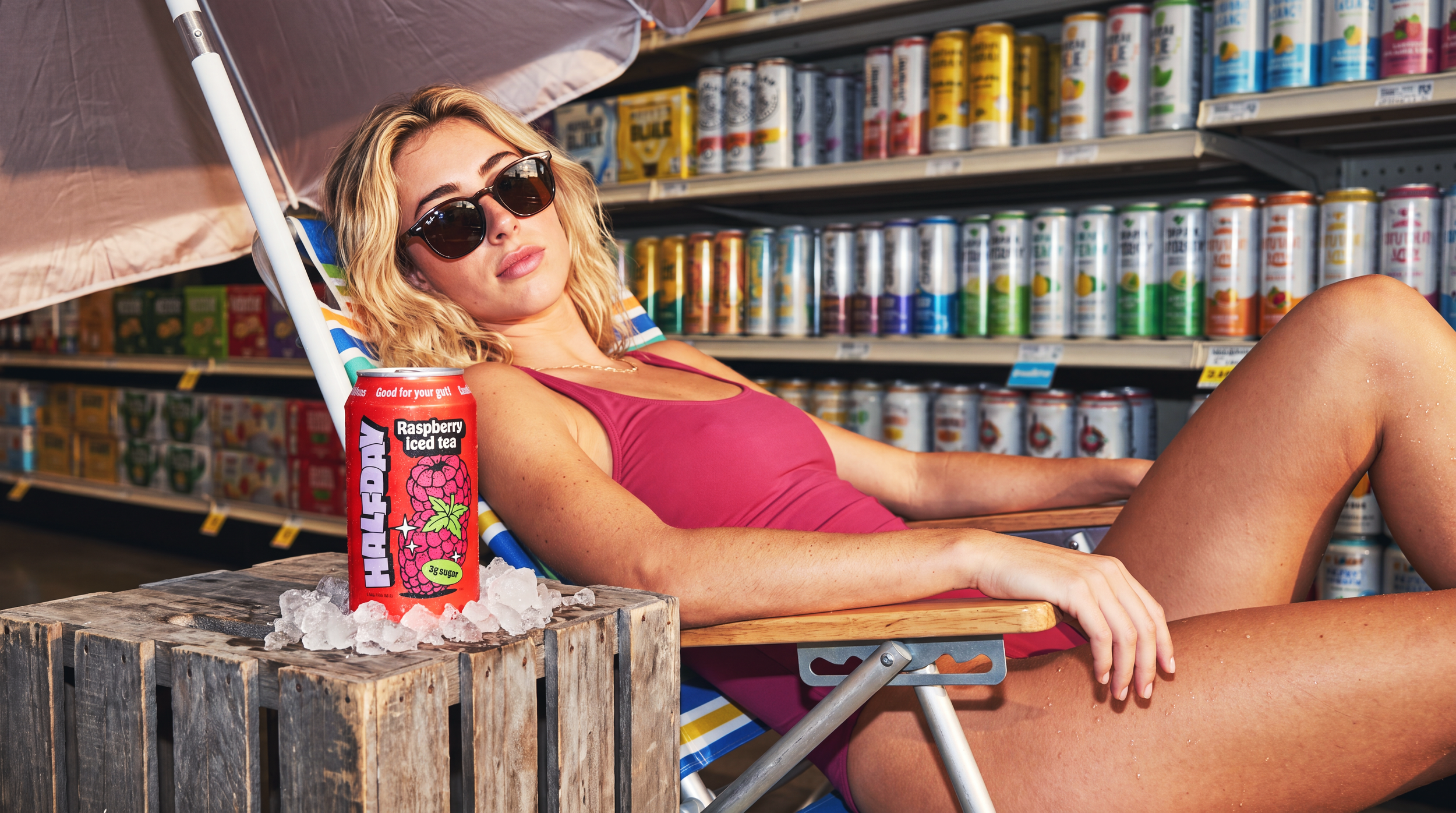
Halfday made a completely different bet. Non-carbonated. Iced tea. Classic flavors - lemon, peach, half & half - the kind of flavors that trigger a real visceral memory for anyone who grew up with a Snapple or an Arizona in their hand. With 6g of prebiotic fiber and 3-5g of sugar, they're not just a healthier soda. They're a category of one: gut-healthy nostalgic iced tea.
One press outlet got this right, describing Halfday as the answer for anyone who wants the prebiotic benefit without the carbonation - the in-between option between sparkling water and soda. That's not a small audience. That's millions of people who love iced tea, hate what sugar does to them, and have never had a brand speak directly to them.
The problem is Halfday isn't speaking directly to them at volume. Not yet.
The Founder Story Is a Social Media Engine They're Running at 20%
Kayvon Jahanbakhsh was diagnosed with ulcerative colitis in college. He lost 80 pounds. He was training to be an Olympic swimmer. The diagnosis forced him to rebuild his relationship with food and drink from the ground up - and in doing that, he couldn't find a product he could actually enjoy. So he built one.
That is one of the most compelling founder narratives in the CPG space right now. It's personal. It's specific. It involves real physical stakes, not just a vague desire to eat cleaner. And it connects directly to the product's core benefit in a way that no marketing department could manufacture.
OLIPOP's CEO Ben Goodwin has been in front of the camera telling his brand story consistently for three years. That content compounds. It builds the kind of trust that converts a first-time buyer into someone who orders six cases at once - which is exactly what Halfday's own reviews show their customers doing.
Kayvon's story needs to be on camera, consistently, on TikTok and Instagram Reels, in short form. Not polished brand content. The unfiltered version. The "here's what ulcerative colitis actually feels like and here's why I couldn't drink iced tea anymore" version. That's what drives the kind of community that OLIPOP spent years building and that Poppi tried to shortcut with a $25,000 vending machine stunt - and got punished for it.
What the Competitive Set Is Doing That Halfday Should Be Watching
The OLIPOP playbook is public at this point. They quit paid advertising in 2021. They went all-in on 30 to 40 creator partnerships per month, prioritizing micro-influencers who integrate the product naturally into their lives rather than announce it. They built a hashtag community (olipoparmy, guttok) that gives their fans a shared identity. They let creators find the niches - and when East Asian creators started driving nearly a million views per post, OLIPOP leaned in rather than trying to control the narrative from the top.
That's the ground game.
The tactical lesson for Halfday is not to copy OLIPOP - it's to understand what OLIPOP figured out that most better-for-you brands still haven't: the audience for functional beverages is not looking for a brand to sell to them. They're looking for a brand they feel like they discovered. The content strategy that wins in this space is the one that feels like something a friend texted you, not an ad you scrolled past.
Halfday has real retail presence - HEB, Kroger, Whole Foods, Wegmans, Sprouts, Erewhon, Wawa. That's not a startup footprint. That's a brand that's already in the cart. The question is whether their social presence is pushing people toward that aisle or waiting for those people to find them accidentally.
Three Things That Would Change the Trajectory
1. Make Kayvon the face of the brand on social, not just on the About page.
His story is not marketing copy. It's the reason the product exists. Short-form video of him talking about what ulcerative colitis actually cost him - athletically, socially, in terms of what he could and couldn't drink - will reach the exact audience Halfday needs: people with gut issues who have made peace with sparkling water because they think that's their only option. These people are on TikTok searching for exactly this. They just can't find Halfday right now.
2. Own the iced tea nostalgia conversation before someone else does.
The prebiotic soda category is about to get very crowded. PepsiCo now owns Poppi. Coca-Cola launched Simply Pop. The big players are here. What they cannot replicate is the authentic nostalgia play - the idea that this is Arizona and Snapple, rebuilt for people who actually care about what they put in their body. That story needs to be claimed loudly and specifically on social before a bigger brand with more ad spend decides to tell a version of it.
3. Activate the customer base that's already evangelical.
"I just ordered 6 cases and am not interested in drinking anything else." That's a real review on their site. That customer exists in large numbers. They're not just buyers - they're unpaid brand ambassadors who haven't been given a reason to post. A structured micro-UGC program, even a simple one, turns that loyalty into a content engine that compounds over time rather than sitting quietly in a DTC subscription queue.
The Bottom Line for Halfday Leadership
The product is real. The story is real. The distribution is real. What's missing is the social media strategy that makes all of that visible to the audience that would convert the moment they found it.
OLIPOP is valued at $1.85 billion. They started with the same kind of product, the same kind of founder story, and a much smaller retail footprint than Halfday has today. The difference is they went all-in on earned social two years before anyone told them to.
Halfday doesn't need to catch OLIPOP. They need to own the iced tea lane in the functional beverage category before OLIPOP, Poppi's new PepsiCo owners, or the next well-funded entrant decides to plant a flag there.
The clock is running.
giovanni gallucci is a brand strategist and content operator specializing in clean-label food and beverage brands. He works with emerging CPG companies to build social media strategies that drive retail velocity and category ownership.

adage, emmy, telly & webby award-winning digital marketing consultant for purpose-driven food & beverage brands.