Your competitors are buying into AI without asking the right question: what are we actually solving?

Your competitors are buying into AI without asking the right question: what are we actually solving?
For clean-label and organic food and beverage brands, the stakes are different. You don't compete on speed or volume. You compete on trust. You compete on being able to prove what's in your product, where it came from, and why it matters. AI strategy for clean-label food and beverage brands isn't about joining the AI arms race. It's about using AI to strengthen the one asset that actually matters: credibility.
Most brands are applying AI to problems that aren't their problems. They're optimizing warehouse logistics or demand forecasting because that's what AI vendors sell them. Meanwhile, the real vulnerability sits upstream. Your suppliers. Your ingredient verification. Your transparency story. That's where AI strategy for clean-label food and beverage brands actually lives.
The wrong bet most clean-label brands are making
You've probably heard the pitch. AI can cut costs. AI can predict demand. AI can automate customer service. True. Also irrelevant.
Clean-label brands fail not because their supply chains are inefficient, but because they can't prove claims fast enough or at scale. Your marketing team says "single-origin, non-GMO, regenerative." Then what. You show a farmer's photo. A third-party cert. By the time a consumer decides to trust you, they've already read three TikToks casting doubt.
Here's the contrarian move: stop optimizing for efficiency and start optimizing for verification. The AI that matters for clean-label brands isn't the AI that replaces humans. It's the AI that lets you move verification from "trust me" to "here's the proof."
The difference is existential. Efficiency AI gets you a 5% cost reduction that a competitor matches in six months. Verification AI gets you a two-year head start on proving claims at scale. Pick one.
Three critical applications of AI for clean-label brands
Supplier intelligence and ingredient verification
Every clean-label brand has a supplier problem hiding in plain sight. You work with 20, 40, 80 ingredient suppliers. Do you know if their supply claims hold up. Are they making the same claim to five competitors. Did their certification lapse.
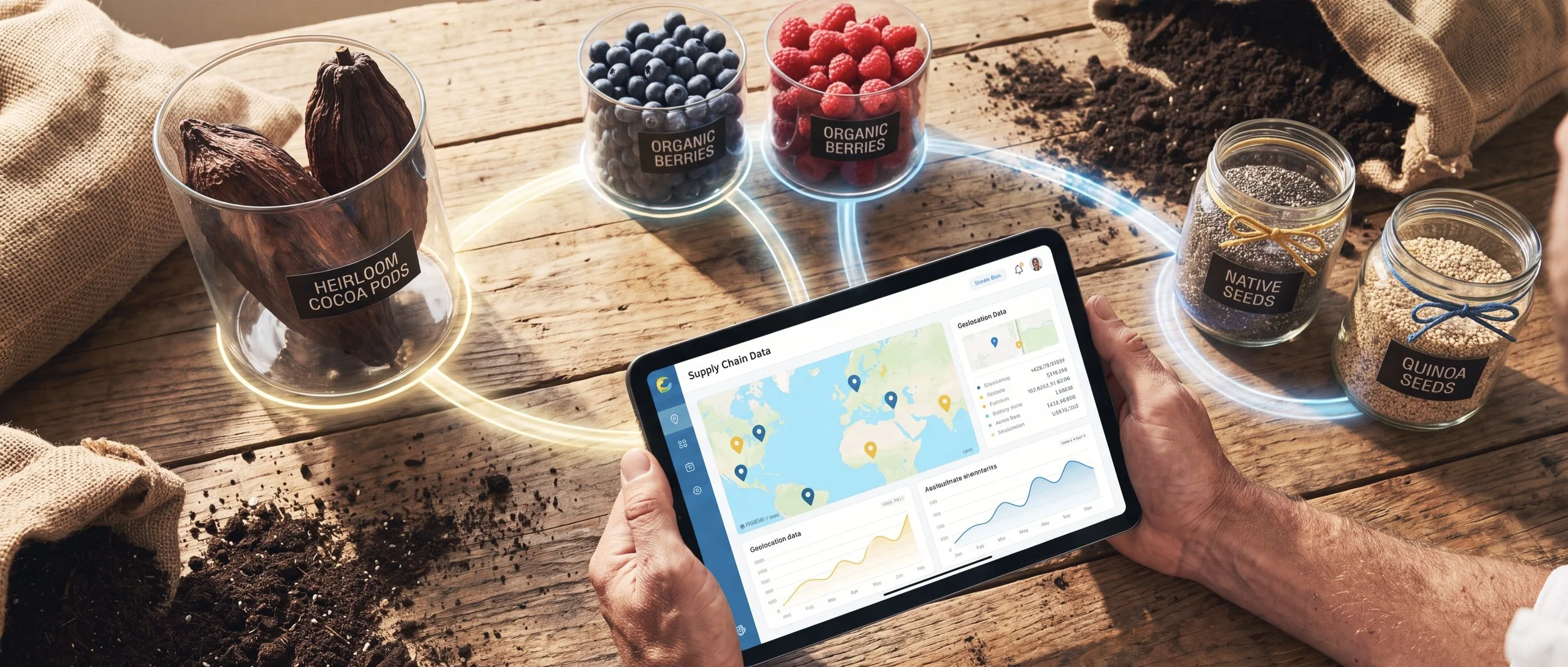
AI changes the game here. Deploy AI to ingest, normalize, and cross-reference supplier certifications, audit reports, and claims against public databases. Flag inconsistencies. Catch lapses before they ship. When a supplier claims "organic regenerative," AI can pull their last three years of audit history, check USDA records, and surface risk in hours instead of weeks.
Concrete example: a brand in the natural snack space discovered that one of their core coconut suppliers was cycling through certifications (letting them lapse, renewing after three months). The pattern was invisible to human review. AI found it by analyzing temporal data across the supplier's certification history and matching gaps to batch numbers. They switched suppliers before the first bad batch shipped. That's AI strategy for clean-label food and beverage brands that actually moves the needle.
Supply chain transparency that converts
Transparency is table stakes. The question is: does your transparency actually change purchase intent.
AI can turn raw data into narrative. Instead of dumping supply-chain intel on your website, AI can generate dynamic stories tailored to what each buyer segment cares about. A B2B customer cares about audit trails and food safety compliance. A millennial consumer cares about farmer impact and regenerative agriculture. A restaurant operator cares about consistency and quality variance. Same source data. AI tailors the story. Same supply chain. Different narratives.
This is where AI strategy for clean-label food and beverage brands intersects with actual conversion lift. Transparency that's personalized to what moves your buyer moves revenue.
Consumer trust signals (not marketing fluff)
Your consumer doesn't read your full supply chain. They decide in three seconds. So the question is: what micro-signal tells them you're trustworthy.
AI can help you identify and amplify the signals that actually move trust. Not all certifications matter equally. Not all origin stories resonate. AI can analyze your customer reviews, social listening, and purchase behavior to surface which trust signals move your specific audience. Then automate their deployment across packaging, website, and social channels. That's not marketing theater. That's leveraging behavioral data to speak the language your customer already trusts.
The Giovanni Clean-Label AI Framework
Here's how to structure AI strategy for clean-label food and beverage brands without becoming a vendor's pet project or chasing shiny objects.
Layer 1. Verification (upstream, risk mitigation)
- AI audits suppliers, certifications, and ingredients in real time
- Flags inconsistencies and lapses before bad data becomes a problem
- Purpose: eliminate risk, not impress executives
Layer 2. Transparency (internal, credibility building)
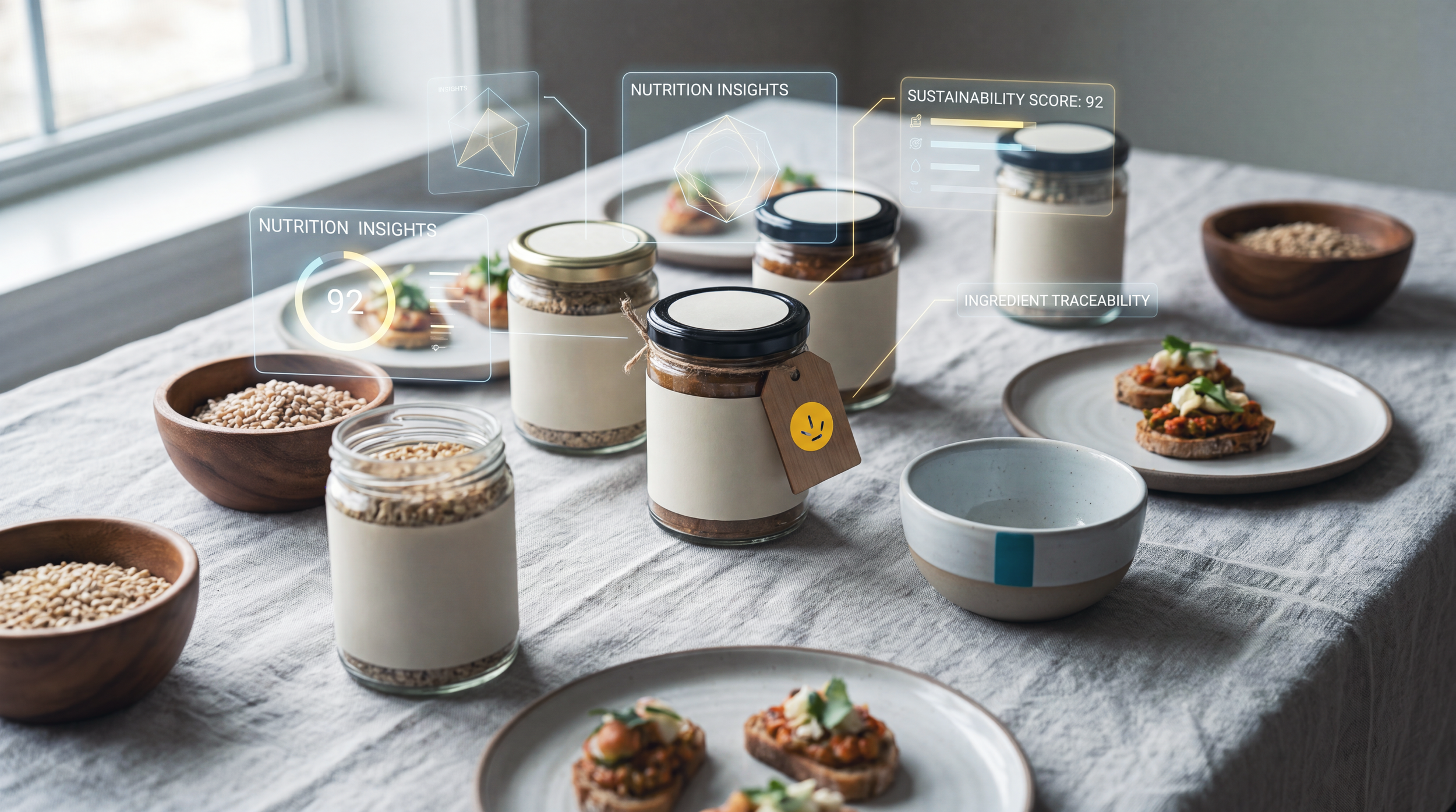
- AI normalizes and structures supply-chain data
- Generates tailored narratives for different buyer segments
- Purpose: move transparency from "nice to have" to "sales asset"
Layer 3. Signal (downstream, conversion)
- AI identifies which trust signals move your specific buyer
- Automates their deployment across all touchpoints
- Purpose: turn credibility into purchase behavior
Every AI initiative should ladder into one of these three layers. If it doesn't, it's tech for tech's sake. Your roadmap shouldn't have 15 AI projects. It should have three.
FAQ: AI strategy for clean-label food and beverage brands
Q. Won't AI supplier audits get gamed by suppliers over time.
A. Probably, eventually. That's why Layer 1 AI isn't about replacing human judgment. It's about automating 80% of the boring work (data normalization, pattern matching, timeline analysis) so your team focuses human expertise on the 20% that actually requires judgment calls. Suppliers game systems they can predict. AI makes prediction harder.
Q. How much does this cost to build.
A. Start with Layer 1 because it has the clearest ROI (risk reduction). Layer 1 can be built on existing commercial tools (LLMs, document processing APIs, basic automation) in three months for 50k to 150k. Don't custom-build. Layer 2 and 3 scale from there once Layer 1 is running.
Q. Do we need to hire AI experts or data scientists.
A. You need people who understand your supply chain and can brief vendors on what actually matters. You don't need a machine learning PhD. You need someone who can ask "what problem are we solving" and refuse the vendor's first answer.
Q. What if our supply chain is already transparent.
A. You still have a signal problem. Start with Layer 3. Find out which proof points actually move your buyers and build a system that deploys them consistently across all touchpoints.
Conclusion
AI strategy for clean-label food and beverage brands isn't about being first to AI. It's about being first to ask the right question. For clean-label brands, the right question isn't "How do we automate." It's "How do we prove it."
The brands that win in the next three years won't be the ones with the fanciest AI. They'll be the ones with the clearest verification infrastructure, the sharpest transparency story, and the most precise trust signals. Those are all AI problems now. Execute them in order. The brands that do will own their categories.
Start with Layer 1. Build verification infrastructure. Prove it works. Everything else follows.
I help outdoor lifestyle and clean-label food brands build real organic communities through strategy, content, and brand storytelling. If your content feels busy but ineffective, that is the problem I fix. Follow me @gallucciNET on social media.

adage, emmy, telly & webby award-winning digital marketing consultant for purpose-driven food & beverage brands.