AI Strategy for Food and Beverage Brands: Skip the Hype, Focus Here
Most food and beverage brands are deploying AI in exactly the wrong places. They're automating customer service, optimizing ad spend, and analyzing social sentiment. All table stakes, all noise. An effective AI strategy for food and beverage brands starts somewhere else entirely: with the assumption that your consumer doesn't trust you yet, and AI is either building that trust or eroding it.
The clean-label and organic segment has a unique advantage and a critical vulnerability. Your consumers choose your product based on narrative. The story of where it comes from, how it's made, who stands behind it. AI strategy for food and beverage brands in this space has to protect that narrative while scaling operations. Most AI adoption does the opposite.
Why AI Strategy for Food and Beverage Brands Matters Now
The market reality is stark. In 2026, AI adoption among mid-market food and beverage brands remains tactical and fragmented. Brands implement tools. They don't implement strategy.
What executives are missing:
1. Consumer trust has become the scarcest asset. AI can build it or demolish it.
2. Regulatory compliance in food is already a bottleneck. AI can reduce friction or create legal exposure.
3. Supply chain transparency is now a competitive weapon, not a compliance checkbox. AI makes it visible.
The biggest mistake: treating AI strategy for food and beverage brands as a marketing problem. It's a trust problem.
The Trust-First Framework: Three Layers of AI Leverage
The framework that separates winners from automation-theater performers is what we call the Trust-First AI Leverage Stack. It's built in three layers, and they must stack in order.
Layer 1: Transparency Operations
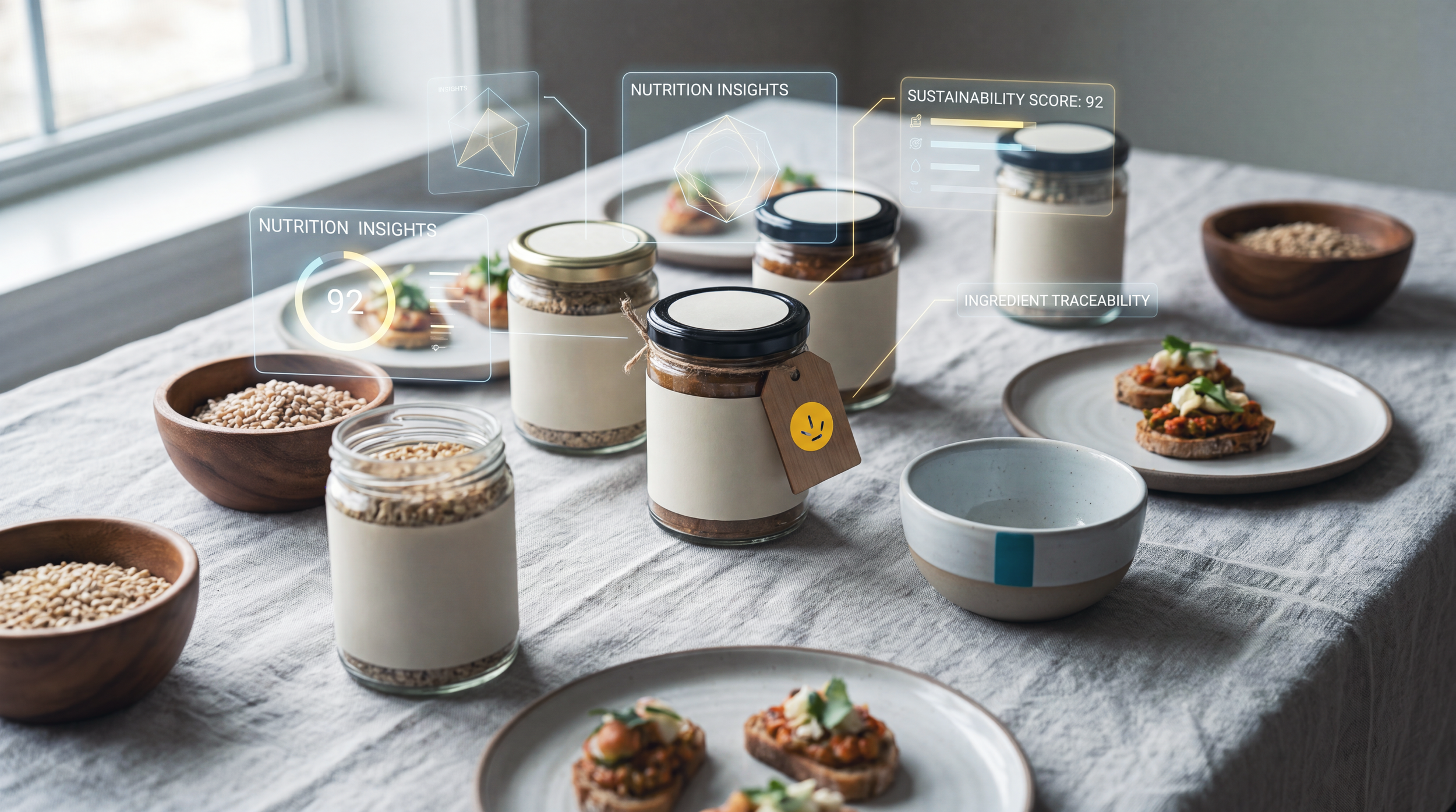
This is where AI actually delivers for clean-label and natural brands. The operating question: Can your AI tools make your supply chain, ingredients, and production methods visible to the end consumer?
Use cases that work:
- Ingredient traceability systems powered by AI-enhanced data capture
- Automated compliance monitoring across suppliers
- Smart labeling systems that surface the real story, not the marketing story
Layer 2: Consumer Intelligence
Only after transparency is in place does consumer data become an asset instead of a liability. This layer asks: What do your actual consumers care about? Not what marketing says they care about. What does the data show?
Use cases that work:
- Sentiment analysis trained on clean-label consumers (not general internet sentiment)
- Product feedback loops that identify improvement opportunities
- Community conversation mapping to understand trust drivers
Layer 3: Efficiency and Scale
Last comes the efficiency layer. By the time you're here, you've already protected the narrative and understood the consumer. Now optimize.
Use cases that work:
- Production scheduling optimization
- Inventory management across channels
- Automated quality control systems
Most brands start at Layer 3. They fail because they've optimized the wrong things.
Where AI Actually Wins in F&B
The pattern holds across the best performers in the clean-label space. AI strategy for food and beverage brands succeeds when it focuses on three areas where the technology creates genuine business value and strengthens consumer trust.
Supply Chain Visibility
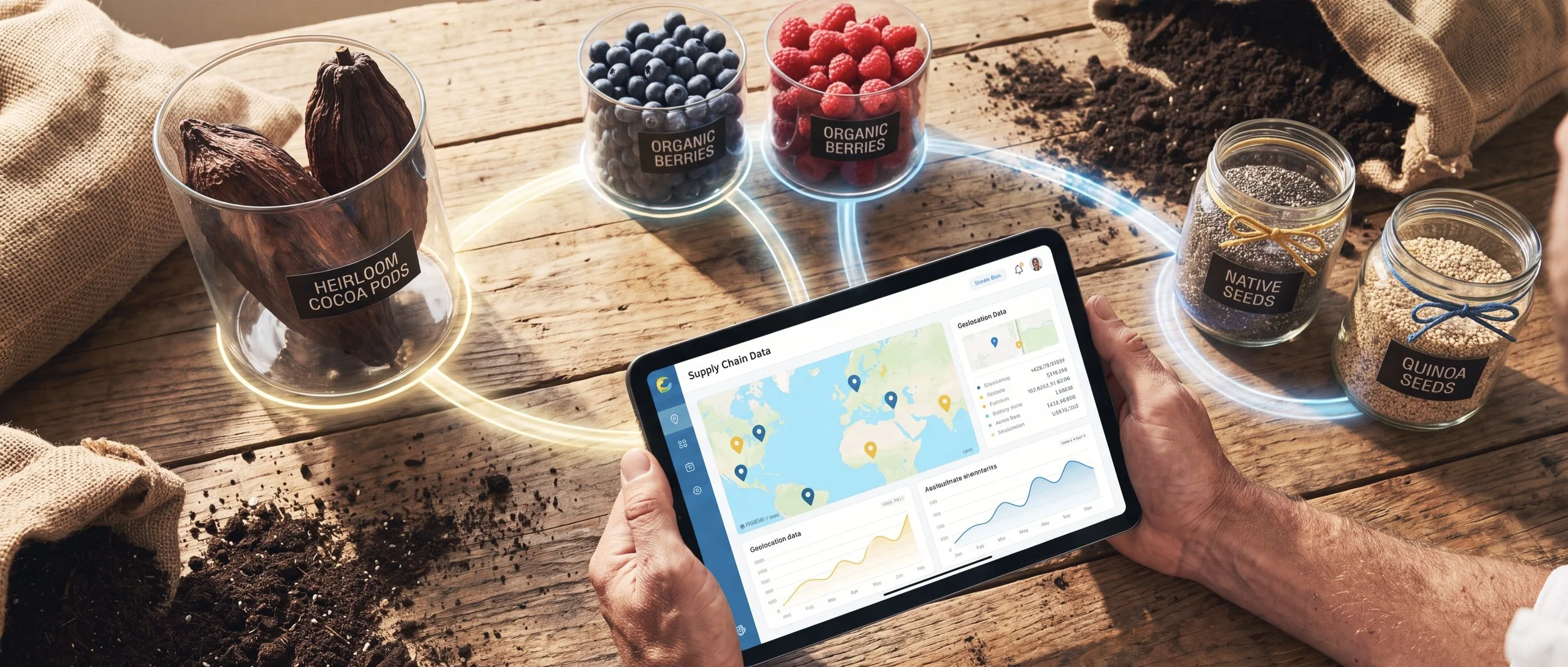
A natural or organic brand that can show, in real time, to any consumer exactly where each ingredient came from and how it was processed has a structural competitive advantage. AI makes this economical at scale. The brand that does this first owns the narrative. Competitors spend the next three years explaining why they don't.
Regulatory Compliance
Food safety and labeling regulations are glacial, Byzantine, and consequential. An AI system that monitors regulatory changes, flags exposure, and automates compliance documentation removes a category of business risk. It doesn't sound sexy. It is critical. And it saves money.
Authentic Storytelling
This is the contrarian piece. AI should not be writing your brand story. AI should be helping you tell your real story at scale. If your ingredient has a region of origin, an AI system can help you tell that story to millions of consumers without diluting it. If your founder has a thesis about food, AI can amplify that conviction across channels while keeping it authentic.
A Concrete Example: How One Emerging Brand Got It Right
A mid-market organic snack brand (let's call it Brand X) had hit a plateau. They were good at product, strong with early adopters, but couldn't scale beyond $15M revenue without losing the narrative. They were getting requests they couldn't answer: Where exactly is the cocoa from? Which farm in Ecuador? Who owns that farm? What's their labor story?
They implemented an AI-powered supply chain visibility system. Real parts:
- All suppliers connected to a shared database
- AI agents automatically updated ingredient locations, certifications, and processing methods
- A consumer-facing layer that let buyers scan the QR code and see the story
- Internal dashboards flagging compliance gaps
Cost: approximately $180K in year one. Result: 40 percent increase in repeat purchases among consumers who engaged with the supply chain story. More importantly, they could now pitch retail buyers ("Every product comes with a verified supply chain") and close deals they couldn't before.
That's AI strategy for food and beverage brands done right. Not marketing theater. Business strategy.
Common Mistakes That Kill AI Adoption
1. Starting with marketing automation instead of consumer trust
2. Building AI systems around internal data instead of supply chain data
3. Using AI to replace storytelling instead of amplify it
4. Implementing before defining what "trust" means for your specific consumer base
FAQ: What Executives Ask About AI Strategy for Food and Beverage Brands
Q: How much does it cost to implement a real AI strategy for food and beverage brands?
A: Depends on baseline. A supply chain visibility system for a mid-market brand (10 to 30 SKUs, 20 to 50 active suppliers) typically runs $150K to $300K in year one, plus ongoing licensing and support. Budget for integration work, not just software. A lot of brands underestimate the data cleanup phase.
Q: Can smaller brands afford AI strategy for food and beverage brands?
A: Yes, and they often move faster. The limiting factor is usually API integrations and data discipline, not capital. A $3M to $5M revenue brand can start with a focused supply chain layer for under $100K. Larger brands struggle because they have legacy systems. Your advantage: you can build clean.
Q: How do I know if AI strategy for food and beverage brands is working?
A: Measure trust, not automation. Track: repeat purchase rate among aware consumers, retail buyer questions answered without manual work, time-to-market for new products, compliance violations caught by the system. If your AI system increases transparency without increasing consumer confusion, it's working.
Q: Which AI tools are best for clean-label brands specifically?
A: The tools are less important than the thinking. Generic AI platforms (OpenAI, Anthropic, etc.) are commodities. What matters is how you structure your data and what questions you teach the system to answer. Most vendors will oversell their vertical expertise. Expect to customize.
Conclusion: The Real Competitive Advantage
AI strategy for food and beverage brands is not about being more efficient. It's about building consumer trust at a scale that's economically impossible without the technology. The brands that win in the next three years will be the ones that treat AI as a transparency tool, not a labor replacement.
Your consumer already knows when you're using AI to cut corners. What they want is AI that helps you be honest.
I help outdoor lifestyle and clean-label food brands build real organic communities through strategy, content, and brand storytelling. If your content feels busy but ineffective, that is the problem I fix. Follow me @gallucciNET on social media.

adage, emmy, telly & webby award-winning digital marketing consultant for purpose-driven food & beverage brands.