AI Strategy for Outdoor Brands That Actually Drive Revenue

The average outdoor brand is burning AI cycles on the wrong problems.
They're deploying chatbots to answer "what's your return policy" when they should be building AI systems that predict which customers will become lifetime enthusiasts. They're optimizing warehouse throughput when they should be engineering discovery experiences that turn casual buyers into community members.
An AI strategy for outdoor brands isn't about matching ChatGPT's feature set. It's about building unfair advantages at the moments that matter most to your customer: research, decision, advocacy, and repeat.
I've worked with forty outdoor and lifestyle brands in the last two years. The ones pulling away from the pack aren't the ones with the shiniest AI tools. They're the ones who've weaponized AI to understand and shape customer behavior at scale. The gap is widening, and it's not technical. It's strategic.
The Trap: AI as Efficiency vs. AI as Moat
Here's what I see most outdoor brands doing wrong.
They adopt AI to reduce friction internally: content generation, customer service automation, demand forecasting. All valuable. But they treat AI as a cost center, not a competitive weapon.
The brands that are actually winning use AI as a moat. They build systems that:
1. Predict lifetime value and personalize the path to purchase in real time
2. Identify micro-communities (a fifteen-person segment obsessed with winter camping, not "winter customers")
3. Route marketing spend to audiences that algorithmically look like their best customers
4. Test messaging at scale before committing creative resources
This is where an AI strategy for outdoor brands separates the category leaders from the middle pack.
The Outdoor AI Maturity Model
Here's a framework I use with our partners. It maps where most outdoor brands are stuck and where the real differentiation happens.
Level 1: Tool Use (60% of outdoor brands are here)
- ChatGPT for social captions, email templates, product descriptions
- Basic email segmentation
- Generative recommendations (product pages, carts)
- Result: 5-15% efficiency gain. Everyone else does this too.
Level 2: Behavioral Prediction (25% of outdoor brands are here)
- Tracking content consumption patterns to model purchase intent
- Predicting churn before it happens (identifying customers about to lapse)
- Recommending next purchase based on usage data, not just past purchases
- Result: 20-40% lift in conversion rates, 15-25% reduction in acquisition costs
Level 3: Community Mining & Advocacy Loops (10% of outdoor brands are here)
- Identifying high-intent micro-segments algorithmically (not by demographic guessing)
- Building feedback loops that turn customers into product advisors
- Using AI to map social proof to purchase moments
- Result: 30-50% reduction in CAC, 3-5x higher lifetime value
Level 4: Experience Co-Design (fewer than 5% are here)
- AI-driven personalization of the entire customer journey, not just email
- Real-time experimentation (multivariate testing at the individual level)
- Predictive content delivery (showing customers what they need before they know they need it)
- Result: 40-70% higher AOV, 2-3x repeat rate
Most outdoor brands are competitive on product, pricing, and brand. The margin is won or lost on experience. An AI strategy for outdoor brands that ignores this is dead on arrival.
Concrete Example: The Patagonia Playbook
Patagonia doesn't sell gear. They sell community membership. Their AI strategy reflects that.
Behind the scenes, they're using AI to:
- Map customer purchases to environmental causes (a skier who buys all-terrain boots is likely to care about water conservation)
- Route donated proceeds back to customers' interests (not random nonprofits)
- Build feedback loops in their community apps that surface gear reviews from people with similar usage patterns
- Predict which customers are most likely to attend regional events
This is an AI strategy for outdoor brands that treats customer data as the raw material for deeper relationships, not just more efficient targeting. The result: Patagonia's customers spend 3-5x more than industry average lifetime value, and they do it with lower ad spend. That's not luck. That's strategy.
The Contrarian Take: Your Moat Isn't the AI. It's the Data.
Everyone will have access to GPT-5 or Claude 10 or whatever's next. The moat isn't in the tool.
The moat is in the data architecture underneath it. If you're organizing customer data by demographic segment (age, income, region), you're playing a zero-sum game. If you're organizing it by behavior, intent, and community, you've got an edge that competitors can't replicate quickly.
An AI strategy for outdoor brands that doesn't start with data infrastructure is cosmetic. It's window dressing.
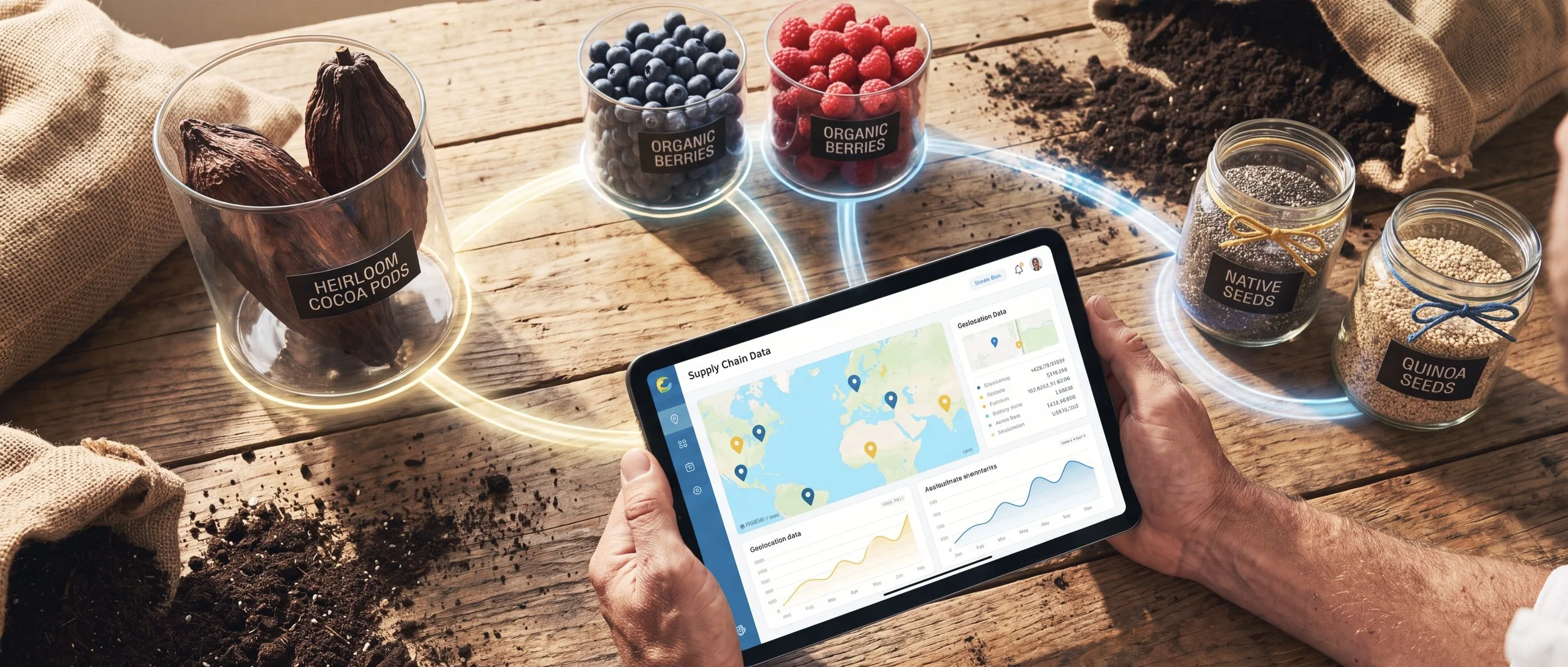
The outdoor brands winning this year are the ones who spent last year organizing their customer data by behavioral signals, not demographic buckets. They invested in clean data pipelines, first-party data collection (email lists, app data, community forums), and customer tagging based on actual usage and interest.
Now they're reaping the reward: AI that actually works because it's trained on signals that predict behavior.
How to Build It: The Three-Step Play
Step 1: Audit Your Data
Map what you know about each customer. Not demographics. Behaviors: which content they engaged with, which products they bought, which reviews they read, when they abandoned carts, whether they follow you on social.
Most outdoor brands discover they have less actionable data than they thought.
Step 2: Build Feedback Loops
Set up systems that let customers tell you more about what matters to them. This doesn't mean a survey. It means reviews tied to usage patterns, community questions, event signups, content shares.
The goal: let AI learn what drives the 1% of customers who spend like the top 5%.
Step 3: Start Small and Prove the Wedge
Pick one customer segment (example: expedition-focused customers, people who climb mountains). Use AI to model what predicts their lifetime value. Test a hypothesis (hypothesis: expedition customers who own at least two tent types and have attended two events are 5x more likely to spend >$2000 in year two).
If it works, expand. If not, iterate. An AI strategy for outdoor brands isn't a marathon. It's a series of small bets that add up.
FAQ: What Outdoor Brand Leaders Are Actually Asking
Q: Should we build custom AI tools or use platforms like HubSpot/Klaviyo?
A: Start with platforms. Custom tools are how you scale differentiation. Platforms are where you learn the game. The outdoor brands building AI moats usually ran campaigns on platforms for twelve months first, figured out what questions platforms couldn't answer, then built custom infrastructure.
Q: How do we get buy-in from the executive team to invest in AI infrastructure?
A: Frame it as customer lifetime value multiplication, not efficiency. A 20% reduction in CAC is nice. A 3x increase in LTV is a strategic priority. Show the delta between your LTV and Patagonia's. That's the funding source.
Q: What's the risk of over-personalizing and creeping out customers?
A: Real risk. Mitigate it by being transparent. Let customers see why they're getting a recommendation (because you bought a tent and asked about waterproofing). Tie AI recommendations to community and expertise, not just purchase history.
Q: How long before an AI strategy for outdoor brands pays off?
A: 6-9 months before you see measurable LTV lift. 12 months before it's defensible (your competitors will start catching up by month 8). The window for differentiation is closing. If you're not starting now, you're already behind.
Conclusion: AI Strategy for Outdoor Brands Is a Behavioral Bet
The outdoor industry is at an inflection point. Margin compression is coming. Product commoditization is inevitable. The last moat is customer intimacy.
An AI strategy for outdoor brands that builds this intimacy wins. An AI strategy that chases efficiency doesn't survive.
Start with your data. Organize it by behavior and community, not demographics. Build small experiments that prove a hypothesis. Iterate. Scale what works.
The brands that move now will look like Patagonia in three years. The ones that wait will look like Costco's seasonal section by 2029. Undifferentiated. High-volume. Thin margin.
This is your inflection point. Time to choose which one you'll be.
I help outdoor lifestyle and clean-label food brands build real organic communities through strategy, content, and brand storytelling. If your content feels busy but ineffective, that is the problem I fix. Follow me @gallucciNET on social media.

adage, emmy, telly & webby award-winning digital marketing consultant for purpose-driven food & beverage brands.