AI Strategy for Clean-Label Food and Beverage Brands: The Authenticity Advantage
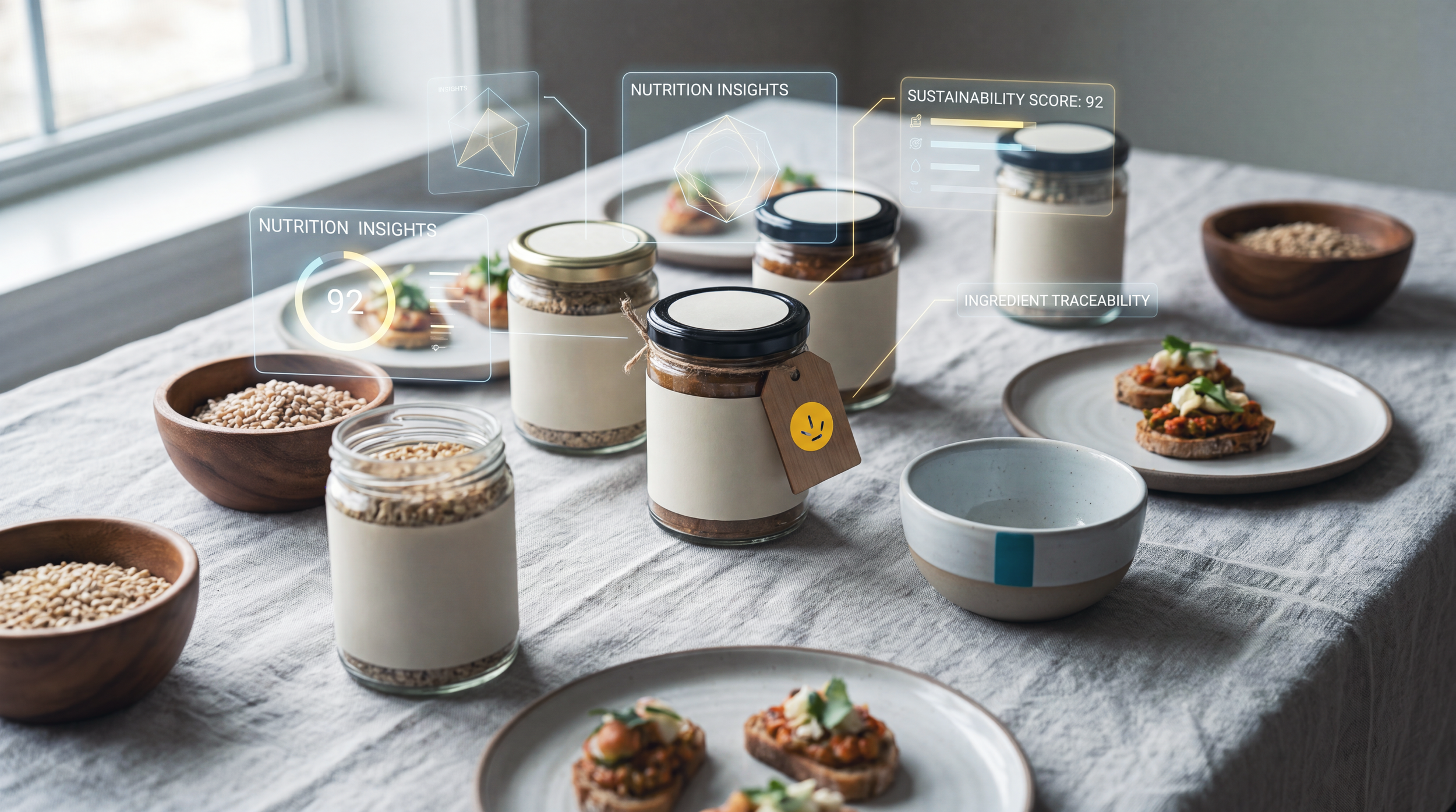
Your clean-label brand sells trust. Every ingredient story, every farm partnership, every certification exists because your customers believe you're different. Then you watch competitors deploy AI to scale messaging, personalize at volume, and own search results. And you freeze.
This tension is real. But the premise is wrong.
An AI strategy for clean-label food and beverage brands isn't about replacing authenticity. It's about scaling it without corrupting it. The brands winning this space right now understand that AI is a multiplier, not a shortcut. They're using it to uncover genuine customer insights, automate the repetitive work that drowns marketing teams, and double down on the stories that actually move margins.
The ones losing are using AI to sound more authentic. Spoiler: you can't AI your way to trust. They're churning generic content, diluting their positioning, and wondering why engagement tanks even as spend climbs.
This post breaks down a practical framework for clean-label brands ready to compete without compromising.
The Clean Signal Framework: Three Layers of AI Deployment
An AI strategy for clean-label food and beverage brands only works if it passes one test: does it reinforce or dilute your core narrative?
We call this the Clean Signal Framework, and it organizes your AI bets into three layers.
Layer 1: Data Intelligence (The Foundation)
Before you generate anything, you need to know what's actually moving your customers.
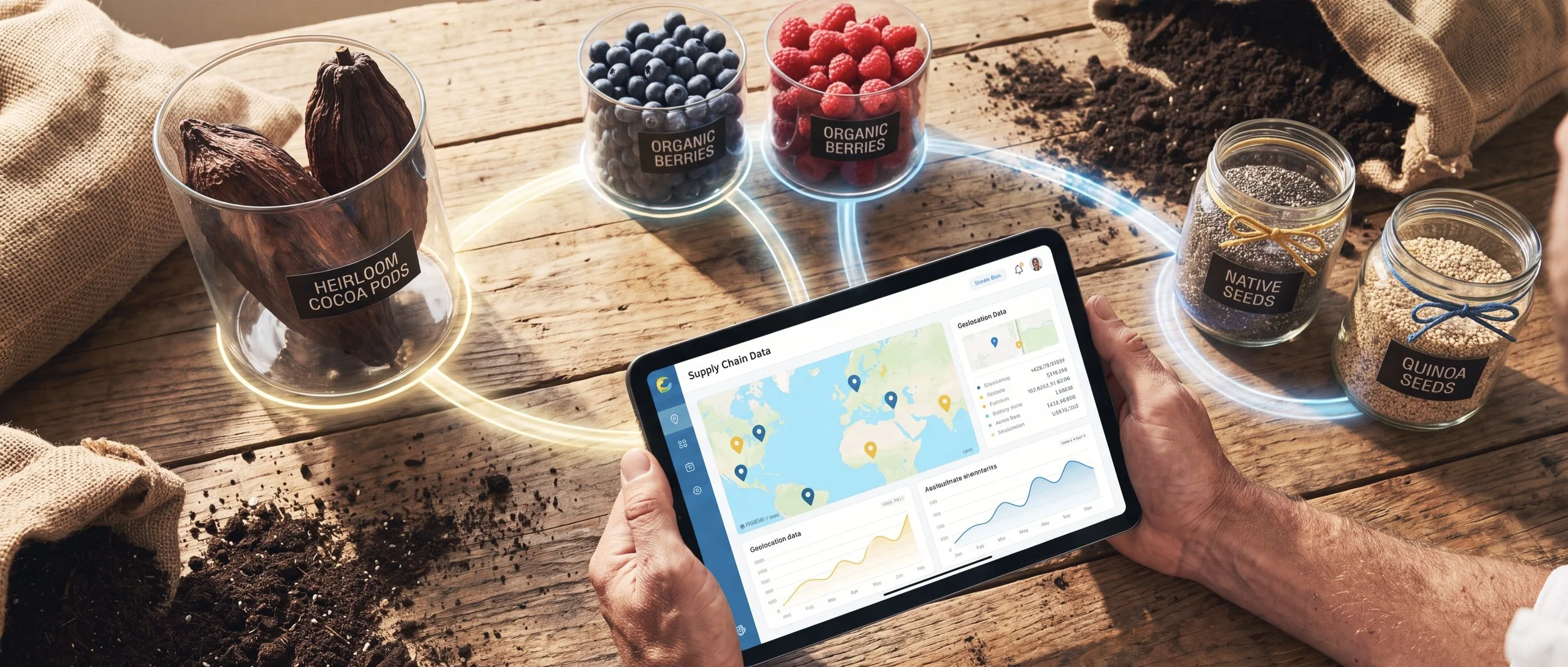
Clean-label audiences don't think like general consumers. They ask different questions. They research deeper. They abandon carts when claims don't hold up. An AI strategy for clean-label food and beverage brands starts by mining this behavior.
Action items:
- Use AI to analyze customer service transcripts, reviews, and forum mentions. Not to automate responses, but to find the questions your FAQ doesn't answer.
- Deploy semantic search across your data to surface the 5-7 core purchase drivers. Hint: it's rarely price.
- Build a competitive listening model that watches how other clean-label players position and where they're vulnerable.
Example: A CPG natural protein brand did this. AI analysis of 18 months of customer data revealed that buyers cared far less about protein per gram than about digestibility and recovery speed. The company had been marketing on amino acid completeness. They pivoted messaging overnight. Revenue per customer climbed 23% in Q2.
This layer takes 4-6 weeks and costs $15K-$30K. It's not sexy. But it's load-bearing.
Layer 2: Content Multiplication (The Engine)
Once you know what resonates, you amplify it without diluting it.
This is where most brands go wrong. They hand AI a category description and ask it to "create 20 social posts." You get garbage. Generic, hollow, off-brand garbage that undercuts your positioning and trains your audience to ignore you.
Instead: hand AI your best-performing content (the pieces that drove revenue, engagement, media pickup) and ask it to multiply the insight, not the prose.
An AI strategy for clean-label food and beverage brands means using AI to:
- Extract the core insight from your top-quartile content, then reframe it for different formats and platforms. One idea, five executions.
- Generate product-specific Q&A that mirrors how actual customers search and ask. Think long-tail keywords your competitors miss.
- Scale customer testimony collection and synthesis. Pay 20 customers for voice clips, use AI to transcribe and cluster insights, then hand copywriters the themes.
- Build competitive response playbooks. When a competitor makes a claim, have AI flag it, surface your data, and draft a rebuttal. You still approve and ship.
This phase is where you see ROI. Expect 40-60% reduction in content production time while quality climbs.
Layer 3: Customer Experience Personalization (The Moat)
Finally, once you have data and content, you personalize without getting creepy.
Clean-label buyers are not Amazon. They don't want algorithmic hand-holding. They want to feel seen and respected. An AI strategy for clean-label food and beverage brands here means:
- Email journeys built on purchase behavior and preference signals, not demographic guesses.
- Personalized landing pages for different buyer personas (health-conscious parent vs. athlete vs. sustainability fanatic), with proof points that matter to each.
- Chat interfaces trained on your brand positioning (not ChatGPT-default) that answer product questions accurately and direct traffic to conversion paths.
The risk: It feels corporate. You'll iterate. But done right, it feels like a brand that knows you.
The Contrarian Take: Your Competitors Are Poisoning AI for Your Category
Here's what's happening in the clean-label space right now.
Bigger commodity players and drop-shipping aggregators are flooding AI-generated content into the market. Listicles, "studies," fake expert Q&As. Search is now polluted with machine-generated noise. Google has noticed. It's tightening quality thresholds.
Brands with human-written, insight-backed, opinionated content are consolidating search authority. Brands publishing AI fluff are watching organic traffic plummet.
Your moat isn't that you can generate content faster. It's that you don't sound like AI. The brands winning an AI strategy for clean-label food and beverage brands are the ones using AI as leverage for human work, not as a substitute for it.
FAQ: What Execs Actually Ask
Q: Can we use AI to write product descriptions and packaging claims?
A: Not alone. AI can draft. A regulatory expert and your marketing team need to review every sentence. False claims are legal and brand risk. Use AI for speed, not judgment.
Q: How do we know our AI strategy is actually working?
A: Track incrementally. Measure Layer 1 by improved customer insight. Layer 2 by time savings and engagement lift. Layer 3 by conversion improvement and retention. If any layer doesn't move the needle in 90 days, it's either misaligned or misexecuted.
Q: Isn't AI going to commoditize our brand story?
A: Only if you let it. Commoditization happens when you sound like everyone else. Your defense isn't refusing AI. It's insisting on using AI to intensify what makes you different, not flatten it.
Q: Where do we start if we have no data infrastructure?
A: Start with Layer 1. Invest in tools that aggregate and analyze your existing customer feedback (Forethought, Mamble, custom dashboards). You don't need perfect infrastructure. You need signal.
Conclusion: AI Strategy for Clean-Label Food and Beverage Brands Is About Leverage, Not Shortcuts
The strongest brands in clean-label space are moving. They're using AI to increase output without compromising voice. They're finding customer signals that their smaller competitors miss. They're automating the grunt work so marketing teams can actually think.
And they're not losing sleep over commoditization because they're doubling down on specificity and narrative strength, not betting everything on automation.
Your AI strategy for clean-label food and beverage brands doesn't have to choose between authenticity and scale. It has to choose between scaling authenticity or scaling noise. The market is already making that choice clear. The brands still investing in human insights, then using AI to amplify them, are the ones pulling away.
The rest are blending into the commodity category that killed their business model to begin with.

adage, emmy, telly & webby award-winning digital marketing consultant for purpose-driven food & beverage brands.