Girl on Girl Review: Sophie Gilbert Built a 352-Page Mood Board
The one-star reviews of Girl on Girl got the book right. They're just wrong about what they found.
Sophie Gilbert's book sits at 3.83 on Goodreads across 22,164 ratings, with 4,256 written reviews behind it. Odd number for this pedigree. Atlantic critic, Pulitzer finalist, Goodreads Choice nominee for nonfiction in 2025. Books that arrive with that much institutional cover usually settle around 4.2 and stay put. This one is carrying 211 one-star ratings and better than a thousand two-stars underneath it like a bruise that hasn't finished coming up.
A split like that means readers are fighting about something real. So I read the fight instead of the jacket.
Both sides are describing the same object correctly. Only one side knows what they're looking at.
The people who loved it keep landing on accumulation. One Goodreads reader wrote that the book forces a reckoning because "the evidence is relentless." Another said it "made me feel like I've been manipulated my entire life," and gave it five stars for the privilege. The praise is almost never about a specific insight. It's about volume. The sheer weight of thirty years of material stacked in one place.
The people who hated it are complaining about the exact same volume. One reader called it "basically a listicle of Bad Stuff that's happened to women." Another wrote that it read like "a laundry list of pop culture events, personalities, and movies/music." A third gave up entirely and said "it's just a great big nothing-burger." A fourth, who made it to the end on audio, complained that "so much of it was just a play-by-play description of TV shows and movies."
Those readers aren't confused. They read the book accurately. Girl on Girl really is a catalogue. Gilbert lines up American Pie and heroin chic and the Spice Girls and Terry Richardson and the girlboss and reality television and the tabloid demolition of Britney and Paris and Lindsay, in roughly chronological order, and doesn't spend much time telling you what to conclude. The chapters don't build a proof. They pile up.
I part ways with the critics here, and it isn't a literary opinion. It's a professional one.
I build mood boards for a living.
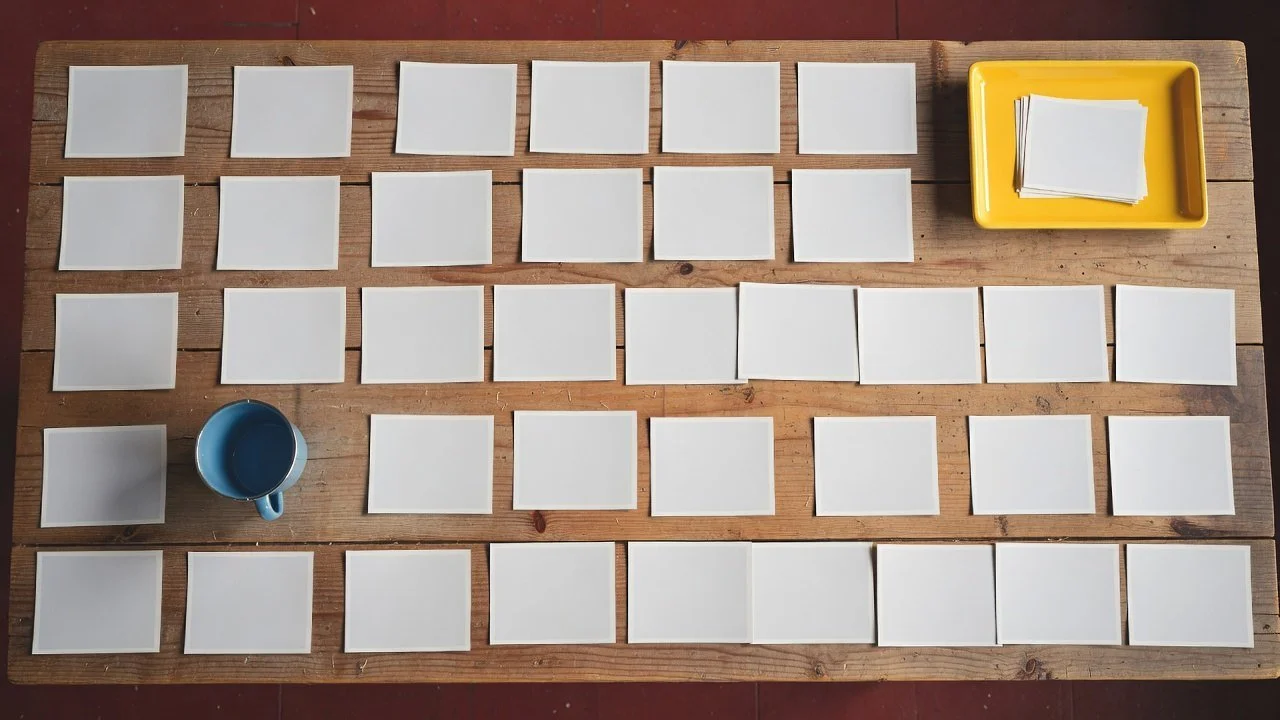
For about twenty years I've made images and image strategy for food, beverage, CPG, and lifestyle brands. A real share of that job isn't photography and isn't copy. It's assembling reference decks. Last spring I put together a visual direction for a beverage client. Forty images, no captions, no argument, no thesis slide. Condensation on glass, a particular quality of late afternoon light, hands, a certain kind of tile. I didn't write a single sentence explaining what any of it meant. The client approved an entire year of visual direction in about nine minutes, and nobody in the room raised an objection, because there was nothing in the deck to object to.
That's the whole trick, and every art director reading this already knows it. A catalogue doesn't hand you a claim you can refuse. It hands you a world you're already standing inside. By the time you notice you've agreed to something, you agreed forty images ago.
Sophie Gilbert wrote a 352-page mood board of American womanhood between roughly 1991 and now. The readers calling that a defect are describing the mechanism and filing it as a bug.
The reader who got closest without quite saying it wrote that the book "doesn't really cover new ground or unearth new insights, but it does an excellent job at assembling decades' worth of cultural history." That isn't faint praise. Assembly is the argument. It's the most persuasive document type in my entire industry, and we use it because it works on people who'd argue with a paragraph.
The critics do land one clean punch, and I'm not going to pretend otherwise.
The title is bait. Multiple readers said so independently, which is how you know it isn't a fluke of taste. One wrote flatly that "the subtitle is misleading here." Another was more specific and, I think, correct. What Gilbert actually delivered, that reader wrote, is "a pop culture history of the aughts through the lens of feminism and its backlashes." It's a book about what was done to women. It's only glancingly a book about women turning on each other, which is what the cover promises in fairly large type.
There's a joke buried in that, and Gilbert didn't write it. A book documenting how packaging shapes the thing inside got packaged with a promise it doesn't keep. Somebody in a marketing meeting looked at a careful cultural history and decided it needed a hook with more friction in it. That decision worked. It sold books. It also generated a few hundred one-star reviews from readers who felt handled. Whoever named this book ran the same play the book spends 352 pages prosecuting, and I'd love to have been in that room.
The other real complaint is the middle. Several readers flagged that long stretches describe sexual violence and degradation in graphic detail, and at least one felt the detail was doing shock work rather than analytical work. That's a fair reading and I'm not going to talk anyone out of it. It's also, mechanically, the same method as everything else in the book, just aimed at material that makes accumulation feel closer to assault than to argument. Whether that's a failure of judgment or the honest cost of the technique depends on the reader, and the ratings distribution suggests readers split about the way you'd expect.
The book is genuinely soft in a couple of places. One reader wrote that it "doesn't push very hard against anything," and wanted more intersectional work than a subject pool this white was ever going to yield. Another noted that "the thesis didn't really deepen or evolve but the points were clear and powerful." Both true. The final chapters, the ones covering the most recent ground, thin out noticeably, which is what happens when you write history that hasn't finished happening yet.
None of that touched the thing that actually rearranged my week.
One reader kept notes while reading and relayed a claim of Gilbert's that I haven't been able to put down. Google Images was built in response to demand for photographs of one woman in one dress at one awards show. YouTube was built in response to demand for video of one incident at one Super Bowl halftime show. As that reader put it, "our digital landscape has been fundamentally shaped by the cultural consumption of women's bodies."
Read that as a practitioner, not a citizen. Every content strategy I've ever built, every asset library, every reverse image search I've run to check whether a client's competitor licensed the same stock photo, runs on infrastructure whose founding use case was looking at a woman without her participation. That isn't a cultural observation. That's a fact about my tooling. Another reader summarized the book's economics more bluntly than I would have: "exploiting women's insecurities and reputations become the quickest way to sell."
That's the sentence I'd put on the wall of every brand team I work with, and not for moral credit. For accuracy. If insecurity is the fastest lever in the business, then most of the industry's growth playbook is just that lever with better fonts on it. I've declined that brief and I've also, earlier in my career, absolutely shot it.
So who is this book actually for.
Not for the reader who wants a fresh thesis, because there isn't one, and the readers who said so are telling the truth. One wrote that most of it "feels like going over a well trodden path," and if you've spent any time in media criticism, you've walked that path.
It's for brand people. I'd hand this to a marketing team the way I'd hand them a competitive teardown. Here are thirty years of persuasion campaigns, assembled by someone with no product to move, arranged so you can see the pattern your own decks are participating in. Read as cultural criticism it is competent and familiar. Read as an archive of what the image business actually did, and what it cost, it is close to indispensable.
The reader who said the book made her feel manipulated her entire life gave it five stars.
That isn't a complaint. That's a review of the technique, from someone who felt it work.
Girl on Girl: How Pop Culture Turned a Generation of Women Against Themselves, by Sophie Gilbert. Penguin Press, April 29, 2025. 352 pages. 3.83 on Goodreads across 22,164 ratings. Review excerpts above are from Goodreads readers, quoted for commentary.

adage, emmy, telly & webby award-winning digital marketing consultant for purpose-driven food & beverage brands.