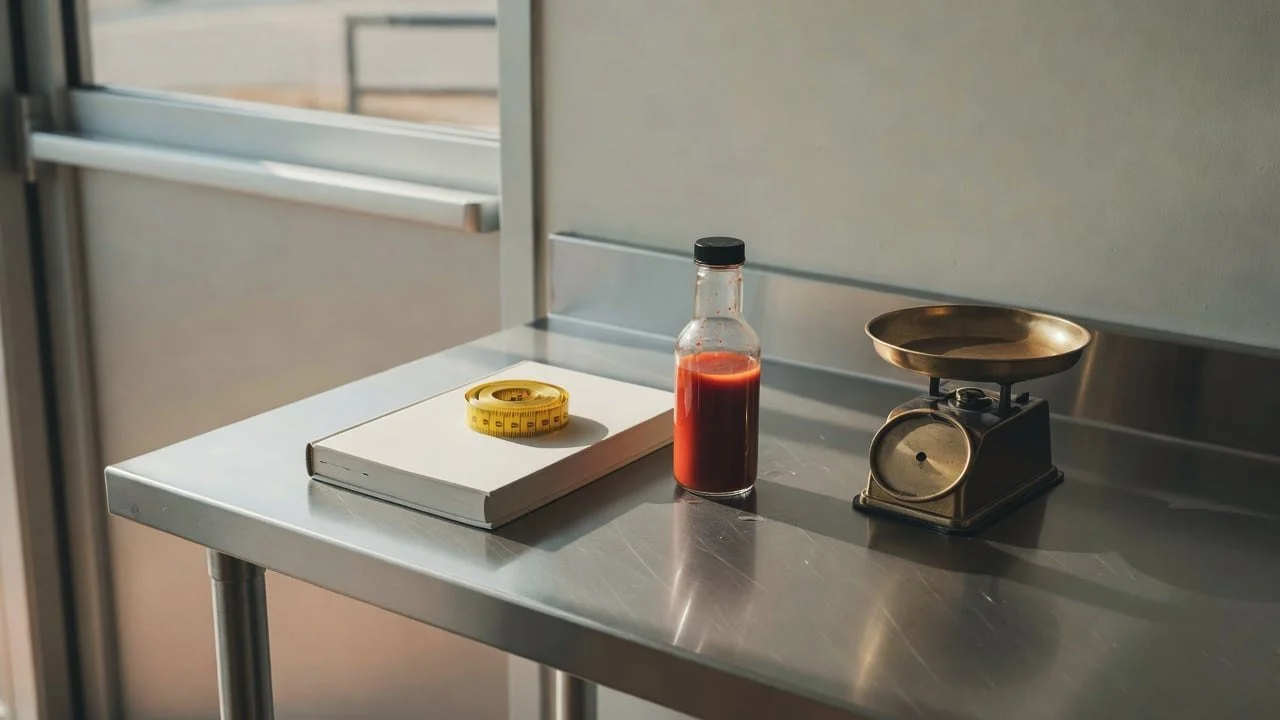
The Food Book That Describes My Job, and the Readers Who Hated It For Saying So
Food Intelligence is the first nutrition book I've read that actually describes what I do for a living. A good share of the people who disliked it disliked it for exactly that reason.
Kevin Hall and Julia Belluz spend 368 pages arguing that the food environment is doing most of the work your willpower keeps getting blamed for. I help build that environment. I light it, style it, shoot it, and write the copy that runs underneath it for food, beverage, and CPG clients. When a book says the shelf is the problem, I don't get to stand there like a bystander.
The book came out September 23, 2025. As of this week it sits at 3.87 on Goodreads across 1,004 ratings and 115 written reviews. That average is the part worth reading twice. A 3.87 on a thousand ratings is an argument with the referee still on the field.
The fight is not about whether the science is right
Read enough of the written reviews and you notice something. Hardly anybody claims Hall measured wrong. Hall is the guy who put Biggest Loser contestants through metabolic testing and ran the controlled feeding trial where people eating ultra-processed food put away roughly 500 more calories a day than the same folks eating unprocessed meals. Even the readers handing out two stars concede the data. One Goodreads reader who works in nutrition and dietetics opens with "I was really disappointed by this book" and then spends four paragraphs arguing about protein recommendations and the EAT-Lancet footnote, which is a very specific kind of disappointment. That's a professional quarrel.
What people are fighting about is what kind of book they wanted. One reader put it flatly: "I was expecting more hard science than I got and got way more policy manifesto than I wanted." Same reader, later, doing an impression of the book's bedside manner: "it's not you, sweetie, it's your food climate." Another gave up on the tone entirely and wrote that it "felt much like a science class textbook, not at all what I was expecting or looking for." A third landed a line I wish I'd written: "Too boring to be generalized nonfiction, too casual to be a textbook."
There it is. People came for a diet, and the book refuses to hand them one.
The uncomfortable part, which is that I am the food environment
I've spent shoot days making a product look like it could not possibly be resisted, because that is the assignment. A stylist's kit is a small tackle box of persuasion. Glycerin so the pour beads correctly. A steamer just off frame. Cotton balls in the mug so the coffee reads hot. In August out here the crew keeps the beverage in an ice chest in the truck until the last second, because a bottle sweating in Marfa heat photographs beautifully for about ninety seconds and then it just looks like a warm bottle. In that parking lot the crew is chasing the hero shot, and the hero shot exists to make the thing look worth reaching for.
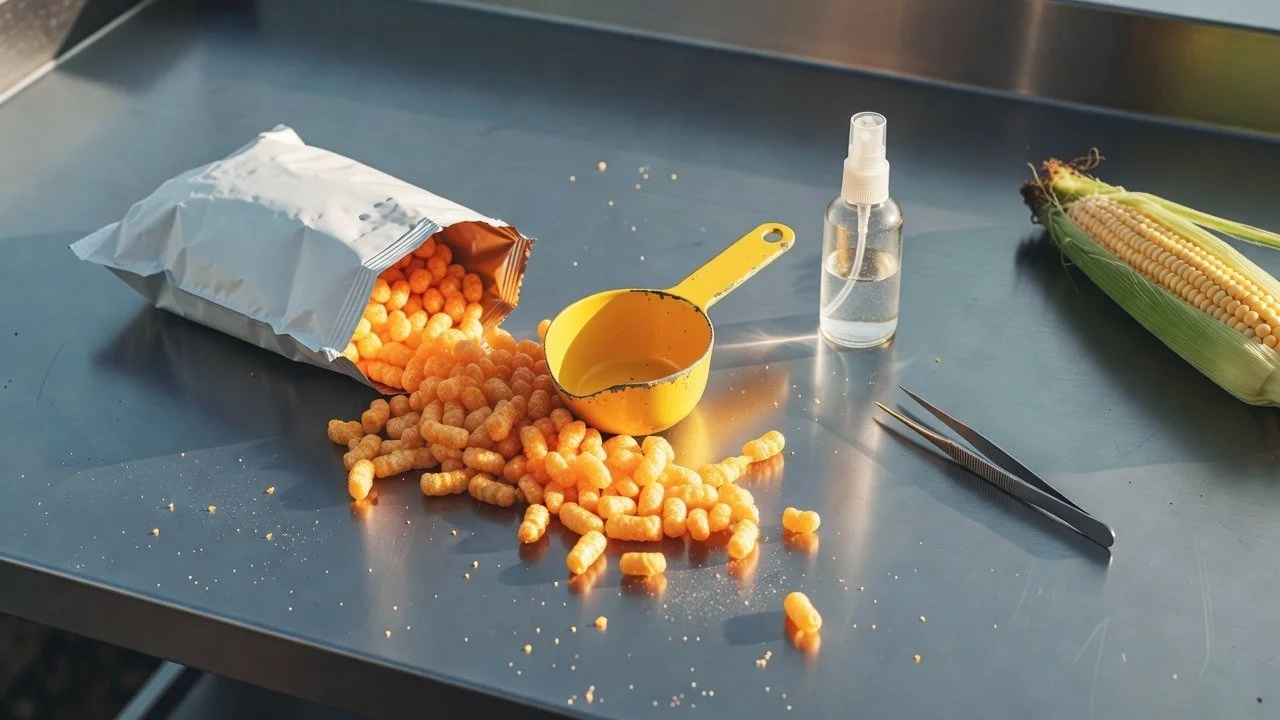
So when Hall and Belluz argue that the shelf is engineered, I read that the way a locksmith reads a book about burglary. One reader summarizing the book's core move asked the question that ends the willpower conversation: "did we all collectively lose our willpower at the same time?" Something else changed. Some of what changed is food science. A meaningful slice of it is my end of the business, and the book is lighter on that than it should be. The packaging, the shelf placement, the paid creator posts, the four hundred dollars of styling that make an extruded corn product look like a farmers market barely show up.
That gap is where I'd push back on Hall and Belluz. Hyperpalatability is chemistry with a marketing budget behind it, and the budget is the reason the chemistry got funded.
Where the critics land a real punch
The best negative review of this book comes from a reader who split their rating in two, five stars for the first half and one for the second. Their complaint about the last chapters sticks to the structure. Hall and Belluz spend the front of the book making the case against ultra-processed food and then, near the end, make room for meat alternatives and lab-grown protein. The reader's response: "Dude. You just spent the first part of the book telling me how bad UPFs are." A different reader, a nutrition professional who gave the book five stars, files the same objection more politely, noting the authors gloss over the fact that these new products will "almost inevitably have the same characteristics" that made the old ones a problem.
They are both right, and from where I sit the problem is worse than either of them says, because I know what my industry does with an opening like that. Reformulation is a marketing event. It has been a marketing event my whole career. Change the oil, drop the dye, put a leaf on the front panel, brief the agency on clean label, and sell the same volume with a better story. If the science community hands us a category called Food 2.0 that is explicitly ultra-processed and explicitly virtuous, we will run that play until the wheels come off. One five-star reader tried to hold the line honestly, writing that "it's too easy to cast all UPFs as evil when the problem is primarily those with high calorie density and hyper palatability." That is the correct read of the evidence. It is also, unfortunately, a sentence I could put on a package tomorrow.
The RFK problem
Politics cost this book stars too. Hall and Belluz give some credit to the MAHA movement for pushing food environment questions into national politics, and a chunk of readers walked out over it. One quit outright: "I actually stopped reading this about two-thirds of the way through, when they started talking about what a great guy RFK Jr. was." Another put the objection in structural terms, arguing that you cannot celebrate someone who "directly defies legitimate research" inside a book whose whole argument rests on legitimate research.
Whether you think that is fair depends on your politics. As somebody who watches messages land for a living, I read this as a positioning failure with a predictable cost. The book's real enemy is the wellness industry and the packaged food lobby, both of which sell certainty. Spending three paragraphs on a figure who sells a competing certainty muddies the only thing the book has going for it, which is that it will not sell you anything.
The passage that stopped me
One reader posted a long block quote from page 147 and labeled it "What-The-What??!" It is the bit where Hall and Belluz trace hyperpalatable food back to who owned the brands. "Philip Morris purchased Kraft in 1988," they write, and go on through R.J. Reynolds and Del Monte and Nabisco, then land on the finding that tobacco-owned foods scored measurably higher on hyperpalatability than the rest of the industry, and that much of the industry followed.
I've shot for brands sitting inside portfolios two or three acquisitions deep. Nobody on set knows or particularly cares who the parent company was in 1988. That paragraph is the best argument in the book for why the individual willpower story is a con, and it is doing the work quietly, in the middle, where most readers who bailed at the textbook chapters never got to it.
What I am actually taking from it
The most persuasive review in the whole pile is the five-star reader who admitted the book followed them to the store: "since finishing this over the weekend I have been to the grocery store twice and found myself thinking much more deliberately about what I would normally be chucking into my basket on auto-pilot." Then, the detail that makes it real: "I bought a box of extra fiber Raisin Bran for christ's sake."
That is the whole review series in one line. Somebody standing in an aisle noticing the aisle for the first time.
For my end of it, I'll keep shooting food. I'm going to be a lot more careful the moment styling crosses into selling health, which is the thing Hall and Belluz spent 368 pages describing. A reader who works in the field gave it five stars and then predicted its fate in one sentence: "Sadly, this likely also means it will be underappreciated." That is probably right. Underappreciation is what you get when you withhold the promise in a business built on selling one.
Book: Food Intelligence: The Science of How Food Both Nourishes and Harms Us, by Julia Belluz and Kevin Hall PhD. Hardcover, 368 pages, published September 23, 2025. 3.87 average on 1,004 Goodreads ratings. Reader quotes are short excerpts from public Goodreads reviews, quoted for commentary and attributed to their authors as a group. Goodreads listing: https://www.goodreads.com/book/show/222925672-food-intelligence Amazon: https://www.amazon.com/Food-Intelligence-Science-Nourishes-Harms-ebook/dp/B0DRBK1BZS

adage, emmy, telly & webby award-winning digital marketing consultant for purpose-driven food & beverage brands.