Most 'Avocado Oil' Isn't. That's a Marketing Problem, Not a Chemistry One.
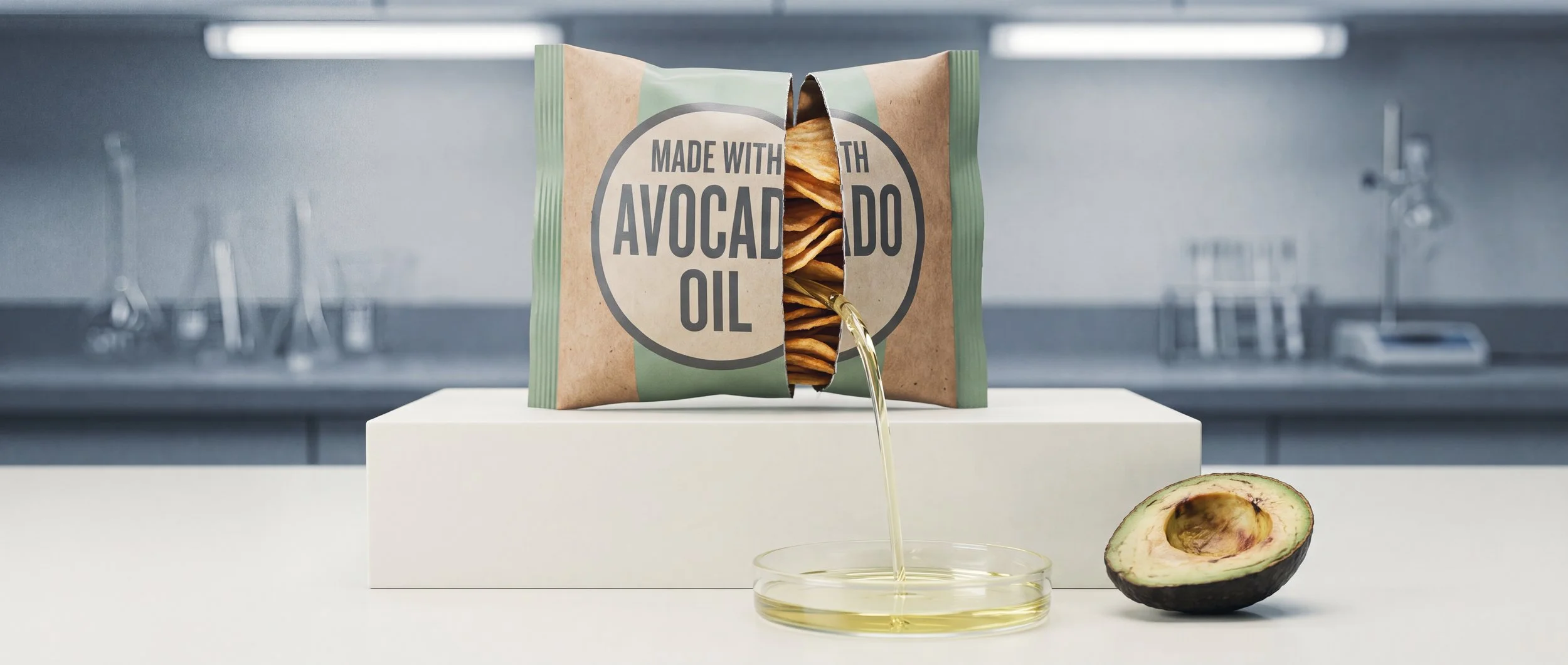
Most of the "made with avocado oil" chips, mayo, and dressing sitting on American shelves isn't what the label says it is. That's a problem for brand trust. It's a problem for pricing. And it's a problem for every brand that's built a "better-for-you" story on top of it.
What UC Davis Actually Found
Researchers at UC Davis tested 54 processed foods sold as made with avocado oil. Chips, salad dressings, mayonnaise. Two dozen brands, the mainstream stuff and the health-aisle stuff alike.
48 of the 54 came back adulterated. That's 89% flunking authenticity testing, because there was cheaper oil in there, canola or safflower, while the label said avocado.
Break it out by category and it gets uglier.
93% of the chips labeled made with avocado oil were adulterated. 71% of the mayonnaise failed purity testing, and for mayo made here in the U.S., that failure rate was 100%. Every last one. And 100% of the salad dressings labeled avocado oil-based failed too.
Here's the part that should sting. Same lab, same tests, 20 processed foods labeled as containing olive oil. One failed. One.
This isn't UC Davis's first pass at this either. Back in 2020 they found 82% of commercial bottled avocado oil was either rancid or cut with cheaper oil, and a later study turned up the same trouble in private-label oils. So the pattern's been sitting there in plain sight for years.
Why This Is a Marketing Problem, Not a Chemistry Problem
For about ten years now, marketers have sold avocado oil as the premium, cleaner answer to seed oils. Health-conscious shoppers were happy to pay up for it in chips, condiments, dressings. What UC Davis is showing is that "made with avocado oil" has turned into a front-of-pack marketing claim more than a reliable fact about what's actually in the package.
Three things worth chewing on here.
The premium is real. The value behind it might not be.
Avocado oil products routinely sell for several times what the conventional version costs. One analysis put avocado oil mayo at roughly $0.65 to $0.67 an ounce against about $0.10 an ounce for regular mayo. That's north of a 500% premium. If what's actually in the jar is mostly canola or safflower, you're charging that premium on a promise the product isn't keeping.
The health halo carries legal and reputational risk.
Plenty of brands, the old ones and the new ones, have built their whole position on avoiding seed oils, with avocado oil right there on the front of the package and running all through the advertising. The study says that in most of what got tested, the oil in the product doesn't match the promise on the label. That's exposure. Class actions, regulators, and the slow bleed of consumer trust.
Supply chain opacity is your problem now.
The researchers point out that food companies usually buy oil through brokers and a chain of middlemen, and most aren't running hard purity testing on every batch. That explains how it happens. It doesn't get anybody off the hook. The shopper isn't thinking about your broker. They're looking at the logo on the bag.
If you've been in marketing a while, this one rhymes. We watched it play out with "all natural." With "organic." With "non-GMO." With "clean label." Every single time the story outran the reality.
What This Means for Food, CPG, and Everybody Selling "Better"
This puts some hard questions to the whole better-for-you world. Brands, agencies, retailers, and the creators getting paid to talk about the stuff.
1. Is your differentiation real, or is it just words?
If your pitch is "we use avocado oil instead of seed oils," that claim is now sitting under a much brighter light. You'd better be able to back it with lab testing, traceable sourcing, and straight talk, or you're going to get lumped in with the 89% that failed.
2. Shoppers are getting sharper.
Health-conscious buyers aren't just reading the front of the package anymore. They're reading the ingredient panel, following the research, passing around news about seed oils and adulteration and the loopholes. Once somebody feels like they got taken, especially after paying up, you don't win them back with a new slogan or a new flavor.
3. Regulators and plaintiffs' lawyers read the news too.
When an outfit with UC Davis's credibility documents mislabeling across categories and brands, that gets noticed. Expect tighter standards on what avocado oil even means, on label claims, maybe even required testing. Olive oil went through that same wringer over the last few decades.
This isn't a food science story. It's a case study in what happens when nobody's governing the claims.
What to Actually Do About It
If you're building or advising a food or CPG brand with better-for-you messaging, take this as the warning shot. Not just so you don't get named, but so you've got something real to stand on.
1. Audit the claims and the ingredients.
Verify every "made with avocado oil," "100% avocado oil," and "no seed oils" claim against independent lab testing. Then walk backward through your supply chain and your brokers and find out what you're actually buying. Spot check the batches, not just the certificate the vendor handed you back at the start.
2. Raise your transparency standard.
Get specific and verifiable instead of broad and pretty. Something like "lab-tested avocado oil, single-origin, batch-certified." Put the test results or the sourcing paperwork somewhere people can actually find them, on the site or behind a QR code. Invite the scrutiny. In a market this skeptical, that's the differentiator.
3. Make the price match the proof.
If you're charging a premium, show people exactly what they're buying. Purity, sourcing, testing, certifications, real health attributes you can measure. Where you can, hang that premium on a third-party standard instead of your own marketing language.
4. Move the story from claims to proof.
Use your content, your packaging, your campaigns to teach people what real avocado oil purity looks like, why testing matters, and how you handle it. Treat the study as a chance to lead the category instead of playing defense. Whoever shows credible proof first gets to redefine the competitive set.
For those of us in marketing and on the agency side, this is a nudge to push harder on diligence. When we help a client build a health-forward story, we're not just selling it. We own a piece of whether it's true.
Trust Is an Ingredient
Strip it all down and this is a trust story. UC Davis has now shown, more than once, that in one of the fastest-growing better-for-you ingredients, most of what's on the label doesn't match what's in the package. Trust doesn't come back from a rebrand or a clever tagline. It comes back from proof, accountability, and doing it the same way every single time.
We're usually the people who turn an operational decision into a promise on the front of a bag. This study says the job has to change, from amplifying the claim to demanding the evidence. If we're going to ask somebody to pay more for "better," we ought to be dead certain "better" is more than a word printed on the package.
So here's my question. If you were advising a brand that just found out its avocado oil products might be adulterated, would you tell them to quietly reformulate, or go public and reset the promise?
I help clean-label food brands build real organic communities through strategy, content, and brand storytelling. If your content feels busy but ineffective, that is the problem I fix. Follow me @gallucciNET on social media.

adage, emmy, telly & webby award-winning digital marketing consultant for purpose-driven food & beverage brands.