Beverage marketing agency: own the logins, the footage and the exit before you sign
A beverage marketing agency plans and runs the work that gets a drink tried and bought: sampling, events, social, creators and retail support. Before you hire one, get three things in writing. Your brand owns every account, every file comes back to you, and you can leave on 30 days' notice. Agency relationships now average about seven years.
Updated November 16, 2026
The short version, before the long one:
The client-agency relationship now averages about seven years, up from 3.2 years in 2016, per the ANA and 4As study published April 30, 2025.
Digital-focused agencies have the shortest tenure in that research, so the social shop you hire this year is the one most likely to leave first.
Under U.S. copyright law, a commissioned photo or video is only yours automatically if a signed agreement covers it. No signed paper, no clean ownership.
On Meta, an agency should be a partner inside your business portfolio. It should never own the portfolio your Instagram page lives in.
A fair retainer term in this category is short. Mine is a 3-month minimum with 30 days' notice.
What does a beverage marketing agency do?
A beverage marketing agency gets a drink in front of people who'll buy it, then gets them to buy it again. That covers four kinds of shop, and Google's page one mixes all of them together.
Search "beverage marketing agency" this week and the first organic result is Beverage Marketing Group, an Ohio promotional company that staffs in-store tastings, trade shows and festivals for beer, wine and spirits suppliers, and sells sponsored placements with food bloggers. The rest of the top five is a beverage consulting firm, a food and beverage ad agency, a food-focused agency and a beverage data company. Five results, at least four different businesses.
I've written about telling those kinds apart and about hiring the agency that sells your distributor rep first. This piece is about the part nobody puts on the services page: what you own when the agency stops showing up.
Why does ownership matter more than the pitch deck?
Because every agency leaves eventually, and the day it leaves you find out what you actually bought. If the Instagram account, the ad account, the raw footage and the creator contracts sit with the agency, you didn't buy marketing. You rented it.
The tenure numbers say leaving is normal. The ANA and 4As tenure study puts the average client-agency relationship at about seven years. Media-only agencies average 3.7 years. Clients who run frequent agency reviews keep an agency as little as 3.8 years, and the client side of a single pitch costs an average of $408,500. Those are national advertisers. A beverage brand doing $2 million a year changes agencies faster than that, and it can't absorb a six-figure pitch, never mind losing three years of content in the handoff.
I've owned gallucci.net since 1996. Platforms have come and gone under that domain, and the archive of 435-plus posts is still mine because nobody else ever held the keys. Your brand deserves the same arrangement with whoever runs its social.
What should a beverage brand own outright?
If your name's on it or you paid to make it, it counts. In practice that's six things. Each one has a plain test.
| Asset | Who should own it | Who the agency should be | Test before you sign | |---|---|---|---| | Instagram and Facebook pages | Your business portfolio | A partner with task access | You can remove the agency yourself in Meta Business Suite | | Ad accounts and pixel | Your business portfolio | A partner with ad permissions | The card on file is yours | | TikTok, YouTube, LinkedIn logins | A brand email you control | A user, never the account holder | Password reset goes to your inbox | | Raw photo and video files | You, by signed written assignment | The maker, licensed back if needed | The contract names the files and the transfer | | Creator and influencer usage rights | You, for a stated term and channel | The negotiator | The creator contract has your brand as the licensee | | Brand voice guide and calendars | You | The author, paid for the work | You get the editable file, not a PDF |
Meta's own help page on giving a partner access to business assets describes the right setup. The organization that owns an asset is the only one that can share it with another business. A partner with full control can manage everything, but can't hand the asset to anyone else. That's the line you want. Your agency works inside your house. It doesn't hold the deed.
Who owns the photos and video your agency shoots?
Not you, unless the paperwork says so. The default surprises a lot of founders.
The U.S. Copyright Office's circular on works made for hire says a commissioned work only counts as made for hire if it fits one of nine categories, and there's a written agreement, signed by everyone, that expressly calls it a work made for hire. Miss any of those and it isn't one. Social photos and short-form video shot by a freelancer the agency hired often don't fit cleanly. The fix is a signed written assignment of copyright from every person who shoots for your brand, passed through the agency to you. I'm not a lawyer, and you should have yours read the clause. But you should know to ask for it.
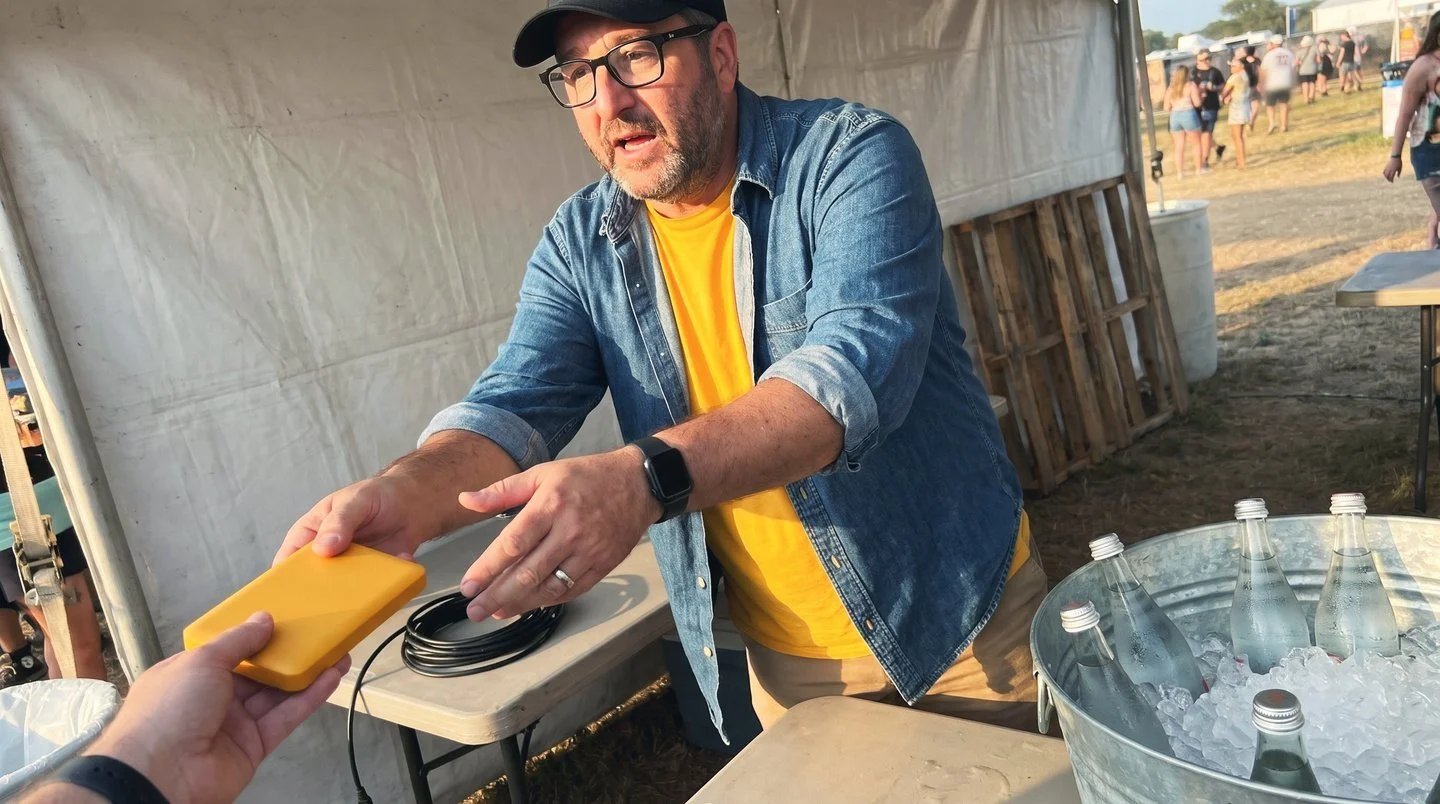
This bites hardest at events. I spent years on a sparkling water brand's festival program, at Lollapalooza, SXSW and ACL, working next to its events agency and its PR agency. When three vendors shoot the same tent, settle before load-in whose drive the footage lands on, who can post it, and when the raw files get handed over. If you wait until the festival's over, you're negotiating for your own footage.
How do you check a beverage marketing agency before you sign?
Run these five steps in the pitch meeting, in this order. Each one has a done-when line so you know it's settled.
Ask who holds the accounts today for their longest-running client. Done when they describe a partner setup in the client's business portfolio without hesitating.
Ask for the exit clause before the scope of work. Done when you have a notice period in writing (30 days is fair) and a list of everything handed back on exit.
Ask how raw files are delivered. Done when the contract names a shared drive you own and a delivery schedule, monthly at minimum.
Ask who signs creator contracts. Done when your brand is named as the licensee, with the usage term and channels written out.
Ask what happens to scheduled posts and open DMs on the last day. Done when there's a one-page handoff checklist with a named owner.
If an agency balks at step 2, you've learned the most important thing about it. The ones confident in their work don't need a 12-month lock to keep you. You can read more on reading an agency's case study numbers and on counting the hands between your brief and your feed before the same meeting.
What does hiring a beverage marketing agency cost?
Retainers for social strategy and management usually run monthly, with a minimum term. My own proposals from 2023 to 2025 ran about $3,000 to $5,000 a month for organic social, with a 3-month minimum and 30 days' notice. That's one consultant's range, not an industry survey, so treat it as one data point.
The rebuild bill is the bigger number. Switch agencies and you lose the account history, the footage library, and the creator rights. Then you pay to remake a year of content and start the algorithm cold. Ownership up front costs you one awkward meeting.
Some brands skip the full agency and hire one senior person who owns the strategy and runs production. I've covered that option in why one food marketing consultant can beat a team. Ownership rules don't change either way.
Should you hire an agency, a freelancer or someone in-house?
It depends on how much you need made and how fast. An in-house hire owns everything by default, which is the cleanest setup, but one person can't shoot, edit, post, answer DMs and run creators at volume. A freelancer is cheap and fast, and the ownership paperwork is usually the weakest. An agency or a senior consultant brings range and a production system.
What I sell sits in that last group: organic social strategy and content production, with the strategy done by a person and the production run on an AI pipeline, so a small brand gets a big brand's volume. Every account stays in the client's portfolio and every file goes to the client's drive. That's how I'd want it done if I were the one signing.
FAQ about beverage marketing agencies
What is the best beverage marketing agency?
The best beverage marketing agency is the one that matches the job you need done and hands you everything it makes. A sampling company, a branding studio and a social agency all use the same label. Pick by the job first, then check ownership: your accounts, your files, your creator rights and a short notice period, all in writing before the first invoice.
Is an alcohol marketing agency different from a beverage marketing agency?
Usually, yes. Beer, wine and spirits brands sell through a three-tier system of producer, distributor and retailer, and alcohol advertising carries its own platform rules and age gates. An alcohol marketing agency should know those rules cold. A non-alcoholic beverage brand needs someone who knows grocery, convenience and direct-to-consumer instead. Ask which side of that line most of their clients sit on.
Who should own my brand's Instagram account when I hire an agency?
Your company should. Put the Instagram account and the Facebook page inside a Meta business portfolio your company controls, then add the agency as a partner with only the access it needs. Meta's own guidance says only the organization that owns an asset can share it with another business. If the agency created the account under its own portfolio, move it before you renew.
How long should a beverage marketing agency contract be?
Shorter than most agencies ask for. A 3-month minimum gives an agency enough time to show results on organic social, and a 30-day notice period after that keeps everyone honest. Long locks protect the agency, not the brand. The ANA and 4As found average agency tenure is about seven years anyway, so a good agency doesn't need the contract to keep you.
Do I own the content my agency creates?
Only if the contract transfers it to you in writing. Under U.S. copyright law, commissioned work is a work made for hire only in nine categories with a signed agreement that says so. Everything else needs a written assignment from the person who made it. Ask for an assignment clause covering every photo, video and design, and have your lawyer read it.
What should you do before your next agency meeting?
Open Meta Business Suite today and look at who owns your business portfolio, your page and your ad account. Then find out where your raw footage from the last twelve months lives. If either answer is "the agency," fix that first, before you talk about next quarter's content. Independent beverage brands win on the story the big players can't fake, and that story belongs in your accounts, not someone else's.
I wrote this with an AI-assisted pipeline. It pulled the current Google results, checked the sources, and drafted it in my voice. I set the angle and the rules it follows.
If you want a social program where you own every account and every file from day one, DM @gallucciNET.

adage, emmy, telly & webby award-winning digital marketing consultant for purpose-driven food & beverage brands.