Cheerwine handed Holiday Punch to Carolina chefs. Your seasonal drop needs local hands too.
Cheerwine, the cherry soda Carolina Beverage Corp. has made in Salisbury, North Carolina since 1917, brought Holiday Punch back for the 2026 season with recipes from chefs and mixologists in three home states. That's the right call. For a small soda's seasonal SKU, a local cook's recipe travels further than a holiday ad ever will.
Updated November 27, 2026.
What did Cheerwine actually do with Holiday Punch?
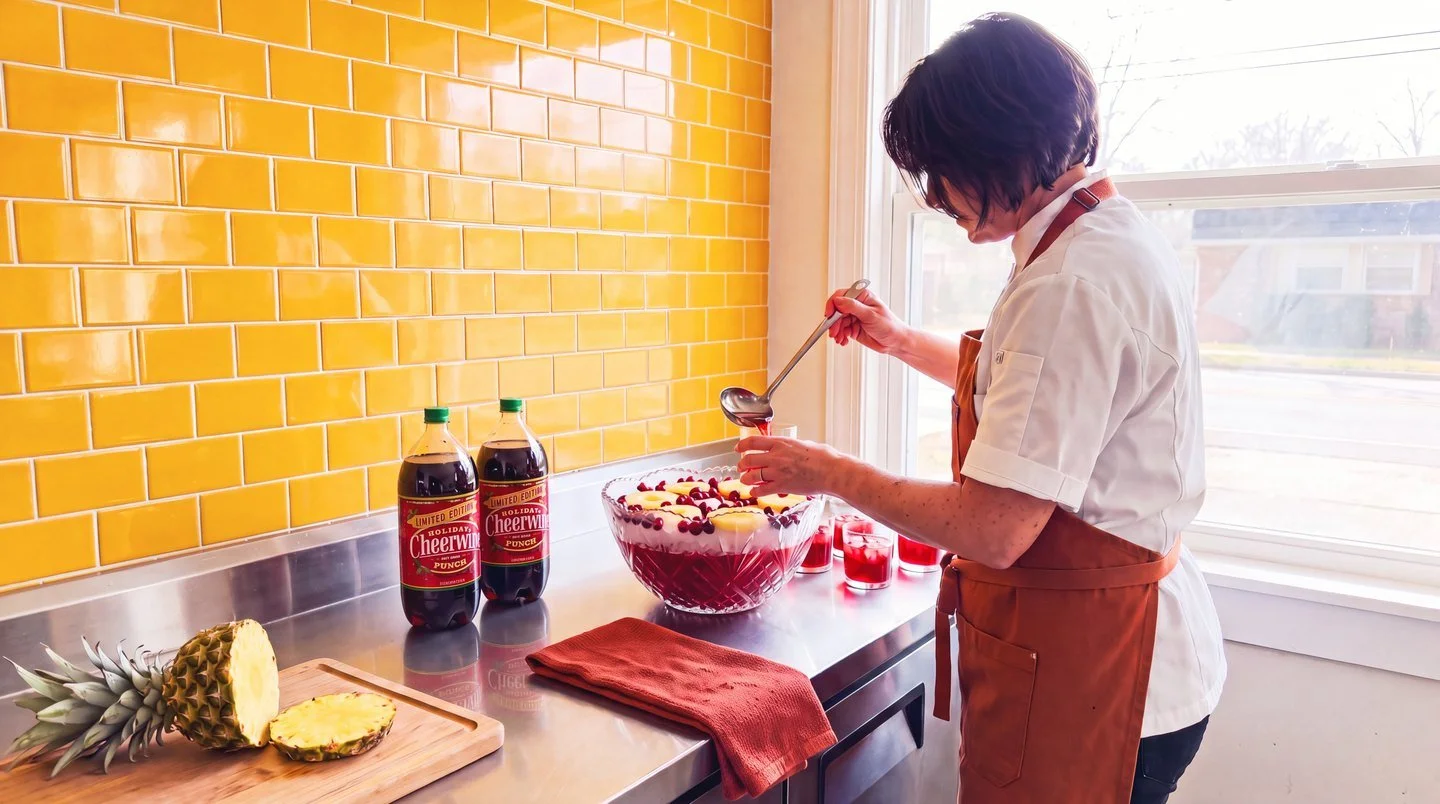
It put the seasonal product in the hands of chefs and mixologists from North Carolina, South Carolina and Tennessee and let them build recipes around it, from cocktails to dishes for a holiday table, Beverage Industry reported on Nov. 25, 2026. Holiday Punch is Cheerwine's cherry flavor blended with pineapple juice and ginger ale, sold for a limited time in 2-liter bottles and 12-pack cans.
The footprint stays small and specific. It's on shelves across North Carolina, South Carolina, and the Savannah, Georgia area. All 141 Food City stores in Tennessee, Georgia, Kentucky, Virginia and Alabama carry it in 12-pack cans. Select Food Lion stores in Virginia stock it too. Giant Eagle and Market District have it in parts of Ohio and Pennsylvania. Everywhere else, you order it online.
Joy Ritchie Harper, Cheerwine's vice president of marketing and a fifth-generation member of the founding family, put it this way in the company's statement: "We're excited to showcase their creativity and share original recipes that inspire people everywhere to add a little Southern cheer to their holiday celebrations."
Then look at Cheerwine's punch page. The family recipe is right there: two 2-liter bottles of Cheerwine, two 46-ounce cans of unsweetened pineapple juice, one 2-liter of ginger ale, plus a bundt-pan ice ring frozen overnight with cranberries and pineapple slices. Same page, the store list and the order button. That's a recipe card, a store locator and a checkout on one URL.
Why do local chefs beat a holiday ad for a regional soda?
Because the chef already has the audience you're trying to reach, in the exact counties where your product sits on the shelf. A cook in Charleston posting a Holiday Punch glaze talks to people who shop the stores that stock it. A national holiday spot talks to everybody, and most of everybody can't buy the thing.
A recipe also gives people a reason to buy more than one unit. Nobody makes punch for one. The family recipe calls for two 2-liters of the soda before anybody adds a spirit or a scoop of sherbet. A recipe turns a curiosity purchase into a party purchase.
The recipe doesn't expire on Dec. 31. It keeps getting found every November after. More than you can say for a boosted post.
Then there's the family. Cheerwine says it's the oldest continuing soft drink run by the same family. A chef from Salisbury or Knoxville cooking with it says something a soda giant can't fake with a bigger budget. The giant can hire a famous chef. It can't hire a hometown one. Most food and beverage social media marketing for a seasonal drop still runs as a countdown graphic and a paid boost. Cheerwine went the other way, and a regional brand should copy it.
What I learned putting Topo Chico in bartenders' hands
I ran social for Topo Chico for 12 years, and for that whole run we never paid an influencer. No access fees, no placement deals. We put the bottle around the right people and stepped back. I wrote about that lesson from my Topo Chico days back in January.
Bartenders did more for Topo Chico than any campaign. Michael Finsilver worked the bar at Mudgie's in Detroit and ran pop-ups. He reached for it as a mixer because it worked in a drink. Nobody paid him. We put recipes on the website. Texas Grapefruit Kicker: Deep Eddy Ruby Red Vodka, Topo Chico, a squeeze of lime. At Honey Bee Market in Detroit an employee told me single bottles were flying off the shelf fast enough that they started stocking 12-packs and 1.5-liter bottles. Mixers sell in multiples. I told the longer version in how I helped Topo Chico become a sparkling water sensation in the U.S.
The bottle was the co-star, never the lead, which is the same idea behind making the bottle the co-star in an organic social strategy for beverage brands. Cheerwine's chefs are the lead this season. The punch is in their hands. That's the arrangement that works, and it's the kind of work I do as a one-man food and beverage marketing agency out of Marfa.
How should a small beverage brand run a chef-led seasonal drop?
Start with the map. The chef's follower count comes last. Hand over the product and get out of the way.
- Pick cooks and bartenders inside your distribution footprint. A chef in a county where you aren't stocked is just a nice post. Done when every chef on your list works within driving distance of a store carrying the seasonal SKU.
- Get product to them early, with one ask: one recipe, made in their own kitchen or behind their own bar, shot on their own phone. Done when every chef has cases in hand at least three weeks before your shelf date.
- Let them post first, then reshare. The chef's account carries the trust, and yours carries the store list. Done when the first post of each recipe is on the chef's account, not yours.
- Build one page that holds the recipes, the store list and the buy button, the way cheerwine.com/punch does. Done when someone who lands from a chef's post can find a store or order in one tap.
If you sell soda, the moves your competitors make each season show up in the soda edition of the Daily Category Brief, which tracks that one aisle every morning.
What should you do before your next seasonal SKU ships?
Pull your store list. Pin every location. Find three cooks or bartenders inside those pins whose food you'd actually eat. Get them cases this month, three weeks ahead of your shelf date.
The Daily Competitive Brief: custom, from $500 a month
A daily brief built around your brand: the competitors you name, your retailers and your channels. It starts with a short onboarding form, and there are three plans. The Custom Brand Brief ($500 a month) covers your brand and the three competitors you watch most. The Full Signal Brand Brief ($1,500 a month) is the complete brief, with moves split for sales and for marketing, and it's the one most brands choose. Founder Signal ($2,500 a month) adds three to five LinkedIn and Instagram posts a week in the founder's voice, written from that morning's brief and approved before anything goes out. Every plan is two months free when you pay for the year.
See the Daily Competitive Brief plans · Read an 18-page sample (PDF)
Put it to work: Grassroots On-Premise Seeding Playbook (Bars, Restaurants, Studios) ($49)
You just read why a regional soda's seasonal drop sells further through the cooks and bartenders inside its own store footprint than through a holiday ad. This playbook is the field system I ran across 14 U.S. markets between 2018 and 2023 with no paid media: an account screen for picking the right rooms, the fridge ladder from a free drop to a second drop two to three weeks later, a per-market cost model and a pipeline workbook that tracks every account.

adage, emmy, telly & webby award-winning digital marketing consultant for purpose-driven food & beverage brands.