Organic social media strategy for beverage brands: make the bottle the co-star
An organic social media strategy for beverage brands is a plan to earn reach without paying for it, by putting your drink in the hands of the right people, in the right rooms, and posting the moments that follow. The bottle is the co-star. The people drinking it carry the story.
I ran social for Topo Chico for 12 years. We never paid an influencer, and the brand still landed in more than two dozen TV shows and half a dozen major motion pictures without a check being written. That's the standard I hold an organic social media strategy for beverage brands to, and it's the one I'd hold yours to.
Key takeaways
- Organic social for a drink brand starts offline, with who's holding the bottle, and only then becomes a posting schedule.
- Put the drink in the scene and keep the people in the lead. Product-first posts get skipped.
- Instagram's head, Adam Mosseri, names watch time, likes per reach and sends per reach as the signals that decide reach. Build for the send.
- Give it 90 days to show signal and a year to show culture. Anyone promising faster is selling ads.
- Hire for judgment and relationships, not post volume.
What is an organic social media strategy for beverage brands?
It's the unpaid half of your marketing: the posts, replies, relationships and placements that get your drink seen without buying the impression. For a beverage, most of it happens before anyone opens the app.
A snack gets eaten at a desk. A drink gets poured at a bar, passed around a tailgate, pulled from a cooler on a film set, iced down backstage. Beverages live in social situations, which means they get photographed by people who aren't you. Your organic strategy decides which of those situations your drink shows up in, then gives you something worth posting when it does.
The #1 result for this search right now is a 2023 guest post that covers food and beverage together and never mentions a bar, a mixer or a cooler. That's the gap. A drink is a different animal from a granola bar, and the plan should say so.
Why the bottle should be the co-star, not the lead
Nobody sends a product shot to a friend. They send the moment. Your drink just rides along in it.
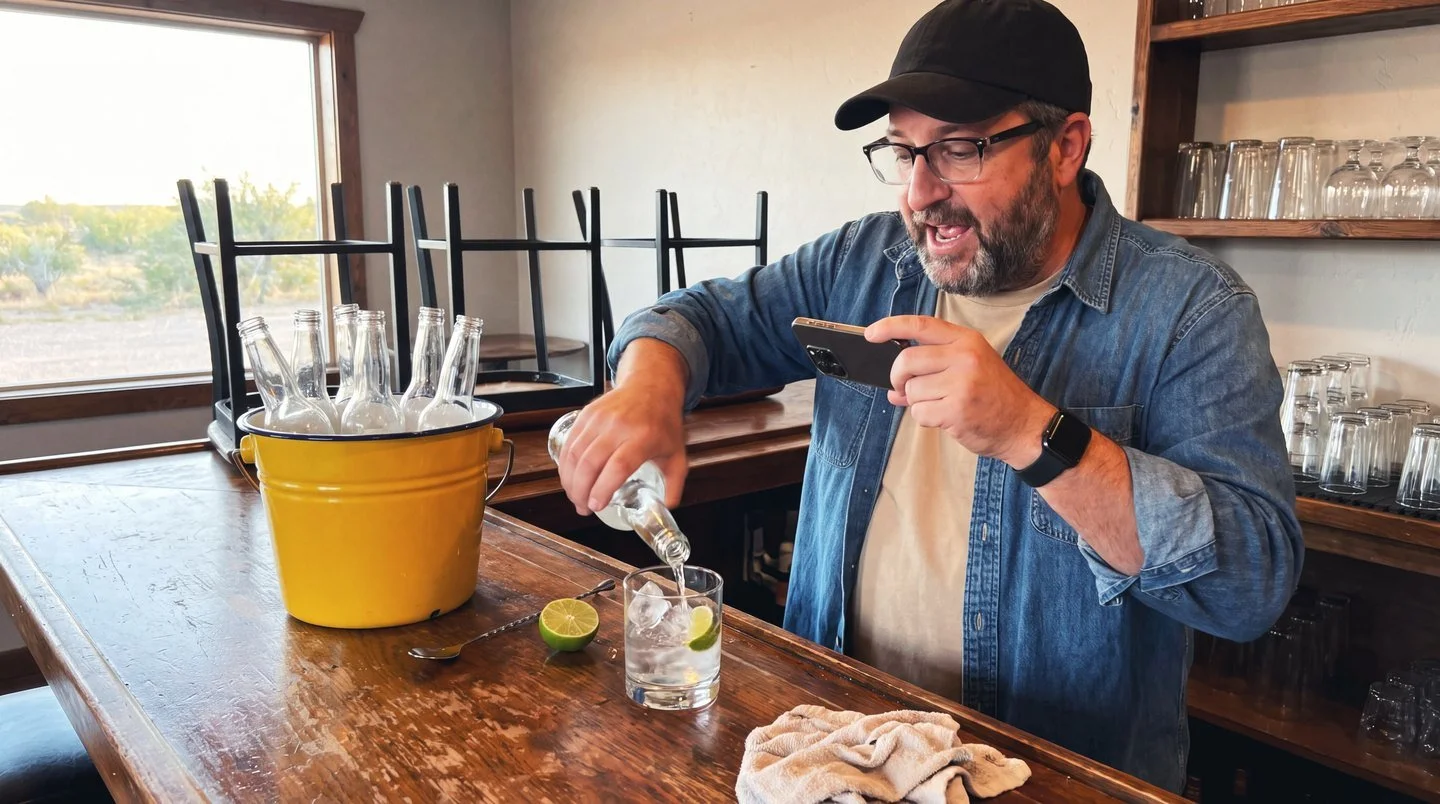
The glass bottle sat on the counter. Background. Part of the scene. At Topo Chico the rule was simple. Brand's the co-star, never the lead. Present enough you notice it. Never beating people over the head. I wrote about it in a lesson I still carry from my Topo Chico days, and I'd run it the same way tomorrow.
That rule holds up against what the platforms say they reward. Instagram's head, Adam Mosseri, has said watch time, likes per reach and sends per reach are the signals that decide how far a post travels, for followers and non-followers alike (Hootsuite's breakdown of his guidance). A bottle on a white background earns none of those. A bartender building a drink at 1 a.m. with your bottle in the shot earns all three.
The audience is asking for the same thing. Sprout Social reports that consumers on social want brands to make human-generated content their #1 priority in 2026, and that 90 percent of consumers rely on social media to keep up with trends and cultural moments (Sprout Social). Drinks are cultural moments with a cap on them.
Organic vs paid vs influencer: what each one buys a beverage brand
Most beverage founders I talk to are paying for the third row and expecting the first. Each lane buys something different.
| Approach | What you pay for | What you get | Where it breaks | |---|---|---|---| | Organic social | Time, product, relationships | Reach that compounds, content other people make, trust | Slow. Takes a year to look like culture | | Paid social | Impressions | Reach on demand, testable offers | Stops the day the budget stops | | Paid influencers | One person's audience for one post | A spike and a screenshot for the deck | The audience knows it's an ad | | Earned placement (bars, sets, stages) | Cases and follow-up | Your drink in other people's content | Needs someone who knows the rooms |
Before Coca-Cola bought Topo Chico in October 2017 for $220 million (Food Dive), the Kardashians' management team called about a partnership. We passed. We sent a thank-you instead: branded refrigerators, stocked monthly, no contract. Years later Kendall Jenner showed up in Vogue drinking a Topo Chico with no deal behind it. The full story is in why we said no to the Kardashians and still ended up in Vogue. That's the fourth row of the table doing the job of the third, for the price of a fridge.
How do you build organic social for a beverage brand? The co-star method
Six steps. They run in this order because each one feeds the next.
- Pick your rooms. Name the five places your drink should be seen: a specific bar, a music venue, a crew trailer, a gym, a fishing dock. Specific addresses, not demographics.
- Pick your people. For each room, name the person who decides what gets poured. Bartenders, production assistants, tour managers, chefs. They're your distribution and your camera crew.
- Send product with no strings. A case, a fridge, a restock. No posting requirement. The ask kills the post.
- Shoot the room, not the bottle. When you post, the drink is in the scene and a person is in the lead. Pour, toss, ice, toast, mix. Hands and faces beat packshots.
- Repost and credit everything. When your drink shows up in someone else's feed, share it, tag them, thank them in public. That's how people learn you'll notice them.
- Measure sends and saves, then volume. Track sends per reach and watch time per post. Track how often your drink appears in content you didn't make. Follower count comes last.
Bartenders in Detroit were building cocktails with Topo Chico. A grocer there told me the single glass bottles were flying off the shelf fast enough that they started stocking 12-packs and 1.5-liter bottles. That's how the U.S. growth actually ran. Steps one through three. I told that story in how I helped Topo Chico become a sparkling water sensation in the U.S.. The posts came after the pours.
What should a beverage brand post on organic social?
Post the occasions your drink belongs to. Shoot them the way a guest would shoot them. Here's the short list I'd start with.
- The pour or the crack. Two seconds of sound and fizz is a hook on its own.
- The bartender's build. A recipe with your drink in it, made by the person who invented it, credited by name.
- The cooler and the case. Your drink in a working setting: a set, a job site, a boat, a green room.
- The reshare. Somebody else's photo with your bottle in it, credited.
- The founder at the source. The well, the farm, the co-packer floor, filmed on a phone.
A beer brand and a sparkling water live by different rules on the same app. If you sell alcohol, check each platform's age-gating settings before you post. Keep the occasion front and center.
Who should run it: in-house, agency or consultant?
Whoever has the relationships. The posting is the easy part.
An in-house coordinator can keep a calendar full, but usually can't get your drink into a green room. A big agency can produce beautiful posts, but tends to sell volume, and volume is the opposite of the co-star rule. I wrote about why agencies stopped hiring juniors for organic social, and it's worth reading before you sign a retainer. A senior consultant who has run beverage social media strategy for years can set the rooms and the rules and train your team to run them.
Questions to ask anyone you're about to hire:
- Name a drink brand whose organic reach you grew, and show me the numbers before and after.
- Who do you know in my rooms, by name?
- How do you feel about paying influencers? (The answer you want is some form of "rarely.")
- What will you measure in the first 90 days, and what will you ignore?
- Who on your team is posting, and how many years have they done it?
Red flags: a content calendar before a single question about your rooms, a follower-growth guarantee, and a deck full of other categories. If they pitch the same plan to a hot sauce and a hard seltzer, they're selling a template. My longer take on vetting is in what a beverage founder should actually buy from a drinks marketing agency.
What to expect in the first 90 days
Signal, not culture. You're looking for evidence the method works before you scale it.
Month one is rooms and people: the list, the first cases out the door, a posting rhythm built around occasions. Month two is the first reshares, the first bartender recipe, the first post from someone you didn't pay. Month three is reading the numbers: which occasions earned sends, which rooms put your drink on camera, and which ones to drop.
Culture takes longer. At Topo Chico some of what we planted showed up a decade later, in Vogue and on TV, with nobody on payroll asking for it. If you're judging an organic program on week six follower count, you'll kill it before it pays.
FAQ
What is an organic social media strategy for beverage brands?
You earn the reach. You don't buy it. Put your drink in the hands of the people who decide what gets poured. On sets, behind bars, at venues. They post the moments that follow and reshare them. The drink is the co-star. Those people carry the story. Done right, other people end up making most of your content. That content travels further than anything you'd pay to boost.
How long does organic social take to work for a drink brand?
Some of what we planted at Topo Chico showed up a decade later. Organic runs on that clock, not the one in the pitch deck. Early signal lands in about 90 days. Reshares. First posts from people you didn't pay. Rising sends per reach on your best occasions. It starts looking like culture in a year or more. Anyone promising fast follower growth from organic alone is probably selling you ads with a different label on them.
Should a beverage brand pay influencers or grow organically?
In 12 years running Topo Chico's social we never paid an influencer. The brand still landed in more than two dozen TV shows and half a dozen major motion pictures. No check written. Grow organic first. Pay rarely. Paid posts buy a spike audiences clock as an ad the second it hits the feed. Free product sent with no strings to the right people buys a relationship that keeps posting for years.
Which platforms matter most for beverage brands?
Most drink brands need the pour on camera. Instagram and TikTok own the bar, the tailgate, the glass in hand. Add whatever your people already live on. Pick one to three platforms and post there every week. Spreading thin just starves the feed. On Instagram, build the post someone actually sends a friend. Adam Mosseri ranks sends per reach with watch time and likes per reach as the signals that move you.
Should a beverage brand hire an agency, a consultant or do it in-house?
Hire for relationships and judgment, not post volume. The in-house coordinator keeps the calendar full. Your drink still rarely makes the green room. Large agencies sell volume. That's the pitch. A senior consultant with beverage experience sets your rooms, your people, and your rules. Then they train an in-house person to run them. Ask every candidate to name a drink brand they grew and show the numbers.
What to do next
Five rooms. Write them down. The real ones where your drink needs to show up, not the fantasy list from the brief. One person in each decides what gets poured. Get the name. Send that person a case this month. No ask attached. Nothing. Then point the camera at the people drinking it. Keep the bottle in the shot. The label doesn't need the close-up.
I take on a handful of beverage brands a year for exactly this. If yours is next, message me on LinkedIn.

adage, emmy, telly & webby award-winning digital marketing consultant for purpose-driven food & beverage brands.