Social media marketing for natural and organic food brands: post like your certifier follows you
Social media marketing for natural and organic food brands works when every post could survive a read by your certifier. "Organic" is a federal word, and USDA counts advertising as a claim. "Natural" has no formal FDA definition. Build the feed on proof of both, and keep founders, creators and comments inside those lines.
The short version:
USDA's organic regulations define a claim to include advertising and spoken statements, so a caption, a reel voiceover and a paid creator's video all count.
Only products labeled "100 percent organic" or "organic" (at least 95 percent organic ingredients) can carry the USDA seal. A "made with organic" product can't show it on the package, and it has no business in that brand's feed either.
"Natural" runs on an FDA policy, not a rule. Nothing artificial or synthetic added. That's thin cover, so you prove it with footage.
Your annual organic inspection and your supplier paperwork are the most believable content you own, and most organic brands never post a frame of it.
Why is social media marketing for natural and organic food brands different?
Two words carry your price premium. In law they mean different things. Your feed claims both of them every day. One gets audited. The other is a promise you keep on your own.
A conventional snack brand posts "tastes amazing" and the worst you get is an eye roll. An organic brand posts "certified organic" over the wrong product and you've got a labeling problem. USDA's organic regulations define claims as oral, written, implied, or symbolic representations, including advertising, that relate to the organic terms. Same section defines market information as advertising made available outside of retail outlets to promote a product. Line those two definitions up. Your Instagram grid is in scope.
U.S. organic sales hit $76.6 billion in 2025, up 6.8 percent, and the Organic Trade Association puts organic food alone at $70.1 billion of that. Money that size draws eyes. Shoppers paying the premium read the back of the bag, and plenty of them read your comments too.
Natural and organic brands get careless with the words once the content calendar gets busy. I already wrote on why distribution buyers matter more than followers. This one's about the words themselves.
What can an organic brand legally say on social media?
The package already locked in one of four USDA organic categories. Run the feed the same way. Claim what that category allows. Nothing more.
| Label category | Organic content | USDA seal allowed? | What a caption can say | |---|---|---|---| | 100 percent organic | 100 percent organic ingredients, not counting salt and water | Yes | "100 percent organic," plus the seal | | Organic | At least 95 percent organic ingredients | Yes | "Organic" or "certified organic," plus the seal | | Made with organic | At least 70 percent organic ingredients | No | "Made with organic oats" (up to three ingredients or categories), never the finished product called organic | | Under 70 percent | Less than 70 percent organic ingredients | No | Organic ingredients named only where the ingredient list names them |
The slip I'd watch hardest for is the "made with" brand whose social person calls the whole product organic in a caption, or drops the seal into a carousel because it looks clean. USDA's labeling page is plain about it: a "made with" product must not show the seal anywhere or represent the finished product as organic. USDA also requires a certifying agent to review and approve organic labels before they hit the market.
Knowingly labeling or selling a product as organic outside the law carries a max civil penalty of $22,974 per violation under 7 CFR 3.91. I'm not a lawyer, and I'm not saying one caption gets you there. I just don't want my client to be the test case. My rule is simple. Treat every post like the front panel of the package.
What can a natural food brand claim on social media?
Less than most founders think. FDA has never written a rule defining "natural." It has a policy, and the policy is narrow.
According to FDA's page on the term, the agency has considered "natural" to mean nothing artificial or synthetic, including all color additives regardless of source, has been added to a food that wouldn't normally be expected to be in it. FDA says that policy doesn't address production methods like pesticide use, doesn't address processing like pasteurization, and doesn't speak to any health benefit.
So "natural" on social is a word with no inspector behind it. That cuts both ways. Nobody audits it, and nobody believes it on its own either. The fix is to stop leaning on the word and show the thing: the ingredient panel, the supplier, the kitchen, the person stirring the pot. If your feed shows where the oats come from and who toasts them, the word "natural" becomes redundant, and redundant is the goal.
Keep "natural" from drifting into health talk. If a caption or a reply to a comment slides from "natural" to "detox" or "heals your gut," you've walked off the narrow FDA policy and into health claims, which is a different and more expensive conversation.
How do you turn your organic inspection into content?
Your organic paperwork is already a content calendar. Every certified organic operation gets an on-site inspection once a year. The inspector checks traceability and mass balance. That means the organic inputs you bought account for the organic product you sold.
A national brand can buy an organic line. It can't film its founder walking an inspector through the receiving logs at a 40-person co-packer. That's the story big food can't fake on a small brand's terms. Here's the order I'd post it in:
Inspection week. Show the binder, the walk-through and the exit interview, with the inspector's permission and nobody on camera who didn't agree to it.
The certificate. Name your certifier and say what it took to earn it. USDA's Strengthening Organic Enforcement rule, fully in force since March 19, 2024, tightened traceability and added unannounced inspections, so the bar your shopper assumes is higher than it was.
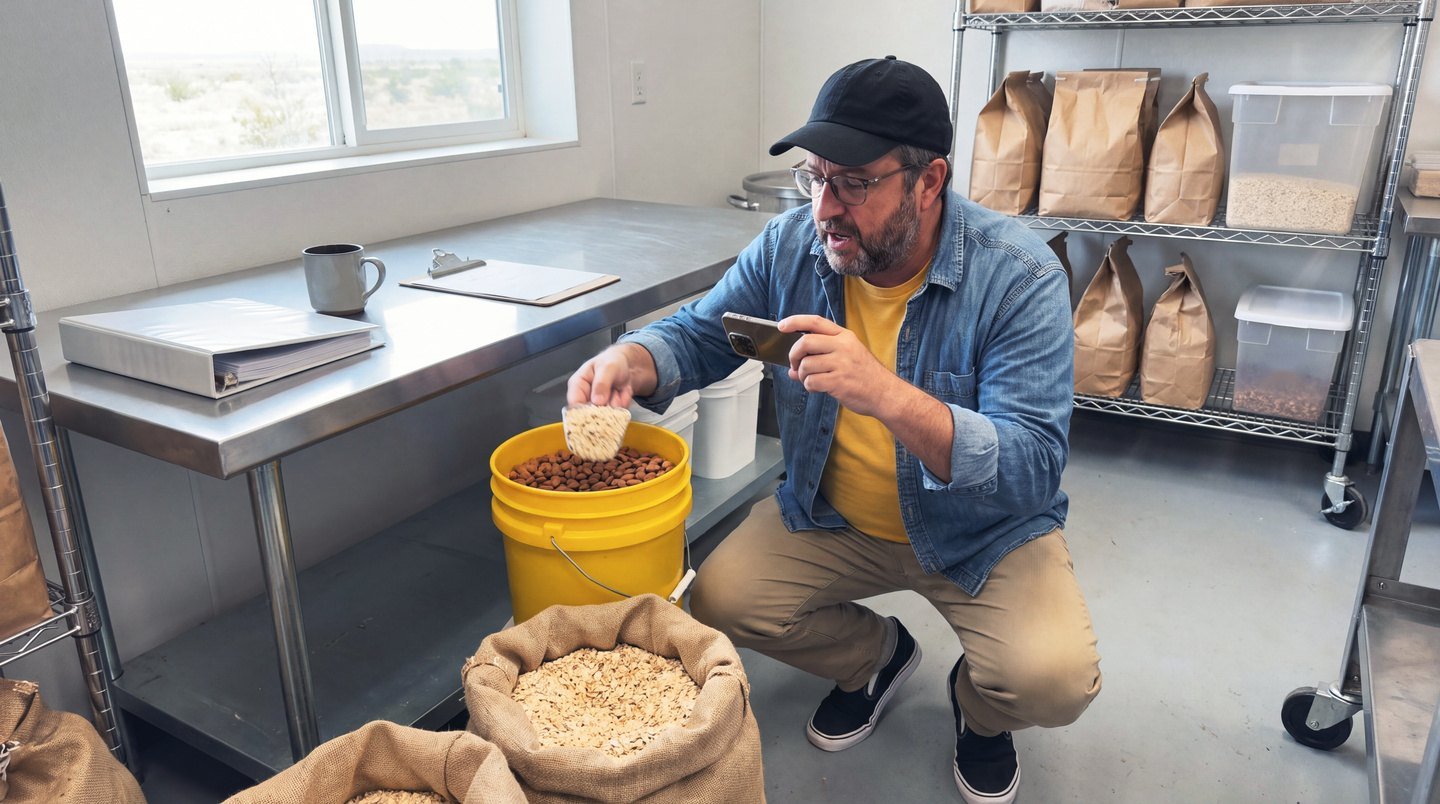
One ingredient, traced back. Pick a single organic ingredient and follow it from the supplier's field or mill to your kettle.
The math post. If you're a "made with" brand, explain why the product sits at 70 percent and not 95. Shoppers respect a brand that shows its arithmetic.
The hard comment. Have the founder answer "why does this cost two dollars more?" on camera, in one take, without a script.
The shelf. Show where to buy it, shot in the store on an ordinary Tuesday.
Natural brands without a certificate run the same list minus step two. Steps three, five and six carry most of the weight anyway. My earlier piece on proof posts for clean-label brands goes deeper on mapping each package claim to a recurring post.
Who is responsible when a creator makes the claim?
You can be liable for it, at least partly. The FTC revised its Endorsement Guides in 2023. A company can get hit for endorsements it knows or should know are deceptive, and for creators it hires and directs who skip the disclosure.
A free case of granola for a five-star review is exactly the kind of deal the FTC's ban on fake reviews and testimonials was written for. That rule took effect October 21, 2024. Knowing violators can get hit with civil penalties up to $51,744 per violation. The FTC's own guidance already tells brands to have "reasonable programs in place to train and monitor the influencers you pay and direct."
In practice, a creator brief for a natural or organic food brand needs four things in writing: your label category, the words they can use, the words they can't (think "chemical-free," "cures," or "certified organic" on a "made with" product), and a review step before anything posts. Comments get the same treatment. If a fan writes that your crackers fixed her blood sugar, thank her and don't pin it.
I run every caption for a claims-sensitive food client through a scripted claims check before it ships. A script catches the word a tired human misses at 9 p.m. on a Thursday. You don't need my script. You need some check that isn't "the intern read it."
Do the 5-5-5 and 5-3-2 rules work for organic food brands?
As a starting habit, sure. As a strategy for a brand selling a regulated word, not really, because both rules assume a lot of curated content.
The 5-3-2 rule says that for every 10 posts, 5 should be curated from other sources, 3 should be your own content and 2 should be personal. The 5-5-5 rule has several versions, and the common one is a daily habit of five posts, five comments on other accounts and five story replies. The comment habit is useful. The curation share is where an organic brand gets into trouble, because a repost of someone else's health claim sits on your account with your logo next to it.
I'd flip the ratio for natural and organic food brands. Most of the feed should be original proof content you shot yourself, a smaller share should be founder and team posts, and curation should be the exception, checked against your label category like everything else.
What should you expect in the first 90 days?
I'd clean the feed before I grow it. That's how I'd split the first quarter.
Days 1 to 30: audit the last 90 days of posts, captions, creator videos and pinned comments against your label category, fix what's wrong, and write the creator brief.
Days 31 to 60: shoot the inspection, certificate and ingredient-trace series, and get the founder on camera answering the price question.
Days 61 to 90: measure saves, shares, DMs that mention a store, and questions from retail buyers, then double down on the two formats that pulled the most of those.
Should you hire an agency, a consultant or keep it in-house?
It depends on who on your team can read a labeling regulation and a content calendar at the same sitting. I'm not going to invent a price range. Public pricing for this niche is too thin to stand behind. Anyone quoting you a confident average is guessing.
In-house knows the product cold. Usually blanks on the organic rules. Big agency knows content. Treats your certifier like a stranger. An independent strategist who's done both is the third option. That's the work I do for natural and organic food brands. If you're comparing agencies, I covered the cost side in hiring a natural food marketing agency.
Whoever you hire, ask them these before you sign:
Can you name the four USDA organic labeling categories without looking them up?
Who checks captions for organic and natural claims before they post, and how?
What would you shoot during our inspection week?
How do you brief and review paid creators?
What do you measure besides followers?
If they promise a follower number, suggest the phrase "chemical-free," or treat the USDA seal as a design element, keep looking. For the wider picture on organic, natural and clean-label positioning, I wrote a longer breakdown of how the three labels differ, and this one on grading a food brand's feed works as a scorecard.
FAQ
Can I use the USDA organic seal in social media posts?
Only use the seal if the product already qualifies for it on the package. USDA allows it on products labeled "100 percent organic" or "organic," which means at least 95 percent organic ingredients. A "made with organic" product can't display the seal anywhere. USDA treats advertising as market information, so the safe practice is simple. Use the seal on social exactly where your approved label uses it. Nowhere else.
Is "natural" a regulated claim on food?
"Natural" isn't an FDA rule. It's a longstanding policy that nothing artificial or synthetic got added, color additives from any source included, that wouldn't normally be expected in the food. Farming methods, processing, and health benefits sit outside it. On the feed a natural brand earns more credibility showing ingredients and suppliers than saying the word again.
What are the best social media platforms for natural and organic food brands?
Pick the feed where your shopper already watches food content and a founder can talk on camera without a production crew in the lot. For most natural and organic food brands that's Instagram and TikTok for shoppers, LinkedIn for retail buyers and distributors. Two platforms run well beat five run badly. Same claims check hits every one of them before anything posts.
What is the 5-3-2 rule for social media posts?
The 5-3-2 rule is a content mix guideline. For every 10 posts, 5 are curated from other sources, 3 are your own original content and 2 are personal or behind-the-scenes posts. For a natural or organic food brand, I'd cut the curated share, since a repost of someone else's health or organic claim shows up on your account and reads like your claim.
Do natural and organic food brands need influencers?
Not to start. A founder who shows the supplier, the kitchen and the inspection will out-earn a paid creator who reads a script. When you do pay creators, the FTC expects you to train and monitor them, disclose the connection, and keep their claims inside your label category. Put the allowed words, the banned words and a review step in writing before the first video.
What should a natural or organic food brand do this week?
Pull your last 30 posts and mark every "organic" and "natural" against the actual label category. Fix or delete what overreaches. Pinned comments and creator reposts count too. Book one shoot from the inspection list above. Ingredient trace is the one I'd take. Get it posted before the month is out.
I run claims audits for a handful of food brands every quarter. If yours is next, message me on LinkedIn.

adage, emmy, telly & webby award-winning digital marketing consultant for purpose-driven food & beverage brands.