Social media for food brands: grade your feed, not your follower count
Social media for food brands works when a stranger can name your product from one post, see the person who makes it, and find it on a shelf later that week. Follower counts don't measure any of that. The feeds worth copying put a real person, one clear product and a reason to buy in front of the shopper.
Key takeaways
Grade social media for food brands on three things: can a stranger name the product, see a person, and find it on a shelf. Follower counts measure none of them.
Chick-fil-A built its Instagram on food photos shot with an iPhone, so a small brand has no reason to wait for a studio shoot before it posts.
Run the five-test scorecard in this article on your last 12 posts. It takes about 20 minutes and a phone.
Answer every "where can I buy this" comment. Sprout Social found 73 percent of consumers say they'll buy from a competitor if a brand doesn't respond on social.
What does good social media for food brands look like?
Good social media for food brands does three jobs in order. It makes the product recognizable, it puts a person next to it, and it tells a shopper where and why to buy. Everything else is decoration.
I've run social for food and beverage brands from a desk in Marfa, Texas, long enough to watch a lot of pretty feeds sell nothing. The pattern is boring and it repeats. A post gets a like from someone who will never see the product in a store. The brand counts the like. Nobody counts the store.
The feeds that move product look different. The package is visible and turned toward the camera, so the shopper learns the shape and the color before she ever reaches the aisle. A human being is on screen, usually the founder or somebody who works the line, talking the way people talk across a farmers market table. And the post answers a question a buyer has: what's in it, what it tastes like next to the thing she already buys, and where to find it.
For an independent brand, that's most of the job. Big food can outspend you on reach every day of the week. What it can't fake is the person who started the company, or the reason a small batch tastes the way it does. If your feed hides both, you're competing on the one thing you'll lose, which is budget.
Why do the "brands crushing it" lists rank follower counts?
Follower counts are easy to screenshot and hard to argue with. They say almost nothing about whether the feed sold a single unit.
Search "social media for food brands" today and the first organic result is a Reddit thread in r/marketing that's roughly seven years old. The answer showing in Google's preview says Wendy's "takes the cake." That's a national fast-food chain with a national ad budget and a famous roast voice, recommended to people running a small snack or sauce company. The second result is an agency roundup of emerging food and beverage brands, each one scored with follower totals across Facebook, Instagram, TikTok, Pinterest and X.
Those lists aren't wrong about the brands. Several of them are good at social. They're wrong about the scoreboard. A founder reads that a sparkling water brand has 188K Instagram followers and concludes the job is audience size. So the brand buys reach, chases trends and posts whatever the algorithm seems to want that week. Six months later the account is bigger and the velocity report from the retailer hasn't moved an inch.
I wrote about the same trap with celebrity-backed drinks that launched with enormous audiences: an audience isn't a moat. A following can buy you a first look. It rarely buys the second purchase, and the second purchase is the business.
Which food brands are doing well on social media, and what can you copy?
I've looked at a lot of feeds. The brands worth studying put the product in somebody's hand, shot by a person, same recognizable frame week after week. Two examples beat a list of twenty.
Chick-fil-A is the first example. IBTimes dug into the chain's Instagram and found no recycled commercial stills. The feed was food shots off an iPhone, sitting next to a fan's lunch like they belonged there. Moxie had run the social since 2008. A national brand with a national budget picked phone photos on purpose. That should end the argument inside your company about needing a studio day before you can post.
Poppi is the second. The prebiotic soda out of Austin, Texas, grew on bright cans and short, playful video that never took itself too seriously, with TikTok out front. PepsiCo closed its acquisition of poppi on May 19, 2025, for $1.95 billion, including $300 million of anticipated cash tax benefits. Social media wasn't the only reason that deal happened, and anybody who tells you it was is selling something. But the can was on screen constantly, and that kind of repetition is copyable at any size.
What you can take from both is short. Keep a consistent product shot. Put a human in frame. Shoot native phone footage. And have the discipline to post the same core idea a hundred different ways, instead of a hundred different ideas once each.
How do you grade your own food brand's social media?
Run five tests on your last 12 posts and score each post pass or fail on each test. It takes about 20 minutes with a phone and a cup of coffee, and it'll tell you more about your food brand social media than any follower report.
TestThe questionPasses whenFails whenName testCould a stranger name the product in the first second?The package or the dish is readable and on screen earlyThe product shows up at the end, or neverPerson testIs a named human on camera?The founder, a line worker or a regular customer is talkingStock footage, hands with no face, or a logo animationShelf testDoes the post say where to buy it?A store, a city or a site is namedThe shopper has to go huntingAnswer testDoes it answer a question buyers ask?Price, taste, ingredients or use are covered plainlyIt's a mood with a caption on itLogo testWould it still sound like you with the logo cropped out?The voice belongs to your brand and your peopleIt could run under any brand in the category
In my experience the logo test is the one most feeds fail most often. That's the committee paragraph at work, copy that got approved by five people and now belongs to none of them. If your posts could run under a competitor's handle without anybody noticing, your social is advertising the whole category, and your competitors get the same benefit you do.
Shoppers stand in the aisle confused more often than brands like to admit. Founders underrate the answer test. I dug into it in half your buyers are confused in the aisle. A post that answers "is this spicy" or "what do I put it on" does more selling than a post that tells people the brand is passionate.
What happened when I ran the same test on my own archive?
I found the same problem in my own house. Before writing this, I pulled the gallucci.net sitemap and counted. It lists 482 blog posts. Of those URLs, 61 open with the same handful of stock verbs, Mastering, Boost and Unlocking among them, and 28 of those 61 are about food, beverage, CPG or social media. They read like everybody else's posts because they were written the way everybody else writes.
Then I checked who ranks. For "social media for food brands," none of those 28 posts shows up in Google's top ten. The one piece of mine that does, sitting sixth, is the LinkedIn version of an opinionated article called the No-BS Guide to Social Media Strategy for Food Brands. The same article on my own site doesn't make the first page, which says something about LinkedIn's domain authority and something else about opinion. The piece that took a position is the one Google surfaced.
Your feed works the same way. Posts with a point of view get remembered and shared. Posts that sound like a category brochure get scrolled past, however nice the lighting is.
Which platforms should a food brand post on?
Start where your buyer already is. For most food brands that means Instagram and Facebook first, TikTok second, and YouTube for anything that needs a recipe or a demo.
The 2025 Sprout Social Index puts numbers on it. Among the consumers surveyed, 90 percent have a Facebook profile, 82 percent have Instagram, 76 percent YouTube, 58 percent TikTok and 50 percent X. For direct purchases, Facebook led among all consumers at 39 percent, while TikTok led for Gen Z at 54 percent and for Millennials at 47 percent.
Translate that for a food brand. If your buyer is a parent loading a cart at H-E-B on a Saturday, Facebook and Instagram are probably carrying more weight than your team gives them credit for. If your product lives or dies with twenty-somethings, TikTok is the checkout lane. Pinterest can earn a spot when your product goes into a recipe. LinkedIn matters for a different buyer entirely, the category manager and the distributor rep who decide whether you get a second season on the shelf.
Pick two platforms you can feed every week before you add a third. A brand that posts well in two places will usually beat a brand that posts thinly in five.
Should a food brand chase social media trends?
Rarely, and only fast. The same Sprout research found 93 percent of consumers think it's important for brands to keep up with online culture, but about a third find brands jumping on viral trends embarrassing, and 27 percent think it only works within 24 to 48 hours of a trend's lifespan.
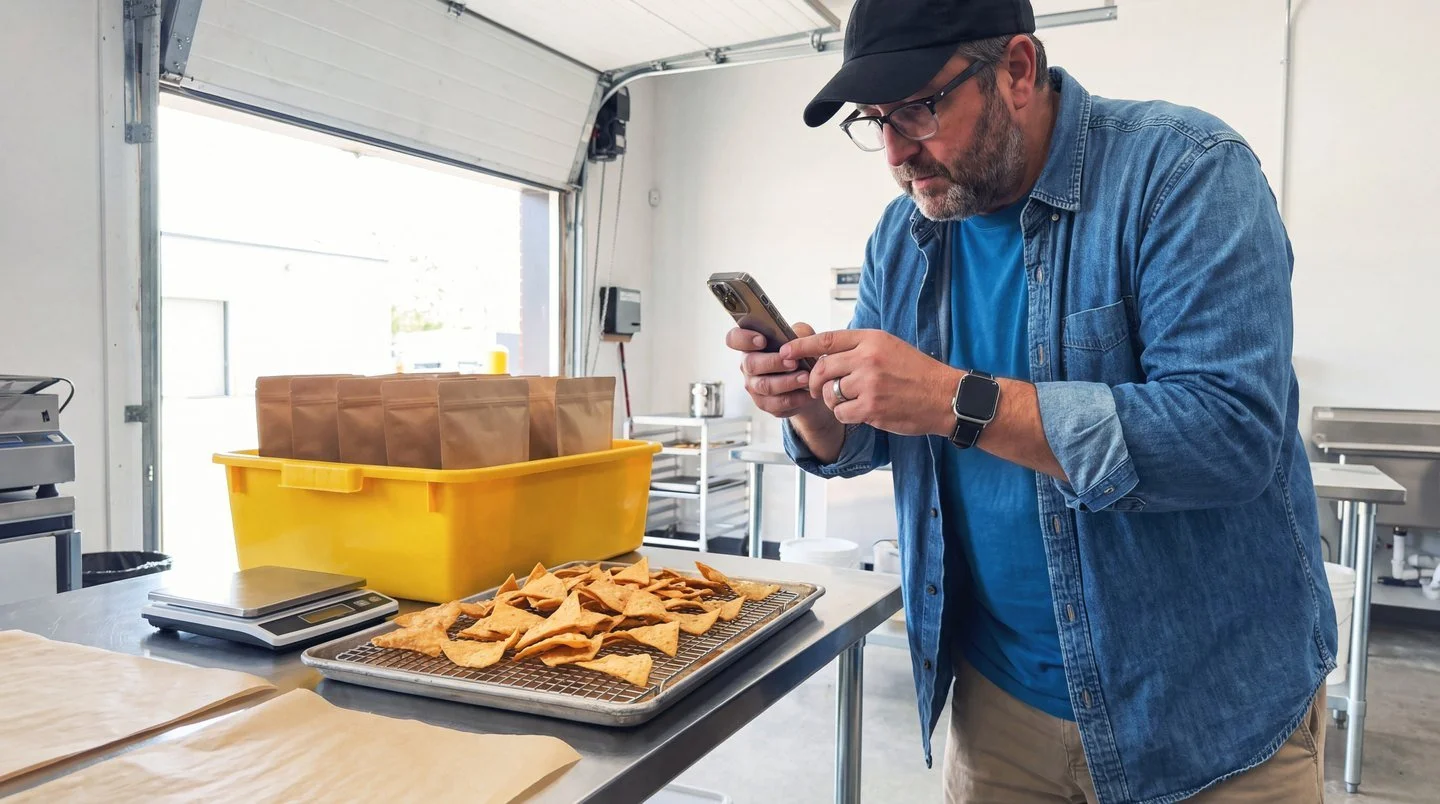
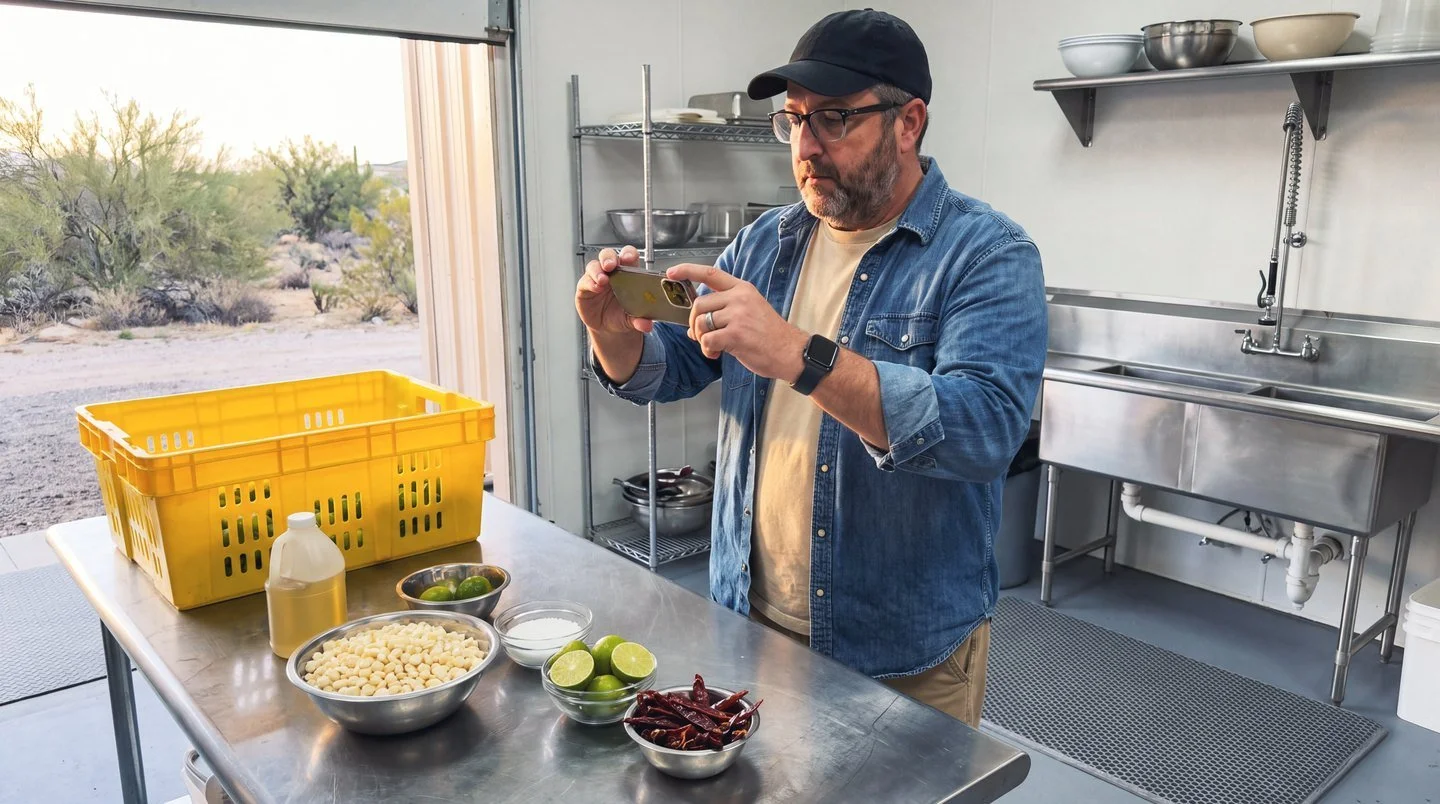
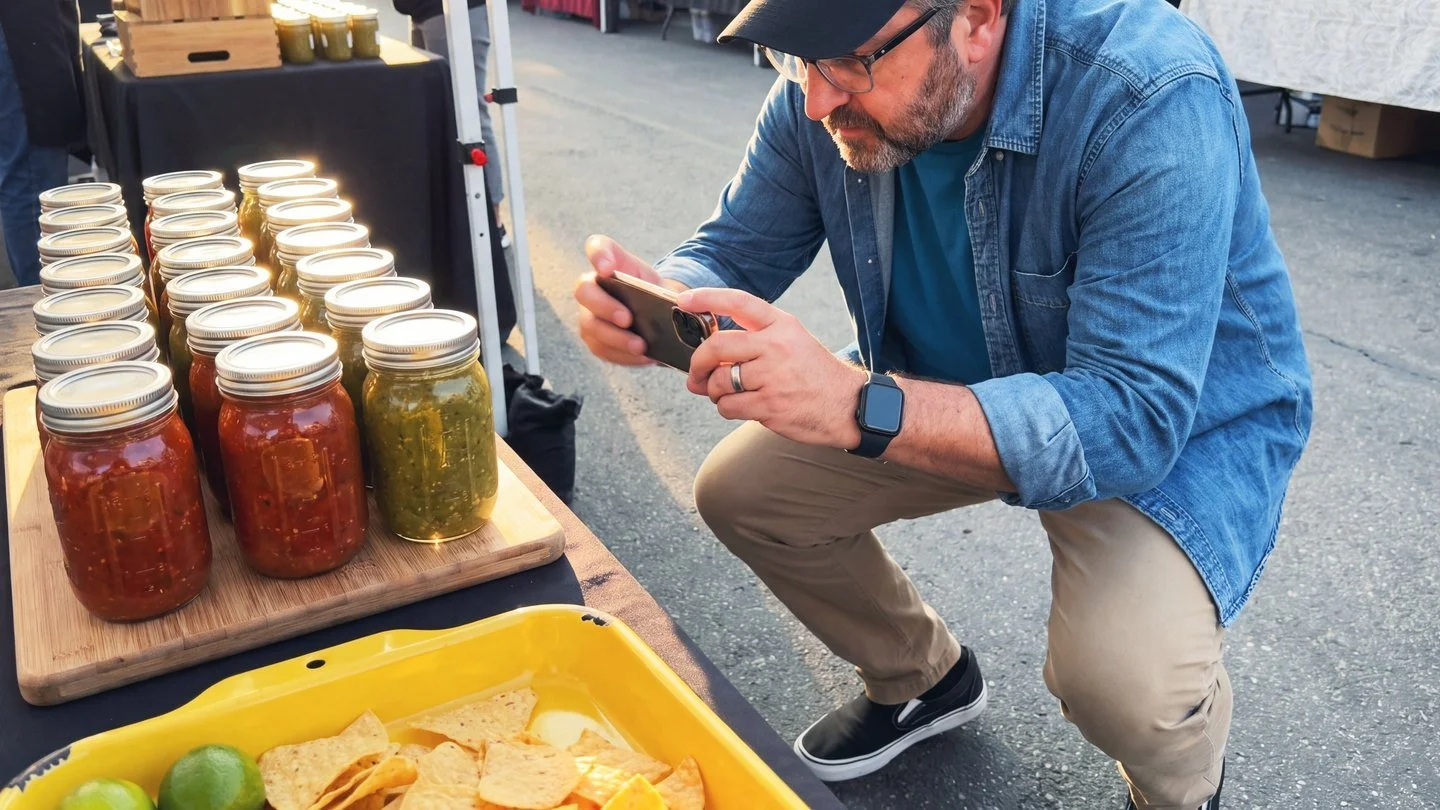
What consumers said they value most was authenticity and relatability, and about half said original content is what makes their favorite brands stand out. For a food brand, original content is cheap to make. It's your kitchen, your co-packer run, your farmers market table, your founder explaining why the salsa has three chiles instead of two. Nobody else can film that, and nobody else owns it.
There's a commercial reason to care. Sprout found 81 percent of consumers say social drives them to make impulse purchases, and 73 percent say they'll buy from a competitor if a brand doesn't respond on social. That second number should keep a food founder up at night. Every unanswered comment asking where to buy your product is a sale handed to the brand sitting next to you on the shelf.
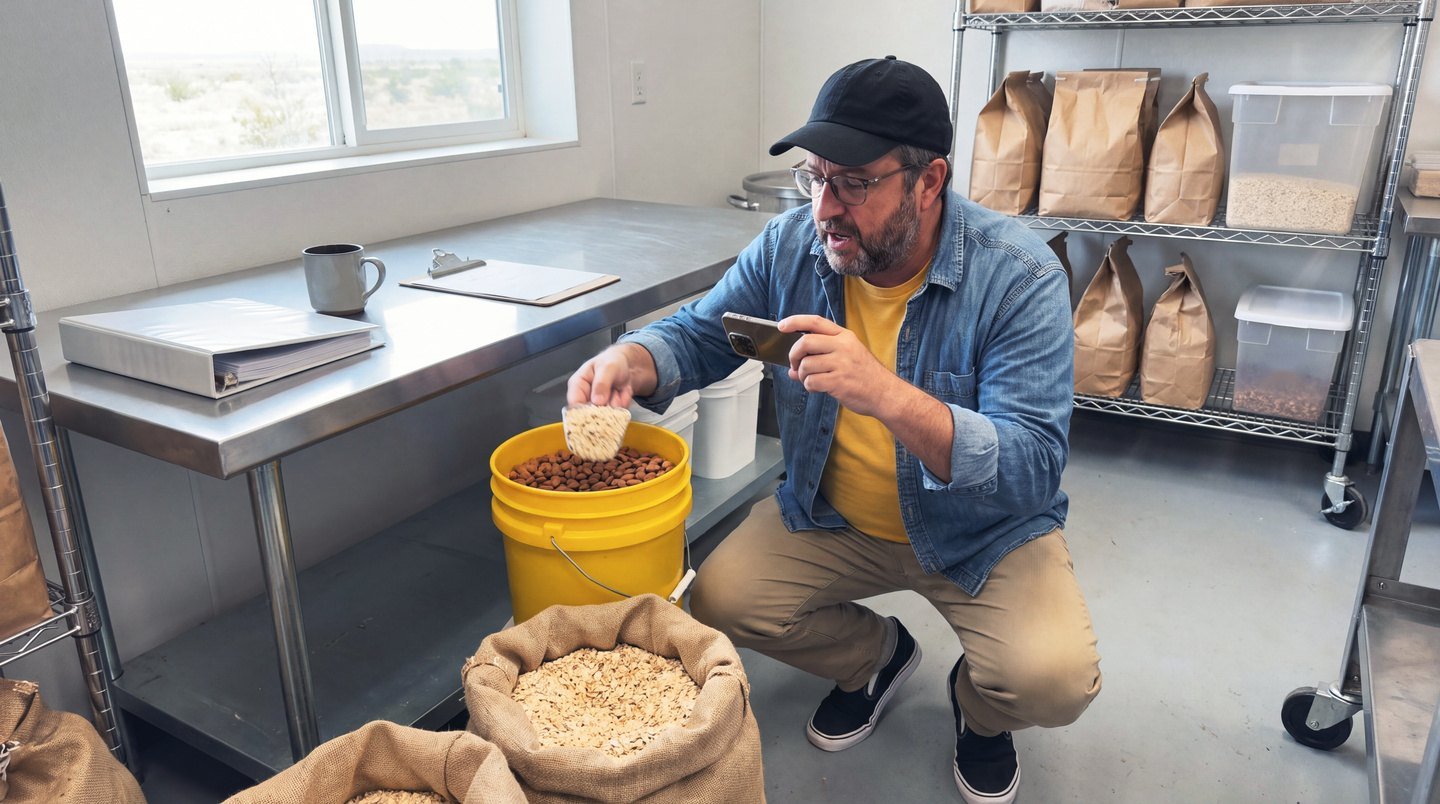
If you want the case for putting the founder on camera without a crew, I made it in lo-fi founder video beats a 4K production. The short version is that a phone and a person who knows the product outperform a polished spot that could belong to anyone.
What does it cost to hire help with social media for food brands?
Expect roughly $400 to $3,000 or more a month for social media management, with about $1,500 a month as a typical figure, according to Bark's 2026 pricing guide. Hourly freelance rates run from about $50 to $150 or more.
Those numbers cover four very different kinds of help. A freelancer is the cheapest and fastest to start, and the quality swings wildly depending on whether that person has ever sold a food product. An agency brings a team and a process, and you'll often pay for an account manager whose job is to explain the work rather than do it. A senior strategist or consultant costs more per hour and less per result when the problem is voice and direction rather than volume. An in-house hire gives you someone who lives with the brand, and it only works if that person has a senior voice to learn from.
The mistake I see most in food and beverage social media is buying volume when the problem is voice. Thirty mediocre posts a month won't fix a feed that fails the logo test. Eight posts that sound like the founder might. If you'd rather have one senior person than an account team, that's the model behind how I work as an independent social media strategist for food brands. I broke down how to measure social against shelf sales in food and beverage social media marketing that moves product.
Before you hire anyone, ask these five questions:
Show me a post you made that sold something, and tell me how you know it did.
Who will be on camera, and how often will you need our founder?
How will you connect our social to retail velocity or site sales?
What exactly will you post in the first 30 days?
Who answers comments and DMs, and how fast?
The red flags are consistent. Watch for guaranteed follower growth, monthly reports that only show reach and impressions, a content calendar built around National Donut Day and every other made-up holiday, and anyone who won't name the brands they'd hold up as models for yours.
A reasonable 90 days looks like this. The first month is an audit, a voice document and a first batch of posts built around the founder and the product. The second month sets a posting rhythm and a response habit, so no buyer question sits unanswered for more than a day. By the third month you should be reading saves, shares, DMs asking where to buy and store locator clicks. If those are climbing, retail velocity usually follows, though it can lag by a quarter or more.
FAQ
What is the 5-5-5 rule for social media?
The 5-5-5 rule is a daily engagement habit. The most common version says to like five posts, leave five thoughtful comments and respond to five messages or replies every day, though sources vary on the details. For a food brand, point it at retailers, recipe creators and shoppers who tag your product, and treat the replies as the part that sells.
Which food brands are doing well on social media?
Chick-fil-A and poppi are two worth studying. Chick-fil-A built its Instagram from iPhone food photos instead of recycled ad images. Poppi grew on bright cans and short, playful video, then sold to PepsiCo for $1.95 billion in 2025. Judge any brand by whether its posts make the product recognizable and the people visible. Follower count is the weakest signal on the page.
How does Chick-fil-A use social media for marketing?
Chick-fil-A's agency, Moxie, which has handled the chain's social since 2008, built the Instagram account around food photos taken with an iPhone instead of images pulled from ad campaigns, so posts blend into a fan's feed. According to IBTimes, the chain's stated aim was to act like a friend in the newsfeed and respond the way its restaurants treat customers.
What are the best social media apps for food brands?
Instagram and Facebook reach the widest share of food shoppers, and the 2025 Sprout Social Index found Facebook led all consumers for direct purchases. TikTok matters most if you sell to Gen Z or Millennials. Pinterest can help when your product goes into recipes, and YouTube carries longer demos. Pick two you can feed every week before adding more.
How often should a food brand post on social media?
In my experience, post as often as you can keep quality and response time up, which for most small food brands means three to five times a week on each of two platforms. Consistency beats volume. A post that goes up on schedule and gets its comments answered within a day usually does more than two rushed posts nobody replies to.
How long does it take for social media to sell more product?
Plan on about 90 days before you can read a signal you trust. The first month sets voice and a posting rhythm. The second builds response habits. By the third, look for saves, shares, direct messages asking where to buy, and store locator clicks. If those are climbing, retail velocity usually follows, though it can lag a quarter or more.
What should a food brand do this week?
Pull your last 12 posts and run the five tests. Circle every post that fails the logo test and rewrite one of them as the founder saying it out loud, on a phone, in the kitchen or on the line. Answer every open comment that asks where to buy. Then pick your two platforms and quit apologizing for the other three.
She already knows the brand when she hits the aisle. Met the people who make it on her phone weeks earlier. Independent labels that build that first are the ones that win the shelf.
I put this scorecard in front of a handful of food brands in week one of a 90-day sprint. Not week twelve. If yours needs it, message me on LinkedIn.

adage, emmy, telly & webby award-winning digital marketing consultant for purpose-driven food & beverage brands.