Food and beverage social media marketing that moves product off the shelf
Food and beverage social media marketing is the work of using Instagram, TikTok, Facebook, Pinterest and YouTube to make one specific shopper recognize your product before they reach the shelf, and then pick it up. The brands that win post like a founder talking to a customer, answer the questions shoppers type, and judge it by sales.
Key takeaways
Most grocery money is still spent inside a store, so your feed is the aisle before the aisle. Build every post so the package gets recognized at the shelf.
The committee-approved caption is the enemy. A founder on a phone, talking plainly about the food, beats a polished brand ad.
Posting more does not sell more. Pick one shopper, two or three platforms, and a weekly rhythm you can keep up for a year.
Measure the signals closest to the shelf, like "where can I buy this" messages, store locator clicks and retailer mentions, instead of follower counts.
An in-house coordinator, an agency and an independent strategist cost very different amounts. Choose based on who will own the story.
What is food and beverage social media marketing, really?
It's the part of your marketing that teaches a shopper what your product is, who it's for and where to find it, before they ever stand in front of it. For a food or beverage brand the finish line is a hand on a package, and almost every number on a social dashboard is a stand-in for that moment.
Eight dollars out of every ten still get spent in a physical store.
Brick Meets Click data, as Wave Grocery summarized it, put online grocery at 19 percent of U.S. grocery spending in December 2025. Record month. Full year sat at roughly 14 to 15 percent.
Your Instagram grid is rarely where the sale closes. It's where a shopper decides your package looks familiar enough to trust.
Salsify's 2025 consumer research, a survey of nearly 2,000 U.S. and U.K. shoppers, found that 57 percent of online food and beverage shoppers use social media to discover new products, and 70 percent have researched a product online before buying it in a store (Salsify). The shopper you want has probably already looked you up. What they found there is the part you control.
Most advice on social media marketing for food brands is written for a media buyer with a paid budget line. It talks about personas, influencer rosters and attribution studies, and it rarely gets to the shelf, the cost of help, or what a founder should do on Monday morning. The rest of this piece stays on those three.
Why does most food brand social media fail to sell anything?
A committee writes it. A calendar posts it. The copy reads like nobody in particular sat down and meant those words, and it almost never asks the shopper to do a thing.
I've seen the committee-approved caption a thousand times. "Simple ingredients. Big flavor. Perfect for any occasion." It went through brand, legal, and the founder's brother-in-law. Came out sounding like every other bag in the aisle. Shoppers scroll past it the same way they walk past a shelf talker. Nothing in it belongs to one brand.
I ran this check on my own publishing before I told anyone else to run it. Eight weeks of my posts, 1,460 of them, came back from Buffer's analytics with a plain verdict.
A lot of output. Very little response. Not one post that asked anybody for business.
Volume is the second failure. Posting every day felt like progress. The numbers said otherwise.
Teaching the wrong thing is the third failure.
Dig Insights found roughly half of functional beverage shoppers feel overwhelmed by the options. I dug into that in Half Your Buyers Are Confused in the Aisle.
If half the category can't tell your can from the one next to it, a prettier grid won't fix that.
Plain explanation will.
What should a food or beverage brand post on social media?
Post the package where it gets bought and eaten, the person who makes it talking plainly, and short answers to the questions shoppers type into search. This five-step framework is the food and beverage social media strategy I start with.
Name one shopper. Skip "health-conscious millennials" and pick the mom buying school lunch snacks on a Sunday night, then write every post to her.
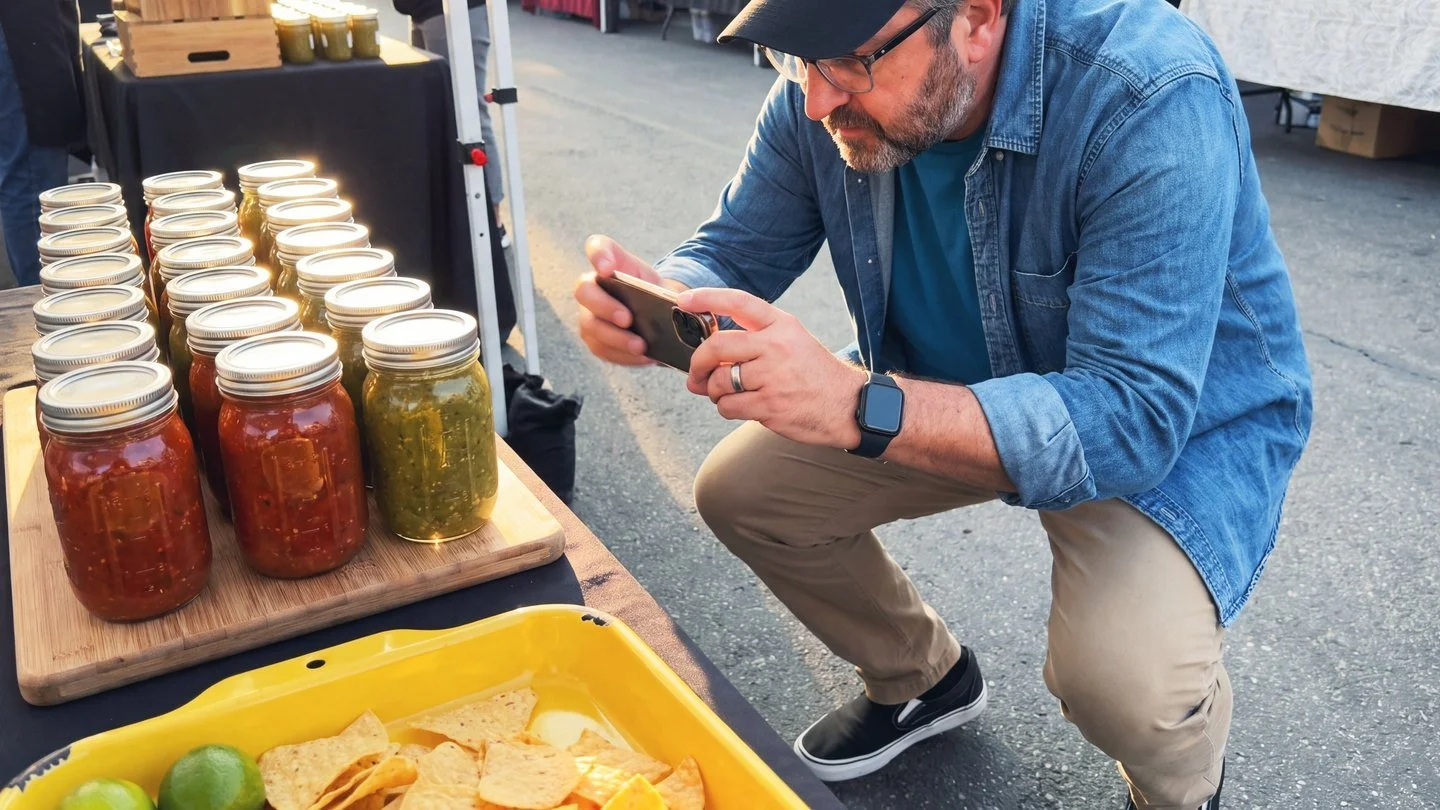
Show the package in the wild. The cooler door, the shelf at eye level, a hand pulling it off the rack, the bag open on a truck tailgate. People have to know the package on sight.
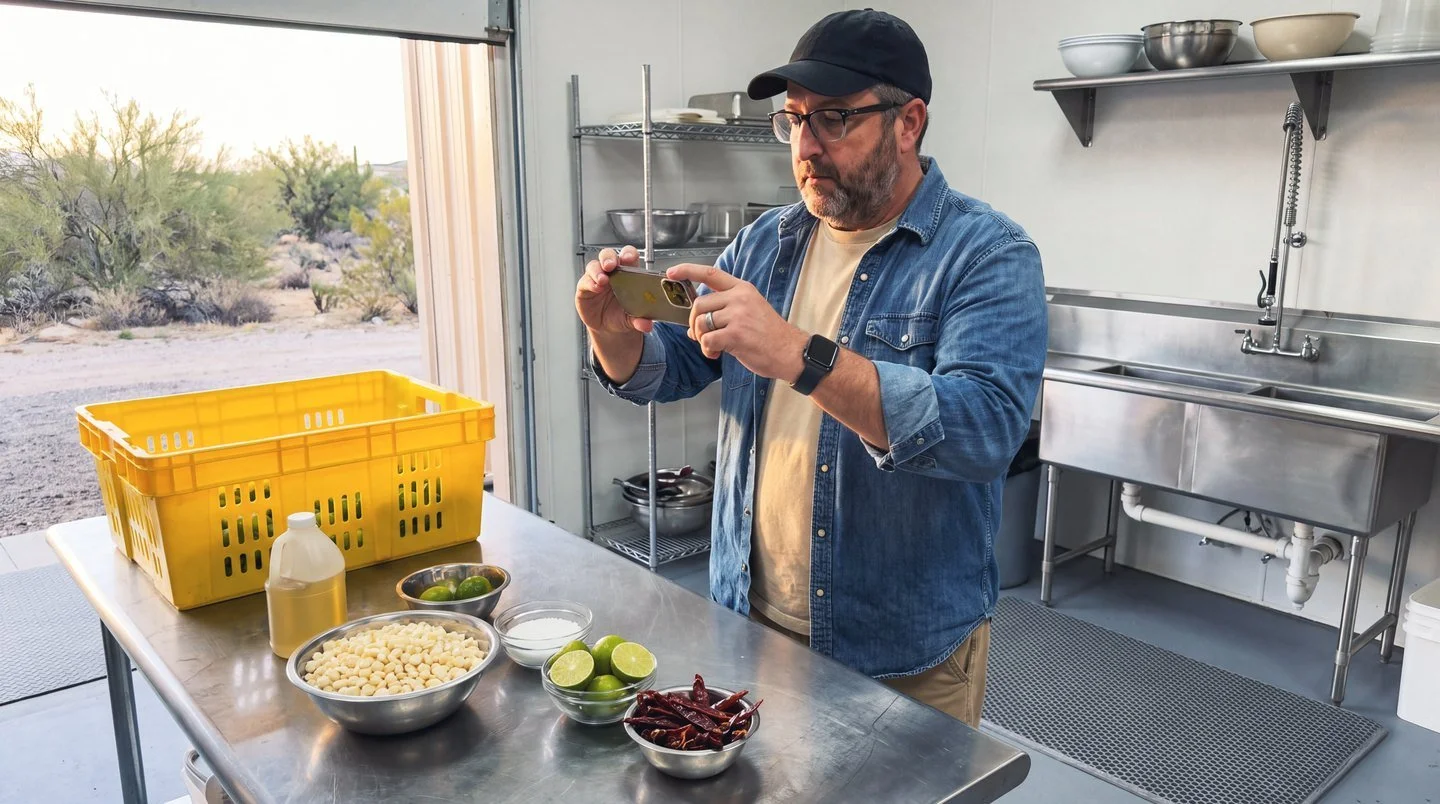
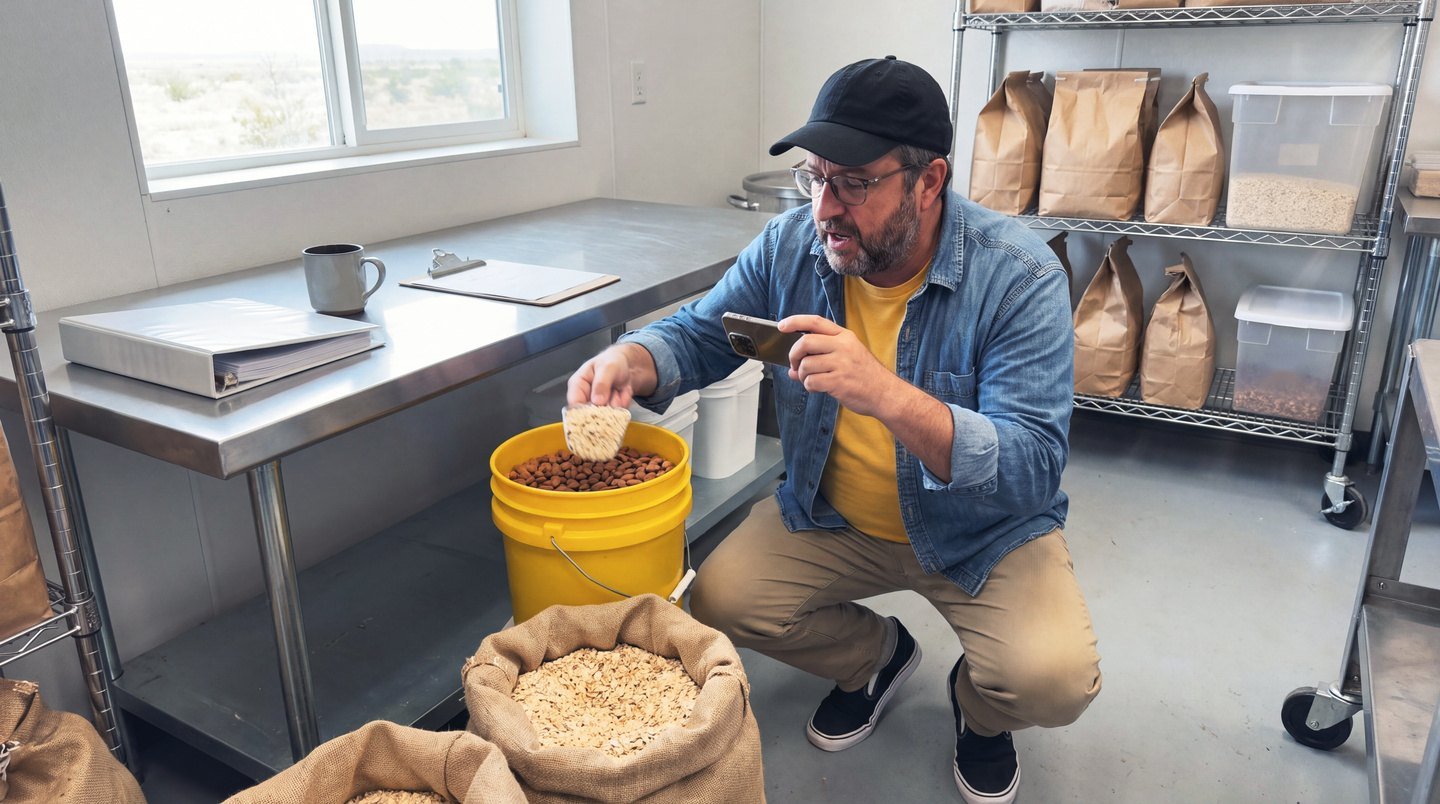
Put the founder on camera. A phone, a kitchen, one point per video. I made the case in Lo-Fi Founder Talking-Head Beats 4K Production, and the argument gets stronger every month.
Answer the questions people type. What's in it, what it tastes like, what it goes with, where to buy it. Each answer is a post, a caption and eventually a search result.
Ask for something in about one post out of five. Find us at a named store, try a named pairing, or send a message. The other four posts give value and ask for nothing.
Sequence counts.
Brands jump straight to step three because founder video is fun to shoot. Then they wonder why nobody can find the product.
Step one decides who the video is for. Step two decides whether that person knows what to look for when they walk in.
Which social media platforms matter most for food and beverage brands?
You don't need six platforms. You need two or three run well.
Instagram and TikTok carry discovery. Facebook reaches household shoppers and local groups. Pinterest holds a recipe for months. YouTube gives depth. LinkedIn reaches the retail buyers who decide whether you get the shelf at all.
| Platform | What it does for a food or beverage brand | What to post | What to watch | |---|---|---|---| | Instagram | Recognition and repeat exposure | Reels of the product in hand, carousels that answer one question | Saves, shares, messages asking where to buy | | TikTok | Discovery, especially with younger shoppers | Founder talking, taste tests, finding it on the shelf | Comments naming stores, profile visits | | Facebook | Household shoppers and local community groups | Store arrivals, recipes, local events | Shares, event responses, store locator clicks | | Pinterest | Recipes and meal planning that keep working for months | Recipe pins with the package in frame | Outbound clicks, saves | | YouTube | Depth and search | Short how-tos, how the product gets made | Watch time, search traffic | | LinkedIn | Retail buyers, brokers and distributors | Sell-through wins, founder point of view | Buyer connections, inbound meetings |
The platform choice follows the shopper from step one. Sprout Social's 2025 Index found that 42 percent of Gen Z consumers turn to TikTok for product discovery, which makes it a strong first channel for an energy drink and a weak one for a brand whose buyer is sixty and shops the weekly circular. Social media for beverage brands aimed at younger drinkers usually starts on TikTok and Instagram. A pantry staple for families usually starts on Facebook and Pinterest.
Do the 5-3-2, 5-5-5 and 3-3-3 rules work for food brands?
Training wheels, sure. They keep a new account from dumping nothing but promotions into the feed.
None of them tells you if a shopper will recognize your package on Saturday.
The 5-3-2 rule says that out of ten posts, five are curated from other sources, three are original and two are personal. For a food brand I'd flip the curation share almost to zero, because reposting someone else's content puts their product in the shopper's head, and yours needs the room. The 3-3-3 rule, three key messages, three audience segments and three channels, is closer to useful. Most snack brands would do better with one message than three, and most would do better with one shopper than three segments.
The 3-3-3 rule sits closer to useful. Three messages, three segments, three channels. Most snack brands would do better with one message than three. Most would do better with one shopper than three segments.
How do you measure social media when most food sales happen in stores?
Follower counts don't tell you if a package moved. Likes don't either. Track the signals that sit closest to the shelf, and read them market by market.
You want messages and comments asking where to buy. Store locator clicks. Mentions of a specific retailer. Saves on recipe posts. Changes in store-level velocity in the markets where you ran local content.
If you buy syndicated or retailer data, line those store numbers up against the weeks you posted.
Coupon codes and QR codes help at the margins. Shoppers who scan a code are a small and unusual slice of your buyers.
A feed tells you inside two days whether something landed. Search can take months to report back on a change.
Speed is the other reason social earns a place next to search.
I laid out that feedback clock in Google Says the Fix Takes Months. Your Feed Answers in Two Days.
Should you hire an agency, a consultant, or keep social media in-house?
Hire whoever owns the story.
An in-house coordinator executes.
An agency scales production and paid media.
An independent strategist sets direction and makes the content sound like the founder.
Budget ranges are public now. Bark's 2026 price guide puts typical social media management at $1,500 to $3,000 a month, with hourly rates running from $25 to more than $150. An analysis of more than 50 agency proposals by SocialRails, cited by Webtonic, found small businesses paying an average of $1,200 a month, mid-market companies $3,500 and enterprise clients $12,000 for full-service management.
| Option | Best fit | What you get | Watch out for | |---|---|---|---| | In-house coordinator | A founder who will stay on camera and in the comments | Daily posting and community replies | A junior hire left to set strategy alone | | Full-service agency | Brands with paid budgets and many SKUs | Production volume, paid media, reporting | Rotating account teams and committee copy | | Independent strategist | Founder-led brands that need a voice and a system | Senior attention, strategy, a content system | Limited bandwidth, so check references |
If you're weighing an independent food and beverage social media strategist against an agency, ask each one the same six questions.
Show me a food or beverage account you grew and tell me what happened at retail.
Who writes the captions, and will I ever talk to that person?
What will you measure in the first 90 days, and what will you ignore?
What do you do with a founder who hates being on camera?
What do you need from my team every week?
Who owns the accounts and the content if we part ways?
Walk away from anyone who guarantees follower numbers. Same for the ones selling engagement packages, handing you a content calendar before they've tasted the product, or reporting only reach.
I covered the generalist version of this problem in the generalist trap. Why creator fees feel invented is in Price the Work, Not the Audience.
What should you expect in the first 90 days?
A sales spike in week two is luck. Treat it that way.
You build the system in the first month. The second finds what lands. The third puts weight behind it. Expect store-level signals by the end of the quarter.
Days 1 to 30: name the shopper, audit the last 30 posts, shoot a batch of founder video, photograph the package at every retailer that carries it, and pick two or three platforms.
Days 31 to 60: post on a fixed weekly rhythm, answer every comment and message, and start tracking where-to-buy questions by market.
Days 61 to 90: cut the formats that died, double the two that worked, and hand your retail buyer a one-page summary of what social did in their stores.
What I've seen from a desk in Marfa
I run social media strategy and content creation for food and beverage brands from Marfa, Texas, and I publish to this blog every day. The archive is past 470 posts now. The pattern across all of it is boring and reliable. The posts that move people are the ones where somebody says a specific thing out loud, like the batch that burned, the grocer who said no twice, or the pepper that came in hotter than last year.
That's the one advantage an independent food brand has over a national one, and it's a big one. A forty-year-old snack company with a nine-person approval chain can't put its founder in a test kitchen at six in the morning saying the second batch came out wrong. You can, today, with the phone in your pocket. Food brand social media that sounds like one person telling the truth about the food outruns the committee every time, and the shopper remembers the package that came with it.
FAQ
What is the 5-5-5 rule for social media?
The most common version of the 5-5-5 rule is a daily engagement habit: like five posts, leave five thoughtful comments, and respond to five messages or posts. It's a way to stay present without posting more. For a food brand, point those fifteen actions at retailers, local food creators and customers who tagged your product, because those conversations are the ones that lead back to a shelf.
What is the 5-3-2 rule for social media posts?
The 5-3-2 rule says that out of every ten posts, five should be curated content from other sources, three should be original content, and two should be personal posts that humanize the brand. It keeps an account from turning into a string of ads. Food and beverage brands usually get better results by cutting the curated share and making most posts original, with the package visible.
What is the 3-3-3 rule for marketing?
Three messages is two too many for most small food brands.
The 3-3-3 rule wants three key messages, three audience segments, and three primary channels. Point is discipline. A brand that says everything gets remembered for nothing.
Start with the one thing you want a shopper to remember at the shelf. Add a second only after the first sticks.
How do you promote food on social media?
Phone video of the cook beats the studio shoot for most food brands. Show it getting made, plated, and paid for. Let the person who makes it talk.
Keep the package in frame so people learn it on sight. Answer the questions that show up in the comments. Post recipes that actually use the product. Say which stores carry it.
Ask for the buy in about one post out of five.
How much does food and beverage social media marketing cost?
Published 2026 price guides put typical social media management between $1,500 and $3,000 a month, and one analysis of more than 50 agency proposals found averages of $1,200 a month for small businesses, $3,500 for mid-market companies and $12,000 for enterprise clients. Content production, paid media budgets and influencer fees usually sit on top of that retainer, so ask what is included before comparing quotes.
How long does it take for social media to affect retail sales?
I've watched where-to-buy questions, saves, and store locator clicks show up inside the first 60 to 90 days of consistent posting.
Store velocity runs on a different clock. Distribution, price, and shelf placement move that number as much as anything you put in the feed.
Read it market by market. Judge the program over two or three quarters, not two weeks.
What to do next
Open your last 30 posts and read them out loud. Count how many a shopper could match to your package on a shelf, how many sound like a person, and how many asked for anything.
If those numbers come back low, start step one of the framework this week. Put your founder in front of a phone before the month ends.
I build this system for a handful of food and beverage brands at a time. If yours should be next, message me on LinkedIn.

adage, emmy, telly & webby award-winning digital marketing consultant for purpose-driven food & beverage brands.