Walmart Put Its Name Where the Food Used to Be
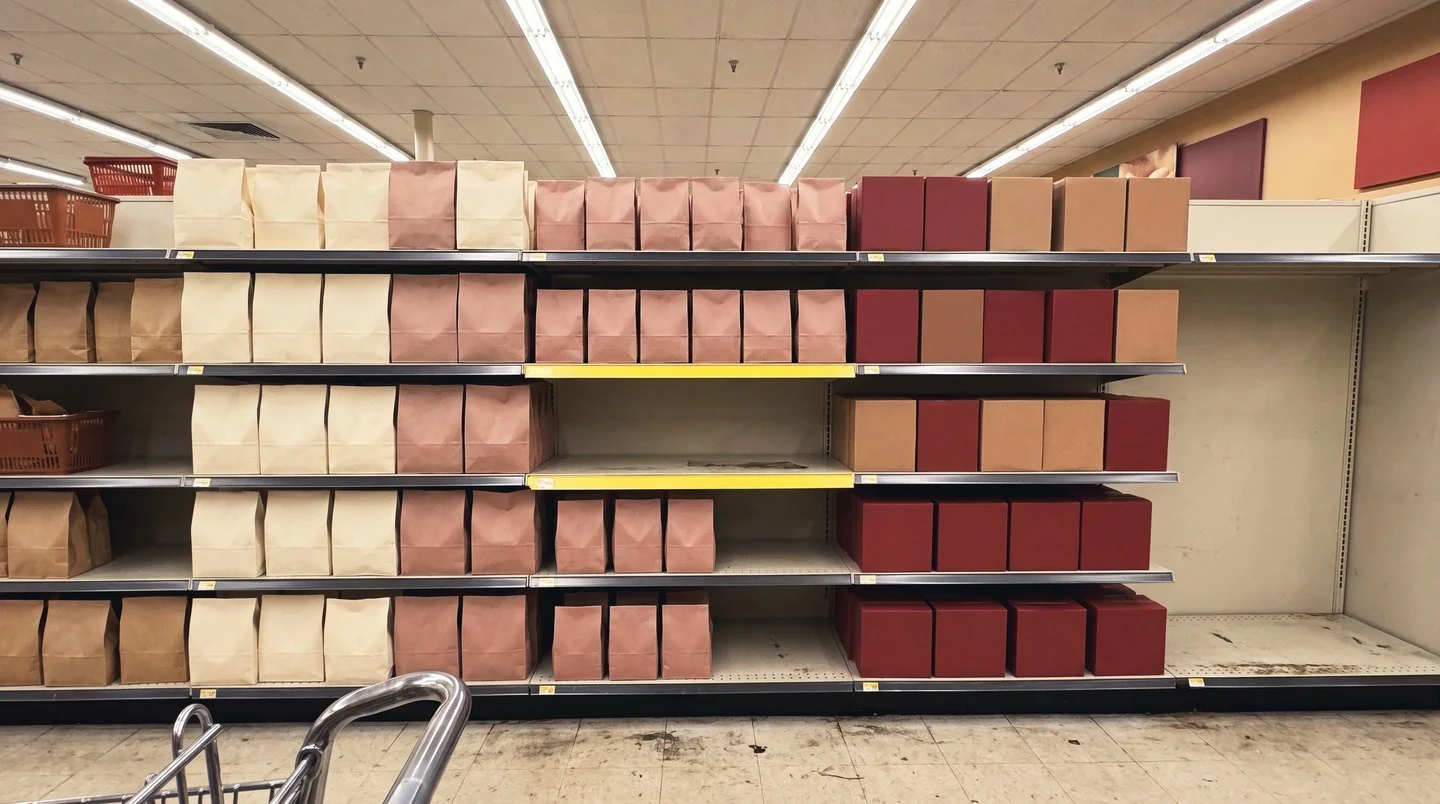
Great Value got its first redesign in a decade this year. The logo got bigger. The food picture got smaller. Color is the least interesting part of that. Lisa Peteet, creative director and co-founder of the packaging agency Atlas Branding, told Packaging Dive that retailers "want their logos really big on their packaging now" while the product imagery takes less real estate, and she called it "a complete flip right now in the industry." If you run a small or mid-market food brand, that flip is the whole story. What Walmart just enlarged is the one thing on a package you can't buy. The work-around is organic social media. I'll get to why.
The numbers under the flip
Private label took 23.5 percent unit share in the US in 2025. All-time high, per the Private Label Manufacturers Association. Through September private brand units were up 0.2 percent. National brand units fell 0.8 percent. Small numbers. One direction. Higher-income households are shifting into store brands rather than trading down out of necessity. Food Dive reported October 2 that a majority of Gen Z shoppers now rate private label just as good as a national brand.
Peteet got the why right. "Being price savvy has become more of a badge of honor." Younger shoppers, she said, have "embraced buying private label, but they still value design."
Everybody with a store is doing it
Target expanded up&up in 2024 with bigger type and colorful panels. Aldi redid the whole private label book in 2025. Kept the names on Clancy's, Simply Nature, and Specially Selected. Stamped "an Aldi Original" on them. Then launched a line under its own name. Amazon folded Amazon Fresh and Happy Belly into one brand called Amazon Grocery. No ceremony. Just the merge. Hannaford refreshed its private brand this year after shoppers said the packaging undersold the product. Sarah Guzmán, the chain's vice president of marketing, said the new look is rolling out on pasta, flour, cold brew, pickles and condiments. Peggy Davies runs the Private Label Manufacturers Association. She put the strategy plainly: good store-brand design tells the shopper "We know who you are."
Numerator puts 82 percent of Trader Joe's unit sales in its own labels. That's the highest share of any retailer in the country. Eran Mizrahi runs Source86. He gives Trader Joe's the credit for teaching American retail you can build an entire brand around value. Walmart owns the six private labels with the widest household penetration.
A store brand with its own look, its own name on the front, and the retailer's scanner data behind it isn't following anybody. The old fight was a lookalike bag. J.M. Smucker sued Trader Joe's over a crustless peanut butter sandwich it says copied Uncrustables, blue box and crimped edges and all. A federal judge let the case proceed in August. Mondelez went after Aldi over Oreos and Chips Ahoy before that. Those suits are about imitation. At least the store brand was following you.
Design was the part you could afford
The arithmetic for an independent runs like this. Pack design is the one piece of brand building that is cheap enough to do well on a launch budget. A good designer and a decent photographer will get you a bag that reads premium for a few thousand dollars, and for about fifteen years that bag was enough to look like the grown-up option next to a store brand in a plain font. Most of what a food and beverage marketing agency sells a food startup is some version of that work. It is real work. It is also the thing Walmart and Aldi just matched, with better data and no trade spend to earn back.
I wrote about this in a narrower form when General Mills named clean labels as its innovation roadmap. Any claim you can print, somebody bigger can print. The same rule holds for anything you can design.
The word a store brand cannot put on a bag
Walmart's name on a bag of frozen peas does sixty years of work before the shopper reads a single ingredient. The name is the proof. That's trust the banner hands over. Clean type won't buy you a shortcut to it.
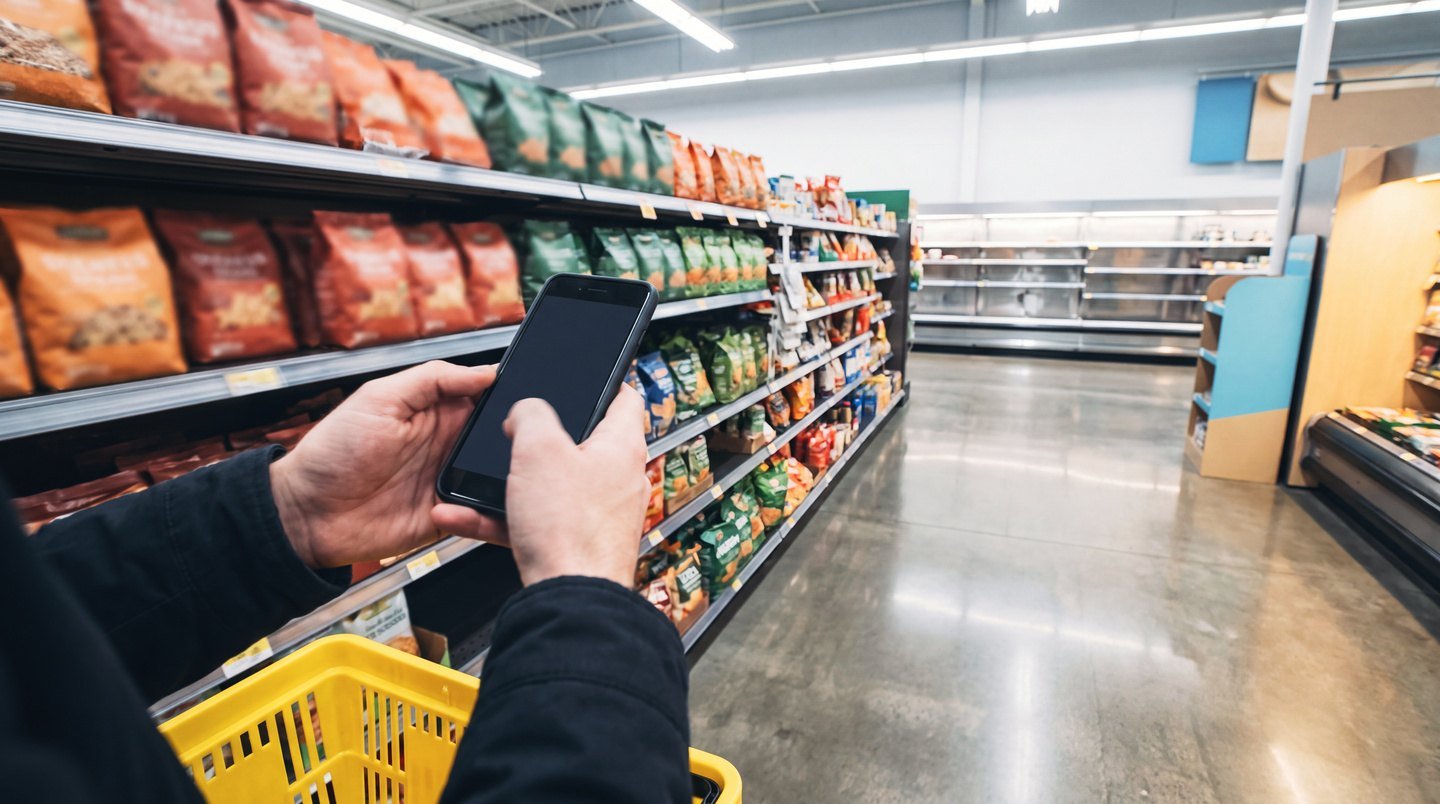
Your name on a nine-ounce bag is an introduction. The aisle is the most expensive room in America to make one in, because you paid for the slot and you get something close to one second of attention in return. Half the shoppers standing in front of you are already confused about what they are looking at, and now the store brand beside you has a confident logo and a clean nutrition panel in the same spot every time.
You can't out-design them. Show up in the aisle already known and the package reminds instead of pitches. That's not packaging. It happens months earlier. Organic social media is the only place an independent can do that work at a cost that makes sense.
What that looks like in practice
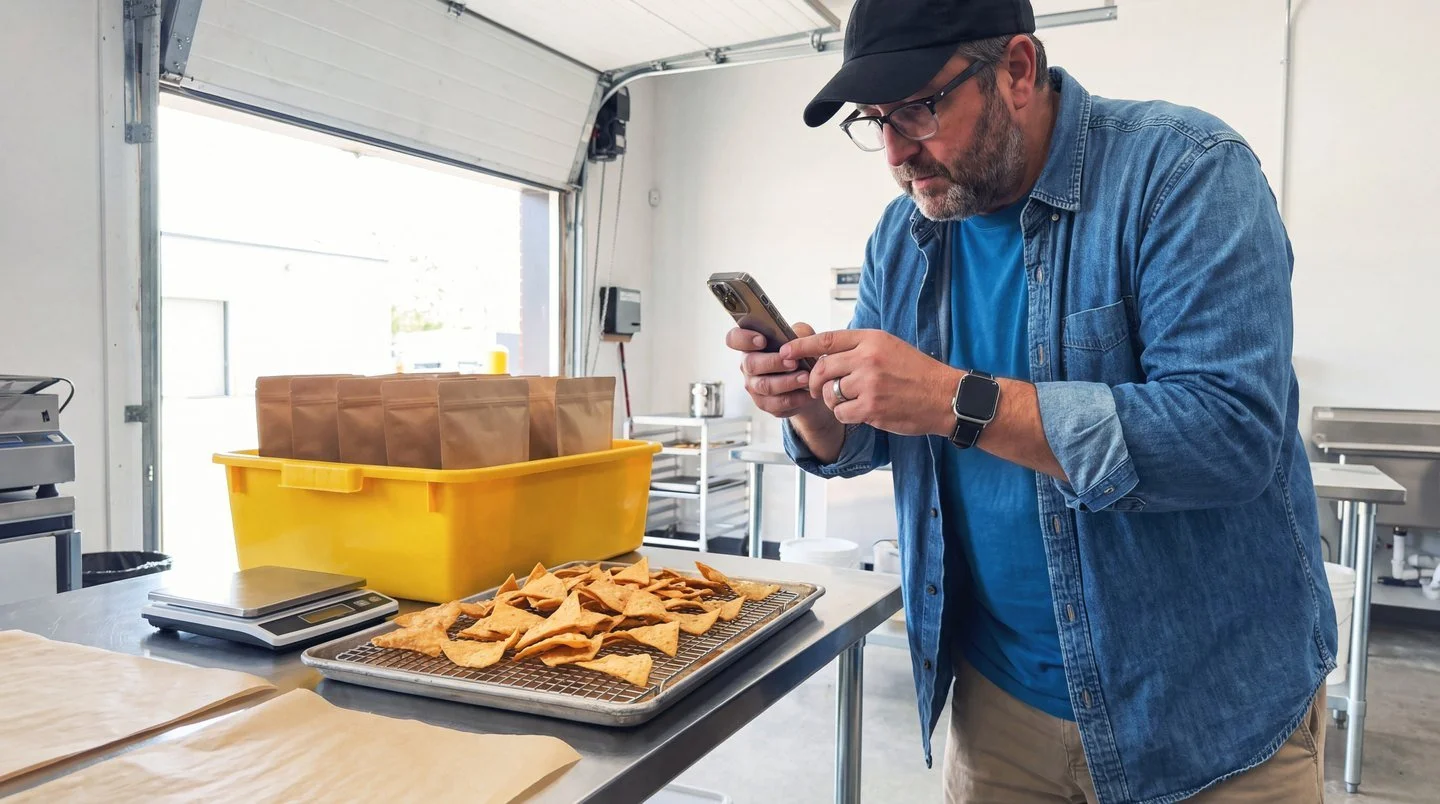
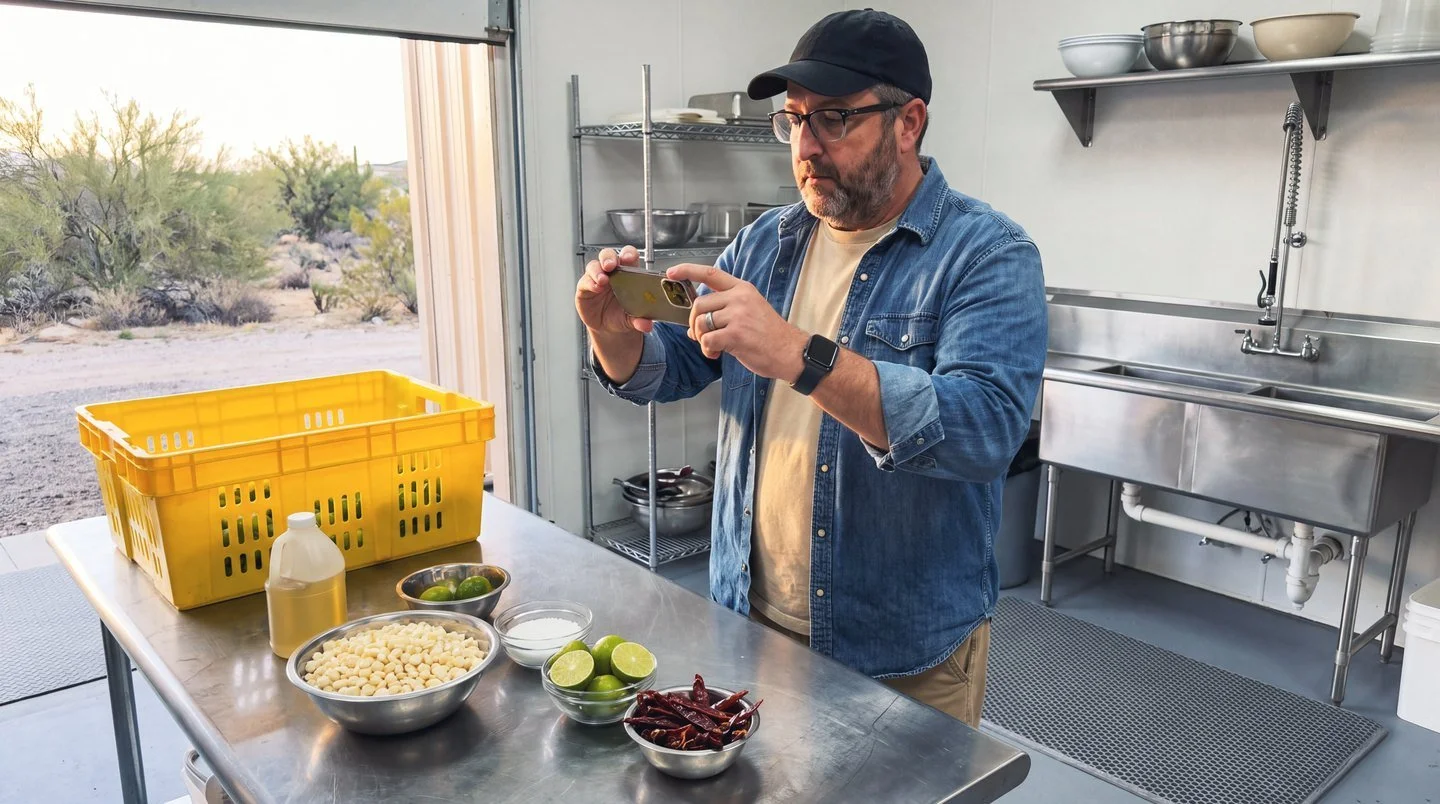
Twenty years of shooting food and beverage work, most of it now on a rigged iPhone in west Texas, and the pattern I see most often is a brand that spent its whole first-year budget looking legitimate and nothing being known. The founder is interesting. The co-packer run is interesting. The reason the bag holds nine ounces and not twelve is interesting. None of it is on the label, because there is no room, and none of it is in the feed either, because the feed is full of the pack shot. When Kraft Heinz blamed a package seal for Oscar Mayer's share loss I made the case that the feed is a package too, and the same thing applies here: the bag is rarely the interesting part.
I ran the same test on my own archive. I don't assign homework I haven't done. gallucci.net has been mine since 1996. There are 435 posts sitting on it. I went through them with one question. Cover my name. Would anyone know who wrote this? A lot of them failed. The ones that passed put me somewhere specific, doing something specific, with an opinion attached. The ones that failed were the competent ones. A store brand could have published them.
Take your last thirty posts and cover the logo. That test costs nothing to run. If a reasonable person can read them and still not name the brand, you're producing the exact thing Great Value just got better at. You're just paying retail for it.
Do this before the next shelf reset
Put your package on the desk next to your laptop. Write down everything on the front panel a store brand could print by Friday. Most of it, probably. What's left is the family name, the county, the year you started, the mill, the batch size, why you won't switch oils. That goes in the content calendar. The panel doesn't have room for it. The feed has nothing but room.
Put a real person on camera. Not a spokesperson. Not a voice-over riding a product spin. The owner. The plant manager. The woman who runs the fill line. Aldi can hire a design firm in a week. It can't hire your last name.
Your retail buyer is watching the same private label numbers everybody else is reading. Walk into that meeting and the argument that still holds is shoppers coming in asking for you by name. The one about your bag looking better lasts about a season now.
I work with a handful of food brands a quarter. If getting known before the aisle is your problem, message me on LinkedIn.

adage, emmy, telly & webby award-winning digital marketing consultant for purpose-driven food & beverage brands.