Tart by Slutty Cheff: What 6,633 Goodreads Ratings Say About Persona Branding
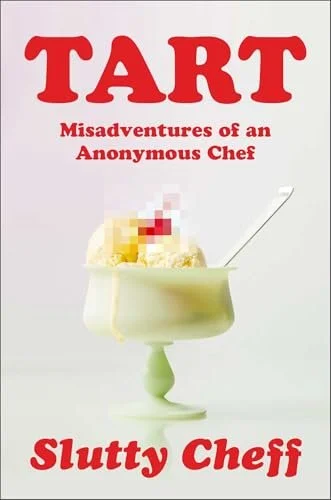
Slutty Cheff put Tart out in August 2025. Thirteen months later it sits at 3.42 stars across 6,633 ratings and 1,040 written reviews. That's a room arguing with itself.
I picked it up for the food writing. I stayed for the review section. Cleanest natural experiment in persona marketing I've read this year.
Most of my working life sits on the question this book answers by accident. What happens when the voice is the product.
A four-star reader on Goodreads called it "a crazy mix of the tv shows The Bear and Fleabag" and meant that as a reason to buy. A one-star reader called it "Fleabag mixed with The Bear and I mean that in the worst way possible." Same two shows. Same read on what the book is doing. Opposite verdicts.
Those two aren't arguing about craft. Both named the product correctly on the first try. They disagreed on whether they wanted it. When a review section splits that clean along that line, the writing isn't on trial. The persona is.
The anonymity is the asset here, and it does more work than any sentence in the book. Slutty Cheff is a name engineered to get screenshot. It promises transgression, competence, and a secret before you've read a word.
Readers noticed the machinery. One two-star review says flatly that "this is kind of mistitled and the pen name is strongly misleading," then spends the rest of its length explaining the book delivers a different thing than the cover sold. Another reader arrived so confused about the category that she opened by lamenting it had been shelved as literary fiction, annoyed to learn the narrator was a real person she now had to be fair to.
That confusion isn't a mistake in the marketing. It is the marketing. A name that loud buys attention by writing a check the manuscript has to cash. The reviews are where you find out whether it cleared.
The single most useful line in all 1,040 reviews comes from a reader who gave it four stars and still put her finger on the structural problem. "I think slutty chef's articles are an art form yet the book didn't satisfy me as much so maybe short form is her sweet spot." She goes on to say the passages dwindled, especially the cooking ones, and that she grew tired of the decisions being narrated to her.
That's a friendly reader describing a failure of format, not of talent. A voice tuned for eight hundred words of column does not automatically survive 351 pages. Density that reads as swagger in a caption reads as a tic by chapter nine. One one-star put the same complaint less kindly, saying the metaphors are constant and that she'd never read a book that abuses metaphors this much.
I run into this with brands constantly. Least glamorous problem in the business. A voice that kills in fifteen seconds of vertical video will fall apart across a three-minute brand film, and the client can't understand why, because the words didn't change. The words aren't the issue. The dosage is. Short form forgives a strong flavor because it ends before your palate adjusts. Long form does not forgive anything. You can build a whole identity on being the loudest thing in the feed and discover, the first time you have to hold a reader for an hour, that loud is the only setting you own.
The fix is boring and nobody wants it. You build a second register before you need it. A quieter one that can carry the same point of view at a slower tempo, so the brand has somewhere to go when the format gets longer.
Here's the part that convinced me the underlying asset is real.
A two-star reviewer who spends her whole review calling the book self-obsessed still stops to concede that "the depictions of professional kitchens, cooking, and chefs, however, are accurate," and says the passion for food is the only reason it got two stars instead of one. A three-star reader who thought the book was mostly an excuse to overshare wrote that "the food writing in this memoir was the best part" and credited the detail about being a woman in a male-dominated kitchen.
Consistent pattern across the negative reviews. Almost nobody says she can't cook or can't describe cooking. The complaints land on the framing, the persona, the pacing, and the self-regard. The product inside the packaging was good. The packaging is what split the room.
If you're a brand reading this, that's the best-case version of a bad rating. It means the thing you make is fine and the story you tell about it is mistuned. That's a fixable problem. The reverse never is.
One reader wrote the sentence I've been trying to write for about four years, and she did it in lowercase on a Tuesday for no money. "you hate corporate bc it's fake then you become a chef and have to sell yourself through instagram and book deals."
Read that again if you sell anything for a living.
The persona was built in opposition to corporate phoniness. Quitting the marketing job is the origin story, the hinge the whole book swings on. And the only way to monetize that story is through the exact apparatus the story rejects. Instagram. A publicist. A book deal. An anonymous name that's a trademark.
The same reviewer says she thinks the author is completely aware of the hypocrisy, which is generous and probably right, and it doesn't save her, because the audience recruited on anti-corporate feeling is the audience least able to forgive a business model.
This is the trap under every founder brand, every chef brand, every scrappy CPG label with a hand-drawn logo and a story about a grandmother. You recruit people with intimacy. Intimacy does not scale. The moment the machinery becomes visible, some meaningful share of the people who loved you for being unpolished will read the polish as a betrayal, and they will not phrase it as a business critique. They will phrase it as a character critique, which is what a one-star review is.
You can see it happen in real time in this book's reviews. The word that recurs in the harshest ones is not boring. It is fake, or privileged, or vapid. Nobody attacks the sauce. They attack the person.
A 3.42 with 6,633 ratings is not a mediocre book. It is a polarizing one that got read by a lot of people who were never its audience, which is what happens when the marketing is better than its targeting. The five-star reviews are unembarrassed about what they wanted. One says it "felt like a new friend catching you up on the chapters of their life that you missed." That is a precise description of the promise the cover makes.
The three-star reviews are where the honest accounting lives. "This doesn't read as a memoir. It's a fun read, but it lacks depth, especially for a memoir," one wrote. And my favorite line in the whole pile, from a one-star reader who sounds more wistful than angry: "her life is no more (and perhaps even less) interesting than mine. maybe I should write a memoir. maybe we all should!"
She's complaining, but she's also correctly identified what the last decade of content did to everybody. The persona economy taught a few million people that an interesting-enough life plus a good enough name is a product. Tart is a competent execution of that thesis. It sold well, it reads fast, the kitchen stuff is right, and a third of its readers finished it feeling sold to rather than let in.
I'd take that trade on a client project. I'd also make sure the client knew, before we started, exactly which third we were going to lose.
Tart: Misadventures of an Anonymous Chef by Slutty Cheff, Marysue Rucci Books, August 2025. 3.42 stars, 6,633 ratings, 1,040 written reviews on Goodreads as of this writing. Review excerpts quoted above are from Goodreads readers.

adage, emmy, telly & webby award-winning digital marketing consultant for purpose-driven food & beverage brands.