Hershey Can't Make Enough Dot's Pretzels Until 2027. Get in Front of Your Snack Buyer Before Then.
Hershey told investors on October 29, 2026 that demand for Dot's Pretzels is beating its supply, and its new lines won't run until the first half of 2027. If you run an independent snack brand, that's your window. Take your buyer an in-stock record and proof that shoppers ask for you.
Data current as of November 1, 2026
What did Hershey say about its salty snacks?
It said it can't ship all the pretzels people want to buy. Hershey, the Pennsylvania company best known for Reese's and Kisses, also owns Dot's Pretzels, LesserEvil, SkinnyPop and Pirate's Booty. On the October 29 call, CEO Kirk Tanner said third-quarter results "remained constrained by supply challenges for Dot's Pretzels and multipacks", and that service levels improved "more slowly than expected." Service level is the trade's polite phrase for whether the truck showed up with what the store ordered.
The brand isn't the problem. Dot's did $626 million in the last year, per Circana, and its third-quarter retail sales rose 9%. "Demand is definitely outstripping supply, but we are catching up," Tanner said, according to Food Dive, which reports the new manufacturing lines should start in the first half of 2027. Anybody who's waited on a parts truck in Marfa knows what a promised date is worth, but let's take him at his word.
Hershey's earnings release has North America Salty Snacks net sales up 22.3% to $392.7 million in the third quarter of 2026. About 20 of those points came from buying LesserEvil. Organic growth was 2.3%, and segment income fell 17.9% to $47.4 million on freight, manufacturing, commodity and marketing costs.
Tanner left LesserEvil out of the shortage sentence. Hershey's CFO, Dave Hulays, says that brand continues "to outperform our year-to-date expectations." Don't walk in claiming Hershey's whole snack set is empty. It isn't. Your buyer already knows what showed up on the truck.
Is a Hershey shortage really an opening for a small brand?
Yes, but a narrow one, and it isn't the one you're picturing. No buyer is going to pull a $626 million pretzel for your seasoned pretzel. What you get is a buyer who has spent at least two quarters thinking about who ships what they promised, at the moment you can show them you do.
Multipacks deserve a hard look. Hershey named them right next to Dot's, so if you sell a variety pack or a lunchbox format, you've got a sharper pitch than a brand with one 10-ounce bag. Hershey also says it's making a planned cut in sales to private label customers. If you have line time and you've ever considered co-packing a store brand, that's a phone call worth making.
The window has a far wall. "It is our job to stimulate demand here," Tanner said. The company's already spending more on consumer marketing. Once those lines run, you're competing with a fully stocked Dot's and a bigger budget than yours behind it.
Dorothy Henke started Dot's in Velva, North Dakota, in 2011, as a snack she shared with family, friends and neighbors, and Hershey paid $1.2 billion for Dot's and Pretzels Inc. That's a lot of money for a kitchen story. Yours isn't for sale yet, and you still pick up the phone.
What happened when I built a list for a competitor's stumble?
The list got done and the placements never showed up on any record I have. This year a beverage client hired me while its biggest competitor was off U.S. shelves. I built the kit: 675 restaurants, bars and hotel bars across nine markets, a ranked short list with the reason each account earned a slot and the opening ask for a rep, market briefs for Chicago, Austin and DFW, and a directory of 575 events.
The target was 40 to 50 placements. I can't give you a number. I don't have one. We'd written field reps down as the gating item for the whole phase, and a spreadsheet doesn't walk into a bar by itself.
That's the lesson I'd pay for if I were you. I had the list and no one with a name attached to it who was going to make the calls. Start with the person.
The second thing I'd fix comes from Lattini, a sunflower seed milk sold in Sprouts, Erewhon and Central Market. It had 174 confirmed store demos in 2023, and I went through the recap rows looking for any mention of social. There wasn't one, which I wrote up in what to do with your demo table. The evidence a buyer wants was being produced in seven states and nobody was collecting it.
What should an independent snack brand do before those lines start?
Emerging CPG brands don't get many openings announced for them on an earnings call. Here's how I'd spend this one, in this order.
- Put your fill rate on one page. Pull orders against shipments by retailer for the last 13 weeks, and work out how many more cases a week you could ship without a second shift. Done when you'd defend both numbers to a buyer's face. If they're ugly, stop here and fix production, because asking for more shelf with a bad fill rate is how you lose the shelf you've got.
- Name the person. Somebody on your team, a broker or a rep owns this through June. Done when their name is on the sheet next to every account.
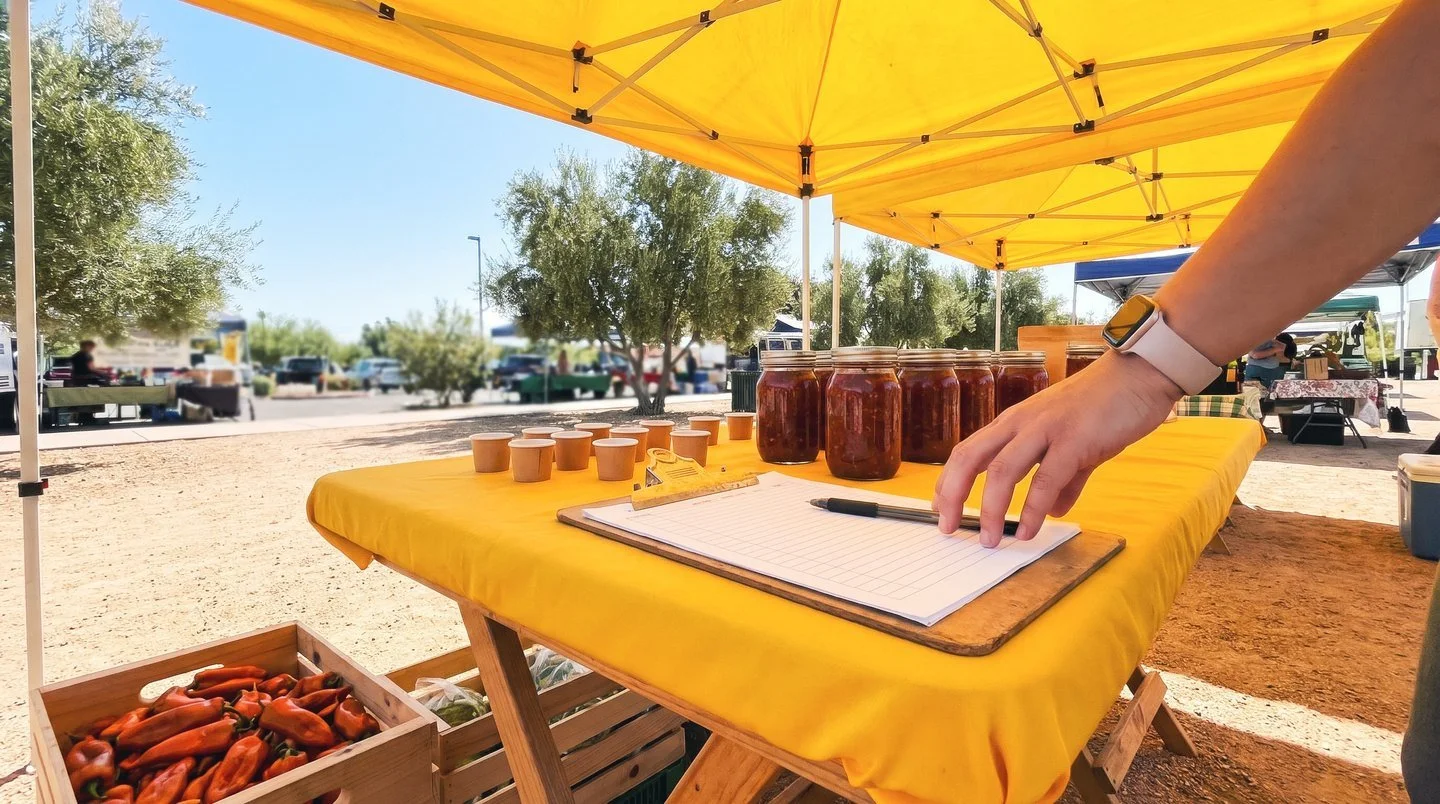
- Walk 20 stores. Go to the stores in your own region and photograph the salty snack set and the multipack section, with the date. Done when you've got a dated list of what was missing and where, seen with your own eyes and not borrowed from a headline.
- Pick one item. One pack size, one price, one sentence on why it fits that gap. Done when your person can say it without looking down.
- Point your organic social media at those stores. Name the store in the post, run a demo there, put a QR code on the table, and hand the sampler a phone. Done when you can show units per store per week for demo stores against stores with no demo.
- Shoot the 60-second version. The founder, the kitchen or the plant, and the reason this snack exists. Make it something a rep can text to a buyer. Done when it works on a phone with the sound off.
- Get the meeting. Ask your buyer when the category resets next, and get on the calendar ahead of it. Done when there's a date, and it comes before Hershey's lines do.
Say Dot's once, if at all. Your buyer doesn't need you to explain their own out-of-stock report. Lead with what you shipped, what sold and who you are.
Any food and beverage marketing agency pitching you a holiday content calendar this month should ask for your fill rate first. If it doesn't, it's selling you posts, and what you need this winter is a meeting.
If you've got the cases and nobody's telling your buyer the story, DM me. It's the first thing I'd fix in a 90-day sprint.

adage, emmy, telly & webby award-winning digital marketing consultant for purpose-driven food & beverage brands.