Food and beverage branding agency: a chip bag and a cold can don't sell the same way
A food and beverage branding agency builds the strategy, identity, packaging and voice a food or drink product sells under. Before you hire one, make it prove it knows the difference between the two. A snack gets chosen in the aisle and eaten at home. A drink gets grabbed from a cooler and photographed in somebody's hand.
Key takeaways
- Plenty of agencies put "food and beverage" on the door and are really a food shop or a drinks shop. Ask which one they are before you sign.
- Food gets bought at the shelf and judged at the kitchen table. A drink gets bought cold, often on the spot, and judged in public.
- A good food and beverage branding agency designs for the moment of use, the feed and the event, along with the package.
- Get strategy, identity, packaging and rollout quoted as separate lines, and plan the first 90 days of using the brand before the brand book is final.
What does a food and beverage branding agency do?
It decides what your brand stands for, then builds the system that carries that idea onto the package, the website, the sell sheet and the social feed. You're buying a set of rules other people will use long after the agency goes home.
Most proposals break the work into four parts. Strategy sets who buys the product, what it beats, and the one sentence a shopper should be able to repeat. Identity covers the name if you need one, plus the logo, type, color and photo direction. Packaging design turns all of that into dielines a printer and a co-packer can run. Guidelines close it out with a brand book for everybody who touches the brand next.
The top Google result for this phrase today is an agency's own service page. It lists those same buckets plus a web build, shows four case studies, and stops. There's no price guidance, no FAQ, nothing on how to choose between agencies, and nothing about why a drink and a snack need different thinking. I covered the handoff problem, what happens the week after the brand book ships, in an earlier piece on hiring a food branding agency. This one is about the "and" in the middle of the phrase.
Packaging carries legal weight in both categories. Statement of identity, net quantity, ingredients, allergens and the Nutrition Facts panel all have rules, and the FDA's Food Labeling Guide should be open on your designer's desk. If the drink has alcohol in it, the label usually also needs a certificate of label approval, a COLA, from the federal Alcohol and Tobacco Tax and Trade Bureau, filed through TTB's COLAs Online system. An agency that has never had a label kicked back by a regulator or a co-packer will learn that lesson on your invoice.
Why are food branding and beverage branding two different jobs?
People buy a drink, use it, and show it off in places a box of crackers never sees. The package, the voice, and the content have to win at the spot where that choice actually happens.
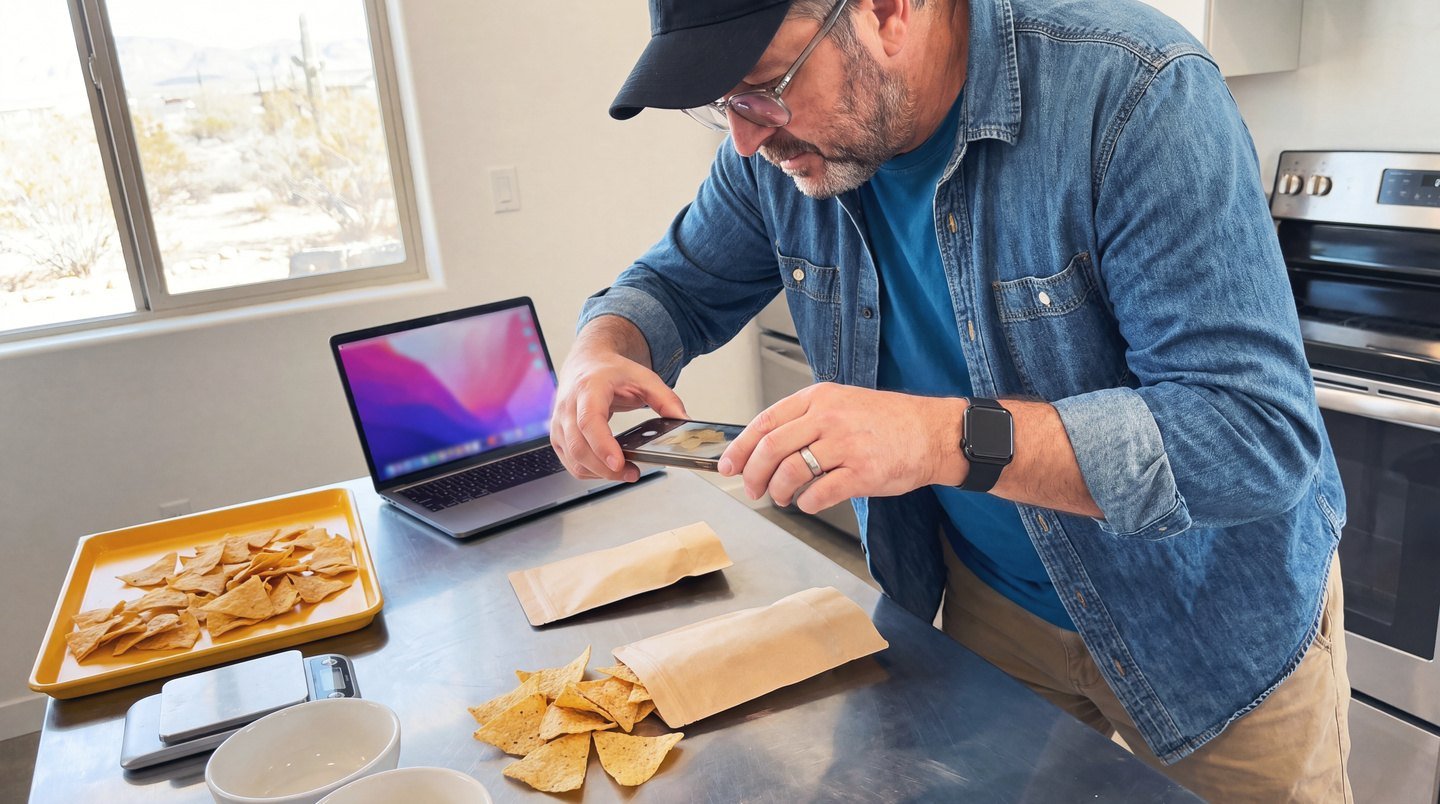
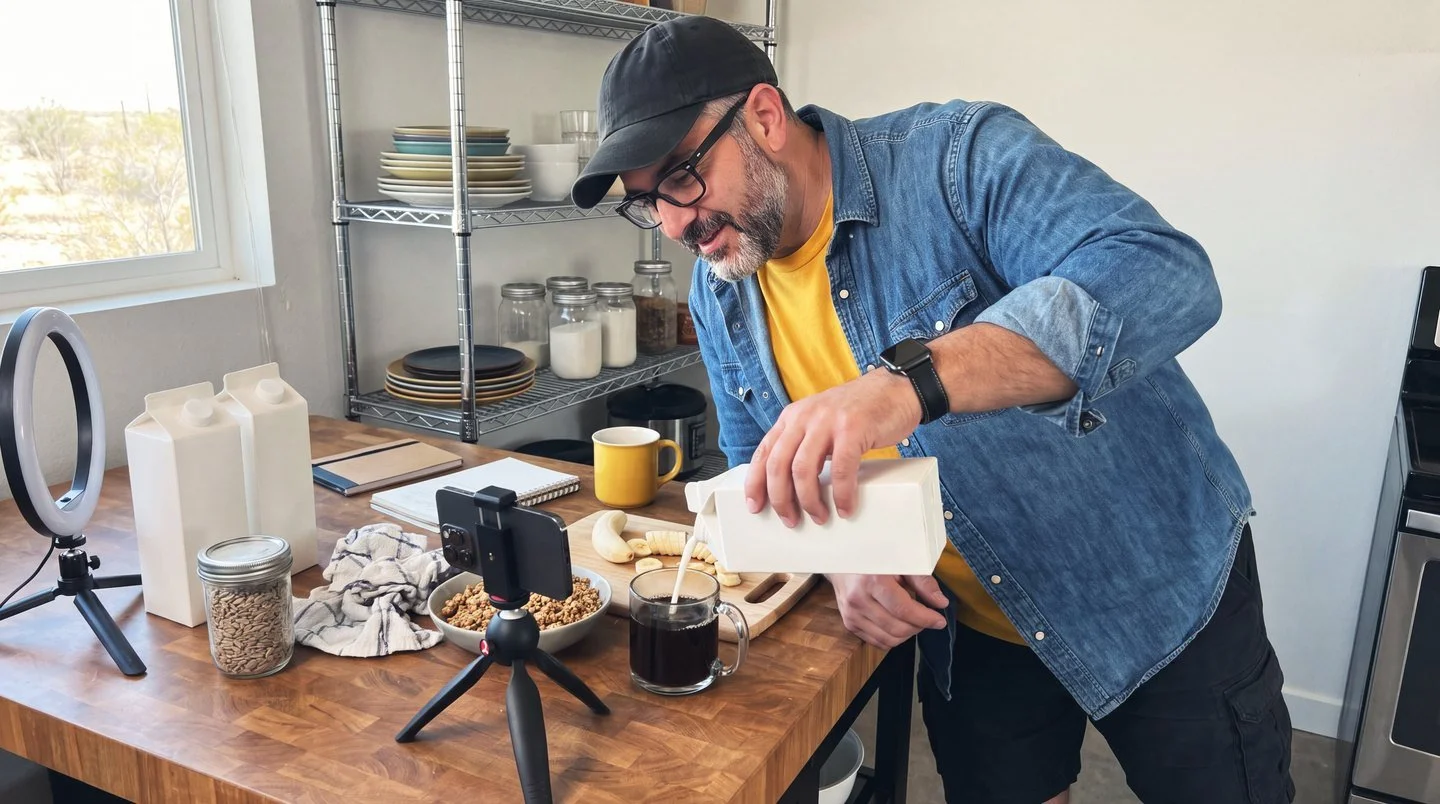
A food product mostly gets chosen in an aisle, by somebody shopping for a household, with a list and a little time. Then it goes home. The brand's second chance comes at the kitchen counter, when somebody figures out what to make with it or whether the kids will eat it. Food branding that works answers "what is this and how do I use it" fast, and gives the brand something to say every week about recipes, meals and the people who make it.
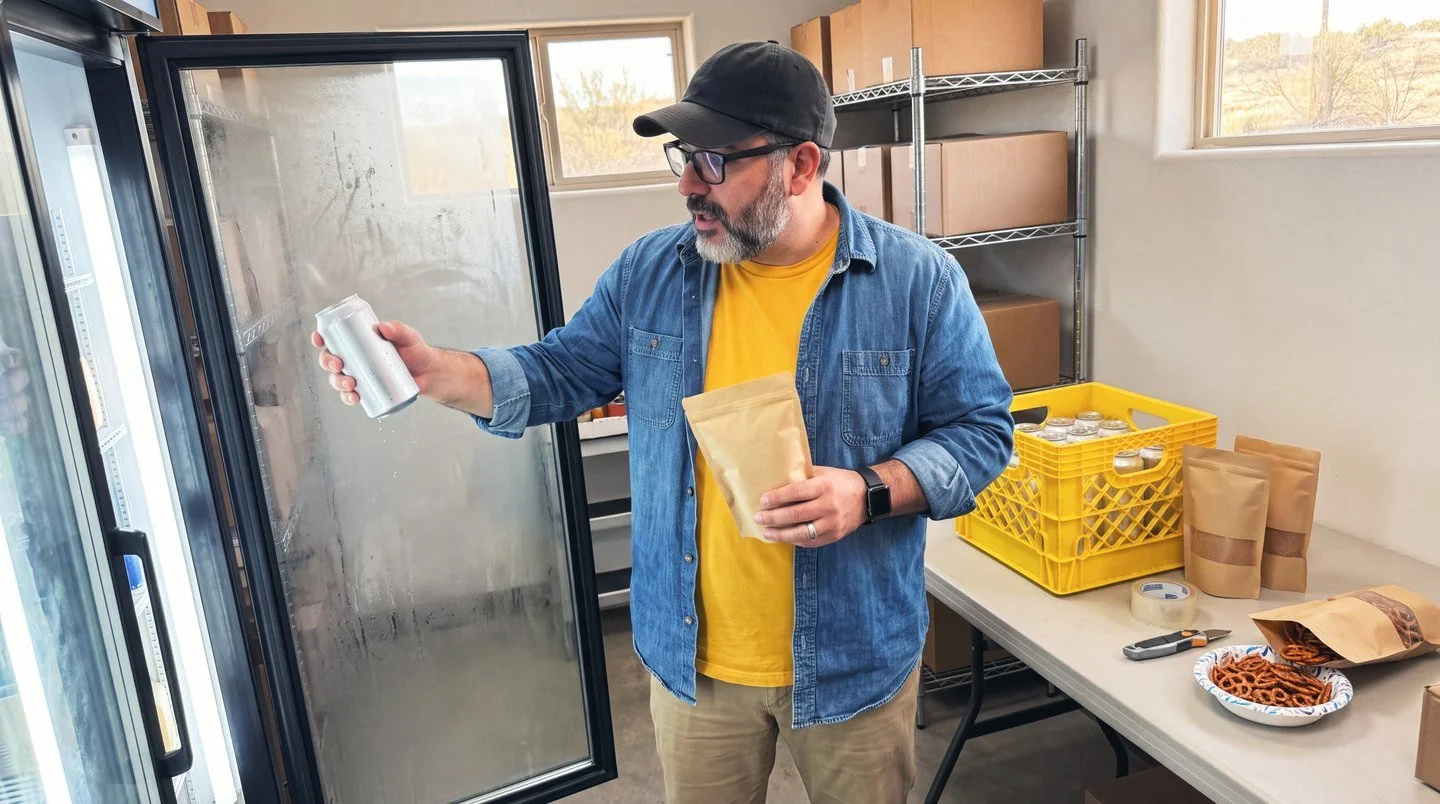
A drink gets chosen at a cooler door, a gas station case, a bar back or a festival tub full of ice. A lot of those purchases are single serves bought on the spot. Then the can goes into a hand, and the hand goes into a photo. The can is the ad. Beverage branding that works reads from six feet away through fogged glass, looks right in a stranger's phone at night, and gives people a reason to hold it up.
Neither job is harder. They're different, and the shortcuts that work in one category show up as mistakes in the other. A beverage-trained team will often put too little "how to use it" on a food package. A food-trained team will sometimes design a beautiful can that disappears under cooler lights. Ask a food and beverage branding agency which side its people came up on, and look at the work for proof.
What I learned building a drink brand after six years of snack content
I've run straight through this split. Six years at Frito-Lay as a content creator, videographer, and video editor. At Arca Continental I built Topo Chico's digital identity from the ground up before Coca-Cola bought the brand. I led social strategy at Coca-Cola for nearly six years after that.
Snack content lives in kitchens, lunchboxes and game-day spreads. The product is an ingredient in somebody's afternoon, and the work is showing how it fits. The mineral water was a different animal. It showed up at Lollapalooza, SXSW, ACL, Luck Reunion and Jam in the Van, in the fridge program, and in photos other people took. The bottle carried the brand into rooms we'd never have paid to get into. Our job was making sure it looked like itself when it got there.
What carried over between the two was voice. A snack brand and a water brand both have to sound like one specific company talking, every day, in a feed that doesn't care about the brand book. I've written more than 435 posts on gallucci.net from Marfa, and the ones that land still sound like one person. That's the test I'd put any new identity through before I paid for it.
Food branding vs beverage branding: where each one gets bought
Food wins at the shelf and the kitchen table. Beverage wins at the cooler and out in public. Run this table against an agency's book and see if they actually cover both.
| Question | Food brand | Beverage brand | |---|---|---| | Where it gets chosen | Center store, on a planned grocery trip | Cooler door, c-store case, bar, event tub | | How long the shopper looks | Long enough to read a claim or two | A glance through fogged glass | | What the package has to do | Say what it is and how to use it | Read from six feet away, cold and wet | | Where the brand gets seen next | Kitchen counter, lunchbox, recipe video | In a hand, in a photo, at a show | | Content that carries it | Recipes, meals, the people who make it | Events, sampling, creators, the drink in use | | Extra label review | FDA labeling rules | FDA rules, plus TTB label approval if it has alcohol |
If an agency's case studies are all clean shelf shots, they've solved half of this table. Ask to see the drink work in somebody's hand and the food work on somebody's counter.
How to vet a food and beverage branding agency in seven questions
Ask these in the pitch meeting. A strong agency answers all seven with examples. A weak one answers the first two and cues up the sizzle reel.
- Which side did your team come up on, food or beverage, and who on my account has done the other side?
- Show me a can or bottle you designed, photographed in a real cooler, and a food package photographed on a home counter.
- What does the logo look like at thumbnail size, inside a social profile circle?
- Who checks the label copy against FDA rules, and TTB rules if there's alcohol, before files go to the printer?
- Will the voice guidelines include sample captions, comment replies and a 30-second script?
- What do you hand my team on day one after launch, and who answers when they get stuck?
- Which food or drink clients still use your identity the way you designed it, two years later?
Question seven tells you the most. Pull up those clients' feeds yourself. If today's posts look nothing like the case study, the identity didn't survive contact with the public, and yours might not either. I made a similar case for drinks in why positioning beats design when you hire a beverage branding agency.
How much does it cost to hire a branding agency?
It depends on scope. Every agency should hand you that scope line by line. Strategy gets its own number. So does identity. Packaging and rollout too. That's the only way you compare quotes without the fog.
Packaging fees grow with SKU count and every new dieline, so a five-flavor launch costs more than one hero product. Beverage adds its own variables, like can or bottle size, a shrink sleeve or a printed can, and multipack cartons. Food adds structure work like pouches, trays and windows. Ask how many revision rounds are in the quote and what an extra round costs. Ask whether photography, copywriting and voice work are included or billed later.
Then budget for the part most quotes skip, the year after launch. A new identity with no content plan is an expensive file. Before you trust any agency's results slide, read how to decode the numbers in a food and beverage marketing agency case study.
Do you need an agency, a design studio or someone in-house?
Match the hire to what's broken. A new product with no name or look needs a full agency. A brand that's clear but losing at the shelf may only need a packaging studio. A brand with a fine look and nothing to say needs strategy and voice first.
In-house works once the identity exists and somebody has to use it every day. That person needs a voice guide they can write from, which most brand books don't include. For most independent food and drink brands under national scale, the setup I'd pick is a design studio for the look and an outside strategist who lives in the feed every day, so the voice survives. The CPG branding agency piece on post number 15 walks through how to test that before you sign.
Is it worth it to hire a branding agency?
It is when the problem is the brand. If shoppers can't tell what you are, or the package loses at the shelf or in the cooler, a good agency can pay for itself in fewer bad launches. If the brand is fine and nobody sees it, a rebrand won't fix that.
Plenty of founders spend on a new identity when the gap is distribution, content or sales follow-through. A sharper logo doesn't move cases that never reach a buyer's desk. Before you sign, write down the one problem you're paying to fix. If the agency's proposal solves a different one, keep shopping. For drinks, I broke down what a beverage founder should buy from a drinks marketing agency.
FAQ
What is a food and beverage branding agency?
A food and beverage branding agency is a firm that builds the identity a food or drink product sells under. That covers positioning, naming when needed, logo and visual identity, packaging design, brand voice and the guidelines that keep it consistent. The good ones also plan how the brand gets used after launch, on social, in sales materials, at events and in video, because that's where most people meet it.
How much does it cost to hire a branding agency?
Cost depends on scope: how many SKUs and dielines, whether naming and strategy are included, how many revision rounds you get, and whether photography or copy is part of the deal. Ask every agency to price strategy, identity, packaging and rollout as separate lines. Then hold back budget for content and social after launch, because an identity nobody uses day to day doesn't sell anything.
How do you brand your food product?
Start with one sentence a shopper could repeat about what the product is and why it's worth buying. Build the name, look and package around that sentence, then test the package where it will actually be chosen, on a shelf or in a cooler. Write a voice guide with sample posts and replies, and plan the first 90 days of content before launch.
What is F&B marketing?
F&B marketing is marketing for food and beverage products: branding, packaging, retail and trade promotion, sampling, events, social media, creators, PR and e-commerce. It differs from most categories because the product gets bought often, judged on taste and seen at the moment of use. Food leans on the shelf and the kitchen, and beverage leans on the cooler, events and the drink in somebody's hand.
Is it worth it to hire a marketing agency?
It's worth it when the agency fixes the specific problem holding back sales and you can measure that fix. Define the problem first: awareness, content volume, retail sell-through or a brand nobody can describe. Hire for that one job, ask who will do the work each week, and set a 90-day check. If the agency can't say what will change by then, keep looking.
What to do next
Write down whether your product wins at a shelf, in a cooler or both. Then pull up three brands each agency on your shortlist has worked on, in their own feeds, and see whether the identity still looks like itself on a counter, in a hand and at a show. Ask the seven questions above, and put the 90-day rollout in the contract. You pay for the identity once. The voice that carries it shows up every day, and that's where an independent brand has the edge, because no committee-approved paragraph sounds like a founder who makes the stuff.
I build brand voice and content for food and beverage brands, a few at a time. If yours sells at a shelf and in a cooler, DM me.

adage, emmy, telly & webby award-winning digital marketing consultant for purpose-driven food & beverage brands.