Beverage branding agency: the best drink brand I ever worked on never got a rebrand
A beverage branding agency builds the positioning, name, identity and packaging a drink sells under. Hire one when the brand is broken: shoppers can't tell what's in the can, the label dies in a cold case, or you're moving into a new category. If the label already works, spend the money putting the drink in people's hands.
I ran social for Topo Chico for 12 years. Nobody redesigned that bottle on my watch. Old logo, yellow cap, plain glass. The water had been bottled in Monterrey more than 120 years before I touched the account. We never paid an influencer. The brand still landed in more than two dozen TV shows and half a dozen major movies. That's the bias I bring to this question. I'd rather you know it up front.
Key takeaways
- A beverage branding agency fixes identity problems. It can't fix a distribution problem or a nobody-has-tasted-it problem, and plenty of founders hire one for those.
- Ask to see drink work specifically. The page Google ranks first for this search shows five case studies, and only one of them is something you pour.
- Packaging design for a drink commonly runs from about $2,000 for a simple label to $50,000 and up for custom structural work, so scope it before you shop it.
- A redesign can cost you shelf recognition you already paid for. Tropicana's 2009 carton change cut unit sales 20 percent in about seven weeks.
- If your can already reads in a cooler, put the budget into content that shows it in a hand, at a table, in a truck.
What does a beverage branding agency actually do?
It decides what your drink is, who it's for, and how that shows up on a can, a bottle, a case, a cooler door and a phone screen. The deliverables are usually positioning, naming, a logo and type system, packaging design for each SKU, and a guide for using all of it.
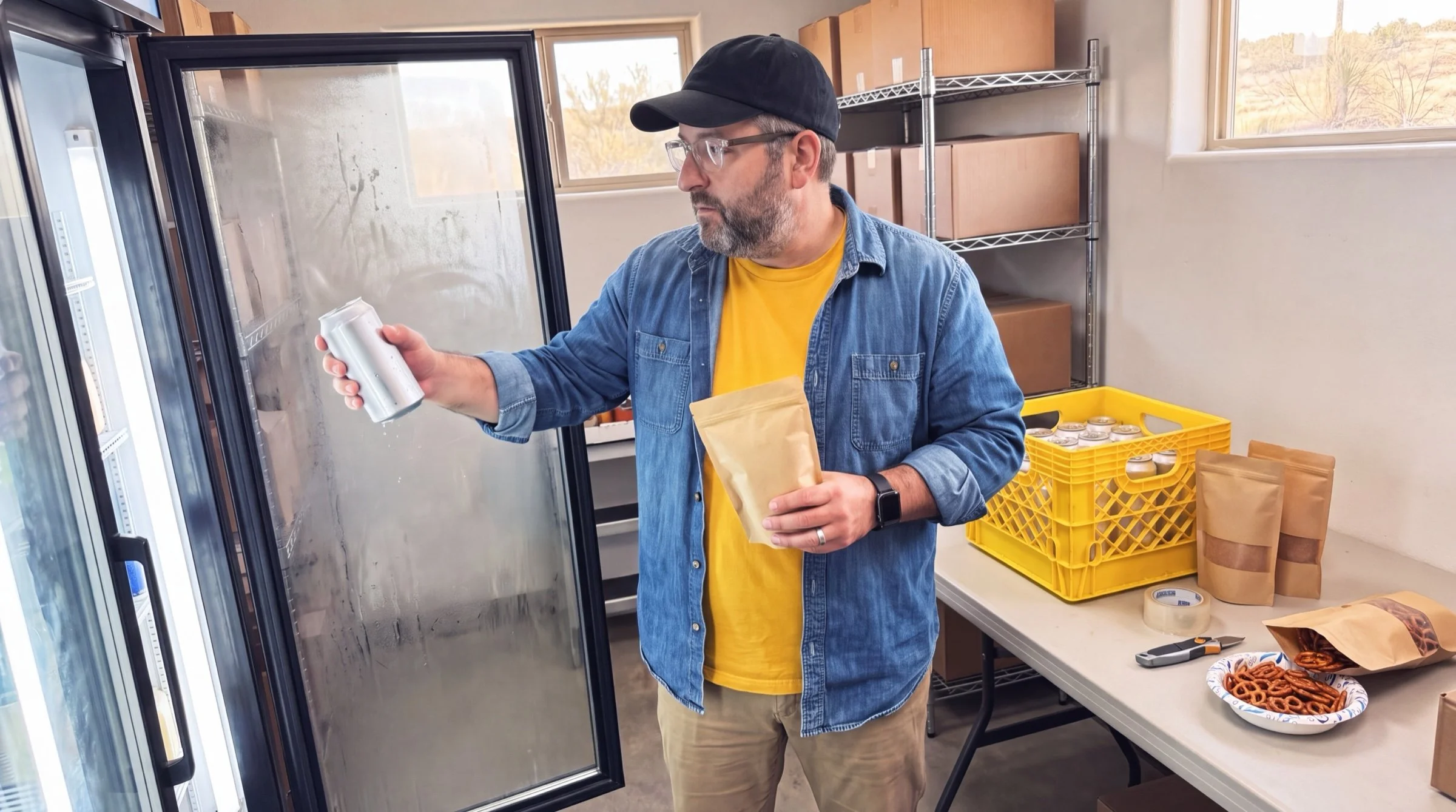
The good ones also design for the cold case. A drink gets grabbed in about the time it takes a cooler door to swing shut, often by somebody who's thirsty and in a hurry at a gas station. Color has to read through fogged glass. The flavor has to read from six feet away. A beverage branding agency that only shows you flat mockups on a white background hasn't done that part yet.
What they usually don't do: get the drink tasted, get it photographed by real customers, get it on a distributor's truck, or keep it in front of people for the 50 weeks after launch. That's sales, sampling and social. Some agencies sell those too. Most do them worse than they do the design.
Do you even need a beverage branding agency?
Maybe not. Here's the test I'd run before calling anybody.
| Situation | Hire a beverage branding agency? | Where the money should go | |---|---|---| | Shoppers can't tell what the drink is or what flavor it is from six feet away | Yes | Packaging system and flavor architecture | | You're launching a new drink with no name, no label and no story yet | Yes | Positioning, naming, identity, packaging | | You're moving categories, say from a soda to a functional drink | Yes, at least a strategy engagement | Positioning first, then packaging | | The label reads fine, sales are flat, and nobody outside your town has heard of you | No | Sampling, organic social, creator seeding | | A buyer said the brand "feels dated" but your regulars love it | Probably not a full rebrand | A refresh tested against your current label | | You're bored of your own label | No | Nothing. Your customers aren't bored of it |
That last row is the expensive one. Founders see their label every single day. Customers see it for two seconds at a cooler. The founder gets tired of it years before the shopper even learns it.
What the top-ranking beverage branding agency page leaves out
I pulled up "beverage branding agency" on Google on October 24, 2026. The first result is a Moxie Sozo service page. They bill themselves as Ad Age's 2025 Small Design Agency of the Year. I'm not knocking their design work. I'm knocking that page. It's what a beverage founder reads first when they type the question you typed.
It runs roughly 1,500 words. It talks to manufacturers, startups and distributors all at once. It explains a five-step process under an acronym. And the "Proven Results" section, on a page about beverage branding, shows five case studies: a dairy and non-dairy rebrand, a whiskey rebrand, an ice cream rebrand, a collagen rebrand, and a snack rebrand. One of those is a drink you'd pour into a glass on purpose. Maybe two, if you count the milk.
There's no price range on the page. No timeline. Nothing about what happens to your existing shelf recognition when you change the label. The FAQ asks about sustainability, consumer psychology and corporate social responsibility goals. Nobody running a 40-SKU drink company with a distributor meeting next month asks those questions first. They ask what it costs, how long it takes, and whether it'll hurt sales.
So here are those answers.
How much does a beverage branding agency cost?
For packaging design alone, one packaging supplier's 2026 pricing guide puts simple label work for a standard bottle or can at $2,000 to $5,000, custom graphic work at $5,000 to $15,000, and fully custom structural work at $15,000 to $50,000 or more. The same guide puts design hourly rates at roughly $100 to $250.
A full engagement (strategy, naming, identity and packaging across a flavor line) costs more than packaging alone, and the agency's quote will depend on how many SKUs you have and whether you need a new structure or just new graphics. Get strategy, identity and packaging quoted as separate line items. That way you can see what you're paying for thinking versus what you're paying for files.
Timeline is the other cost. Every month you spend redesigning is a month your current label isn't getting known. Finish the art before the next production run, not during it.
The rebrand that cost $33 million in seven weeks
Tropicana launched new Pure Premium cartons on January 8, 2009. The orange with the straw stuck in it was gone, replaced by a glass of juice. Unit sales fell 20 percent between January 1 and February 22, and dollar sales fell 19 percent, about $33 million, according to Information Resources data reported by Ad Age. The company announced on February 23 that it was going back to the old carton.
The juice didn't change. The shelf did. Regulars walked right past a carton they'd bought for years because it stopped looking like the one they knew.
A small drink brand has less to lose in dollars and more to lose in proportion. If 300 stores and a few thousand loyal drinkers know your can by its color, a new color resets that. Sometimes that's worth it. Make the agency show you, before you approve anything, how a regular will still spot the new can in the old spot.
How to evaluate a beverage branding agency in one meeting
Bring these six questions. If they dodge more than one, keep looking.
- Show me three drinks you've branded, and tell me what happened to sales in the first six months after launch.
- Show me the work in a cooler, in a hand and on a phone, not only on a white background.
- What do you keep from our current label, and why?
- Who on your team does the work on our account, and who just pitched it?
- What's quoted as strategy, what's quoted as design, and what's quoted as production files?
- What happens the month after you hand over the brand guide?
Question six is where most agencies go quiet. The brand guide is where their job ends and yours starts, and the first test of the new identity happens on a feed, not in a conference room. I wrote about that handoff in what happens the week after the brand book ships.
If you sell both snacks and drinks, also ask whether they know the difference. A chip bag and a cold can don't get bought the same way, which I went into in food and beverage branding agency: a chip bag and a cold can don't sell the same way. And if you've already been through one agency and came out with pretty files and no story, what to actually look for beyond the portfolio covers that gap.
What I'd do with the budget if the label already works
Topo Chico is the case I know best. The label didn't need anybody. What it needed was for the right people to be seen holding the bottle, in the right places, and for somebody to post what happened next. A bartender squeezing a lime into one. A 12-pack for $9.99 at Honey Bee Market in Detroit, where the guy behind the counter told me they couldn't keep the single bottles on the shelf. That's branding too. It just doesn't come with a logo file.
If your can already reads in a cooler, here's the order I'd spend in.
- Sampling where your drinker already is, with a phone out.
- A steady organic feed built on those moments, so the can shows up in hands and not only on a white background.
- Creator seeding with product, not checks, until something sticks.
- A packaging refresh only after you know which version of the can people photograph.
I laid out the full version of that in organic social media strategy for beverage brands. If you're weighing a full-service shop against buying one job at a time, what a beverage founder should actually buy from a drinks marketing agency breaks down the menu.
This is the organic social strategy and content production I do for food and beverage brands. I've owned gallucci.net since 1996 and written more than 435 posts here, a lot of them about food and beverage brands, from a desk in Marfa, Texas.
FAQ
What is a beverage branding agency?
A beverage branding agency is a design and strategy firm that builds the positioning, name, visual identity and packaging a drink sells under. Good ones design for the places a drink gets chosen: a fogged cooler door, a crowded shelf, a hand in a photo. They usually don't handle distribution, sampling or the social feed after launch.
How much does it cost to hire a beverage branding agency?
Packaging design for a drink commonly runs from about $2,000 to $5,000 for simple label work up to $15,000 to $50,000 or more for custom structural design, according to one 2026 industry pricing guide. Full strategy and identity work costs more. Ask for strategy, identity and packaging quoted separately so you can see where the money goes.
When should a beverage brand rebrand?
Rebrand when shoppers can't tell what the drink is or what flavor it is at a glance, when you're entering a new category, or when the brand promises something the drink no longer delivers. Don't rebrand because you're bored of the label. Your customers have seen it far less than you have, and recognition is expensive to rebuild.
What should I ask a beverage branding agency before hiring them?
Ask to see three drinks they branded and what happened to sales afterward. Ask to see the work in a cooler and on a phone. Ask what they'd keep from your current label, who does the work, how strategy and design are priced, and what happens the month after they deliver the brand guide.
Can a rebrand hurt beverage sales?
Yes. When Tropicana replaced its familiar orange-and-straw carton in January 2009, unit sales fell 20 percent and dollar sales fell about $33 million in roughly seven weeks, and the company went back to the old design. Regular buyers couldn't find the product they knew. A smaller brand faces the same risk in proportion.
What to do next
Put your can in a cooler next to the three brands it sits beside in your best store. Take a photo from six feet back. If you can't find yours in two seconds, call a beverage branding agency. If you can, keep the label and spend the money getting it into more hands.
I run organic social and content for a handful of drink brands at a time. If the can's good and nobody's seen it yet, message me on LinkedIn.

adage, emmy, telly & webby award-winning digital marketing consultant for purpose-driven food & beverage brands.