Flavor Houses Mask the Off-Note. I Counted How Often My Camera Did the Same Thing.
Beverage Industry ran a piece on August 28 about masking solutions in functional drinks.
It's written for R&D people and reads like a technical service story.
Somewhere in the middle is the most honest sentence anybody in this business has said out loud all year.
Anna Lada's a senior marketing specialist at Flavor Producers in Valencia, California. She put it plain: "The best flavor modification is one that consumers never notice."
She's right about her job. That's exactly what a masking system is built to do. Put a camera in your hand instead of a beaker and read the line again. It covers most of what passes for beverage content. I've got the proof on my own hard drive.
What the trade piece actually said
The functional category has a taste problem it does not like to discuss in public. Chloe Alverson's piece walked through it with the flavor houses on the record.
Kathryn Murano, senior flavorist at IFF in New York, laid it out. Protein "can introduce cheesy or vegetative off-notes, bitterness, astringency, chalkiness and texture challenges."
Shivangi Patel at Sensient Flavors and Extracts in Hoffman Estates, Illinois, watches stevia, monk fruit, agave, and erythritol each fail on their own clock. Sweetness curve is the polite term for that.
Philip Caputo at Virginia Dare in Carteret, New Jersey, says the real work moved upstream. "It's less about throwing a masking agent into a formulation and more about building a sensory profile around a functional ingredient from the start."
There's no scandal in any of it. These folks are doing real work and doing it well.
Patel said consumers "want to enjoy their drink rather than just endure it," and that's a fair ask for something that cost you four dollars.
Invisibility is the stated design target of the entire discipline. That should stop a marketer cold.
Lada's other line: "Consumers don't think about masking ingredients or flavor modification."
The system works when nobody clocks it. Same standard, with nobody voting on it, quietly became how the category gets photographed.
So I ran the numbers on my own archive
I tag every still and clip in the library. Subject line on every frame. Real database, not a vibe folder.
Pulled everything marked food and beverage or ingredient focus. Dropped client work so nobody else's shoot got graded on my behalf. Landed on 14,254 frames.
I went through those subject lines looking for one human being drinking, sipping, tasting, eating, chewing, or swallowing anything.
1,108 frames. Seven point eight percent.
13,146 frames of food and beverage work, shot by a guy who's been at it thirty years, and nobody's mouth ever touches the product.
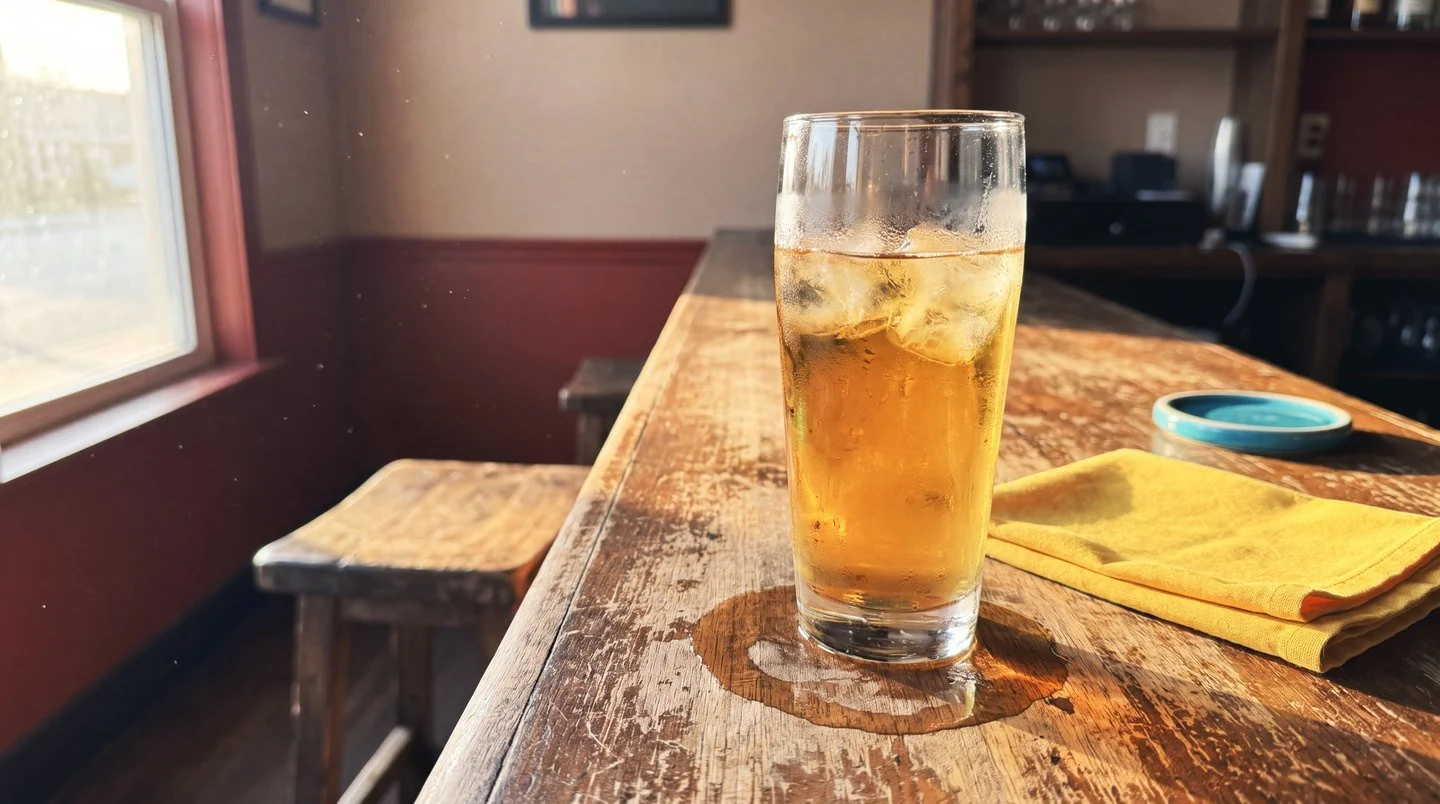
Cans on tables. Bottles buried in ice. Condensation running down aluminum in good afternoon light.
People holding a drink, gesturing with a drink, standing in a frame a drink also happens to occupy.
Some of it's genuinely nice work. Almost none of it answers the one question a shopper actually has: whether the thing tastes like anything they want in their mouth.
That's my number, straight off my drive. I ran it. Didn't enjoy a second.
The camera is a masking system
Ashwagandha tastes like a garden. That's why the formulator reaches for a bitter blocker. Brand reaches for the beauty shot for the same reason. Both moves cost about the same and buy about the same thing. One hides the off-note in the can. The other hides it in the feed.
That's the tell in most CPG social media. The product just sits there sweating, lit like a wristwatch, while the copy talks mornings and clarity and doing hard things. Nobody swallows. Nobody reacts. There's no face in the frame at the actual moment because that moment is the part the brand is least sure about.
Shoppers got sharp at reading that silence. A can photographed for two years by people who never showed anybody drinking it is telling on itself. Same move as a five-ingredient front-of-pack claim sitting over a "natural flavors" line that never gets explained.
I'll give credit where it's owed. Emily Hoyle, senior VP of marketing at Nutrabolt, put the objection right in her July launch for C4 Sparkling Protein.
Her words: "Sparkling and clear protein drinks have a reputation for tasting flat or leaving behind a chalky mouthfeel, and we knew that wasn't good enough for C4."
A marketer naming the off-note in a press release almost never happens. It does more for the brand than another can on another rock.
What I would do instead, starting Monday
Shoot the swallow. Not the sip.
Keep the camera on them a full beat after the can comes down.
If the drink is good, that beat sells harder than anything you can do with a polarizer.
If the beat is unusable, your formulation just told you something the agency was never going to.
Roll before you hand them the can. Real person who hasn't tasted it. First reaction, no second take. Keep whatever happens.
A founder who admits the adaptogen is a little earthy and then shows why the balance works will out-convert a month of condensation. I have written about that trade before in the transparency playbook for clean-label content, and the numbers keep pointing the same direction.
Pull your own bottle on camera and read the back label out loud. Every line. That includes the flavor system.
If you bought a masking solution, name it.
Monk fruit is monk fruit. Say monk fruit.
"Natural flavors" is the least informative phrase in American food. First founder in a category who explains it plain owns that conversation for everybody else.
Pull the last two years of your own library and count the frames that show real consumption. Divide.
If that number sits under ten percent, your CPG social media is running the same play as your flavor house. Only one of you gets paid to hide the taste.
I've made this mistake with a Canon body. I've made it with a rigged iPhone.
Thirty years taught me the gear won't save you here.
The lo-fi founder take beats the 4K production every time it's nerve on the line, not resolution.
Polish is cheap now. Nerve is not.
Lada's right on flavor. The best modification is the one nobody clocks.
Content runs the other way. You want the line they notice and then repeat to somebody else.
You don't get there while the second that actually matters keeps happening off camera.
Bring the last two years of your library. We'll count what your own frames keep avoiding.
That's a fair amount of what I do as a food and beverage marketing agency of one.
The number is usually worse than people expect. And it's always fixable with a camera you already own.

adage, emmy, telly & webby award-winning digital marketing consultant for purpose-driven food & beverage brands.