TikTok Just Badged Your Agency Shortlist. The Badge Only Measures Ad Spend.

TikTok Just Badged Your Agency Shortlist. The Badge Only Measures Ad Spend.
On September 16 TikTok posted a short announcement on its business blog called "Elevating Excellence: Introducing Premier Agency Partners." The agency badging program went from one tier to two. There's an Agency Partner badge now, and above it a Premier Agency Partner badge, which TikTok calls "an exclusive honor" handed to "a select group of top-performing partners worldwide." Social Media Today picked it up on September 29 and wrote the part TikTok left implied, that the new badges "could help marketers choose which agency to go with for assistance."
The badge is the whole product. Brands grab it so they can shortcut the question of who to hire.
So read what it actually grades. TikTok says the Agency Partner badge goes to shops that "demonstrate exceptional performance, operational capability, and certified team expertise," against core criteria it names as TikTok Excellence, Experience, and Commitment. Premier goes to partners with "proven business results, deep platform expertise, and an unwavering commitment to TikTok-first marketing," blending "deep platform specialization with sophisticated media execution" for "complex advertiser portfolios." And in the line that gives the game away, TikTok says the two-tier structure exists to highlight "top-scale investment and performance globally."
Investment means spend. Media execution means buying. Advertiser portfolios means accounts with budgets. Every criterion on that list is an ad criterion, which makes sense, because the badging program lives inside TikTok For Business and the directory it feeds is a directory of marketing partners who move money through TikTok's auction. The program launched in 2020 and the partner directory now lists more than 600 approved partners across creative, marketing technology and measurement.
Nothing in there measures if the shop can make a 22-second video a human watches to the end.
That is not a gotcha. TikTok never claimed otherwise. The badge is honest about what it is, in TikTok's own words, on TikTok's own blog. The problem starts when a brand treats an ad credential as a general one, which is exactly what a procurement department does with a badge, because a badge is a checkbox and a portfolio is forty minutes of somebody's afternoon.
What that does to a food brand
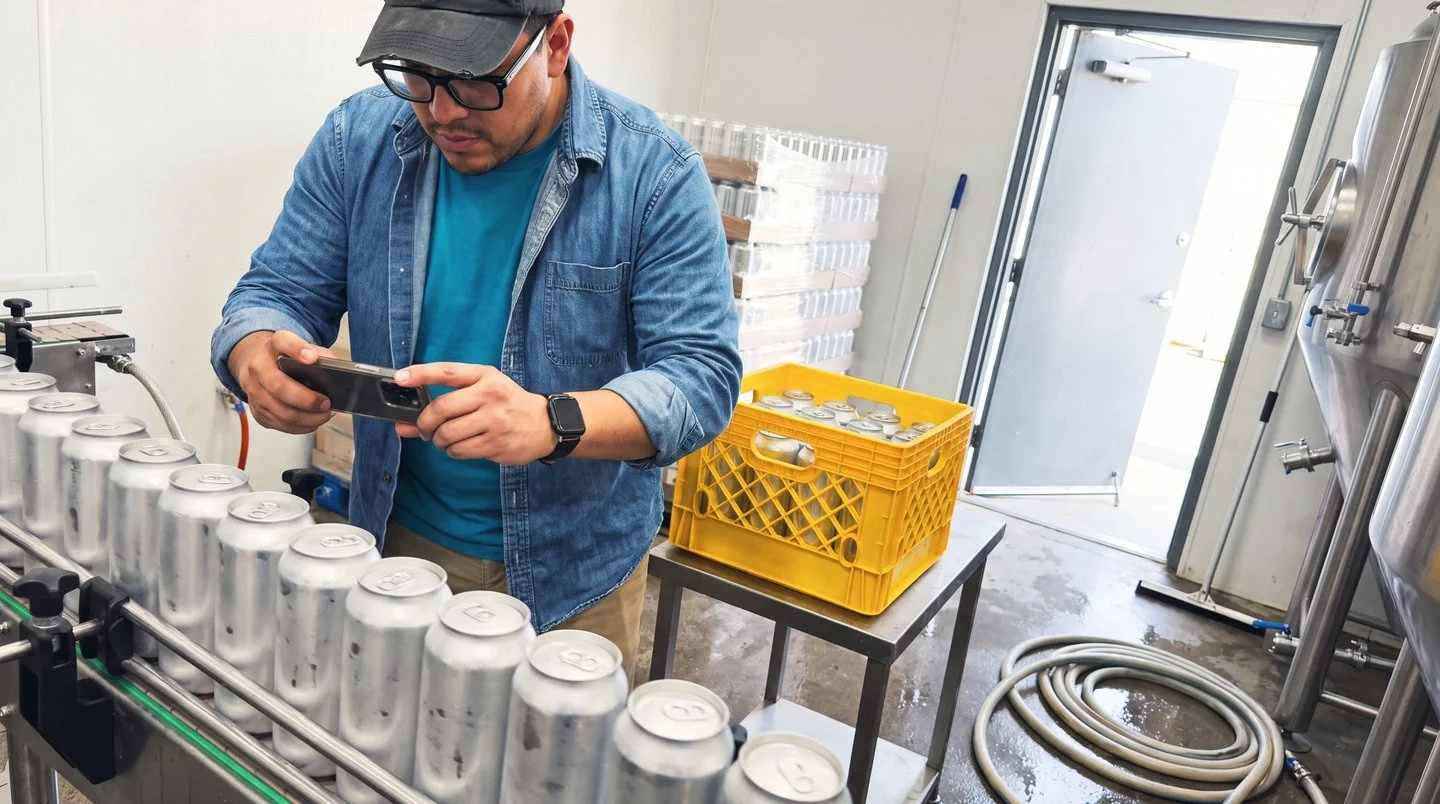
Say you make a better-for-you soda and you've got two hundred grand a year for marketing. You're not a complex advertiser portfolio. You're a founder, a sales guy who lives in his truck, and whoever is currently answering the Instagram DMs. What you need is somebody who can walk your co-packer floor with a phone, come back with eleven usable clips, write a caption that sounds like you instead of like a category, and then do that again in three weeks without being asked twice.
Run a CPG social media agency shortlist through TikTok's badge and it sorts on none of that. It sorts the field by who manages the most TikTok ad spend, which correlates with agency size and client budget and almost nothing else you care about. The shops that clear the bar for Premier are running media for accounts whose quarterly test budget is bigger than your whole year. They are good at what the badge measures. They will also hand your account to a coordinator, and that coordinator will have your brand and eleven others.
That badge hands every shop a logo for the pitch deck. It also hands you a tidy reason to skip the hard part of the evaluation.
My own shop would not make that directory. In September my pipelines built 396 finished content packages across 30 days, out of a house in Marfa, and not one dollar of that ran through TikTok's ad auction. By TikTok's badging criteria that scores zero. No managed spend, no media execution, no complex advertiser portfolio. There's no field on the form for the thing I actually do, and I'm not going to pretend 396 of anything proves craft on its own, because volume is the one number that's always been easy to fake. It proves the system runs. The gate at the end of it is what decides whether any of it should have shipped, and I've already priced what running that gate costs.
The reason I bring up the zero is that a credential which can't see a shop like mine also can't see the twelve other independents on your list who'd do your organic better than a holding company would. The filter doesn't know it's filtering.
Four questions that sort a shortlist better than a badge
If you're evaluating a CPG social media agency this quarter, the badge tells you one real thing (they handle meaningful ad budget) and nothing else. These four I'd ask in the pitch meeting, out loud, and I'd want the answers in the room rather than in a follow-up email.
Who writes the words. Not which team. Which human. Get the name, and get whether that name is on your account in month seven or just in the pitch. The single most common thing I see go wrong is that the person who sold the voice is not the person who writes it by spring.
Show me three things you made for a brand my size with a budget like mine. Not the case study with the national rollout. Three posts, for a brand under fifty million, where you can tell me what the client was nervous about and how you handled it. Anybody can show you the work that went well.
What happens the week we have nothing to shoot. Every food brand has that week. The co-packer pushes the run, the photographer cancels, the new flavor isn't approved yet. What the agency does in that week is the whole relationship, and almost nobody asks about it.
Who signs off before it posts. Somebody has to own the sentence. When a claim about your sourcing turns out to be wrong on a Tuesday, I want to know in advance whose name is on it, because that question gets a lot less pleasant to ask afterward.
None of those four have a badge. All four of them are checkable in one meeting, which is less time than most brands spend reading a directory listing.
The platforms are all building credential layers around themselves right now, and they're doing it fast. On September 29 Meta announced recognition badges for top contributors in its Forum app, the Q and A spinoff of Facebook Groups. On September 30 Reddit added the ad-verification firm Zefr to its brand suitability stack, next to Integral Ad Science and DoubleVerify. Two more verification layers in two days, in the same week the trade press picked up TikTok's. A credential is cheap for a platform to issue and expensive for a small shop to earn, and when a vendor category can't prove which of its tactics work, a badge is what it sells instead. I went through that same problem on the AI search side when AdExchanger got the AEO vendors to concede on the record that they can't demonstrate what's working.
The other half of this landed on September 28, when agencies told Digiday they've stopped hiring entry-level talent because software covers the junior's old tasks. Put those together and the picture for a brand is clear enough. The shops getting badged are the ones with the most spend under management, and the pipeline that used to produce people who can actually make the stuff is closing. The credential is getting easier to read right as the thing it fails to measure gets scarcer.
So before your next pitch cycle, write down the four questions and bring them. If a shop has the badge and good answers, hire them, and the badge is a fine tiebreaker. If a shop has the badge and no answers, you found that out in twenty minutes instead of two quarters. And if the only thing on the shortlist is badge status, you're letting TikTok's ad org pick who tells your brand's story, which is a strange thing to outsource to a company that sells ad inventory. Most of what a food and beverage marketing agency sells you is production capacity, and production capacity got cheap this year. The judgment didn't.
I do this for a handful of food and beverage brands a quarter. If you're about to sit through agency pitches and want the four questions sharpened for your category, DM me.

adage, emmy, telly & webby award-winning digital marketing consultant for purpose-driven food & beverage brands.