ADM Counted 4.6 Million Regenerative Acres. You Can't Put One on Your Label.
ADM released its fourth annual regenerative agriculture report on September 15. In 2025 its programs ran across roughly 4.6 million acres in 11 countries and 10 crops, with more than 56,000 farmers enrolled and about 946,000 metric tons of CO2e reduced against regional benchmarks. Greg Morris, who runs Ag Services and Oilseeds there, opened with a line worth reading twice. "Resilience starts on the farm."
He's right. That's the whole problem.
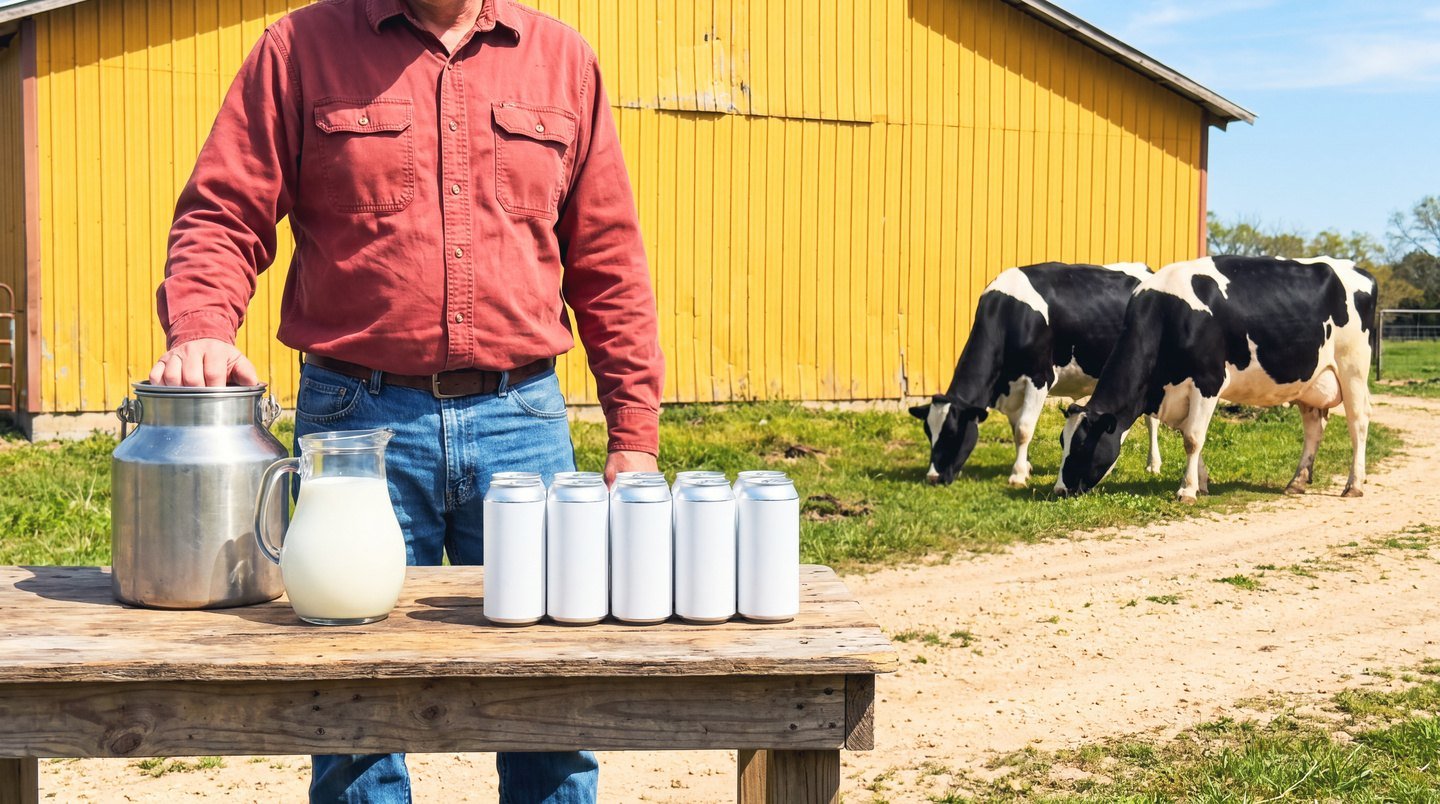
The farmers bought the cover crop seed. The farmers ran the drill inside a narrower window. The farmers took the yield hit in the season it didn't pencil out. ADM got the report, the chart, and a very tidy slide for the customer deck. None of that is a scandal, and I'm not here to knock the program, because real ground got farmed differently and that counts. But if you run a small or mid-sized food brand and you buy an ingredient that touches a program like this one, you should be clear-eyed about what you did and didn't purchase.
You bought grain. You didn't buy a story.
The cost sits three steps upstream from the claim
Barclays surveyed its farm customers in May and published the results on July 2. Eighty percent said they've already adopted regenerative practices or plan to. Two-thirds named rising input costs as their biggest challenge for the coming year. And more than sixty percent built their own transition plan, which is a polite way of saying nobody handed them one. A federal literature review puts the short-term upfront cost of a Kansas wheat transition near forty dollars an acre, with the business case turning positive somewhere in year three to five.
Three to five years. On a farm. In weather.
The claim moves faster than that. ADM added work with PepsiCo and Mars this year, plus a collaboration with General Mills and Walmart covering roughly 40,000 acres of Midwest wheat, the kind of arrangement that ends up as two words on a box in a Walmart aisle. From cover crop to package copy, and the risk never left the county where the seed went in the ground.
The adjective is available to your competitor by spring
Set the ethics aside for a minute and look at it as a marketer. "Regeneratively grown" is available to anybody buying out of the same elevator you buy from. It's a purchased adjective. So is "partner farms." So is "soil-first sourcing." Any claim you can print, a better-funded brand can print in a larger font, and this category has already run that play in front of you. Beef tallow was an independents' lane until Conagra started printing the word in large type on the front of its Rebel Roots fries and Utz put out a Boulder Canyon kettle chip cooked in it, both inside a year, per Food Dive in June. Sales of food made with tallow hit $1.1 billion in the year to March 22, up 275 percent in three years, according to Spins. That is how long an adjective stays yours.
A farm name, a county, and a year can't be lifted the same way.
"Grown by the Hendricks family in Story County, Iowa, who went to cover crops in 2021" beats "regeneratively sourced" every day of the week, and it beats it for a reason a marketer should love. It's unforgeable. A competitor can lift your adjective over a weekend. The second he lifts your grower's name, it's a lie a reporter can check with one phone call. The specific verifiable detail is the moat. The generic claim is a rented apartment with the door propped open.
This is also the difference between content that sits there and content that does work. Most social media marketing for food brands is built to look like sourcing, all golden-hour wheat and a hand in dirt, shot anywhere, usable by anyone. A named grower with a real season behind him turns that same footage into evidence. Your shopper already wants it. Dig Insights surveyed 500 Americans on functional beverages and found that not knowing enough about what's in the can is one of the real barriers to purchase, which is a version of the shopper standing in front of a cooler doing math she can't do. An adjective doesn't help her. A name and a year start to.
One company already published the honest version
Boortmalt, the maltster, put out a case study through WBCSD in June that reads like the opposite of a sustainability slide. In Argentina its 2025 harvest showed about a 30 percent cut in fertilizer-related emissions and roughly twenty dollars per hectare in savings at farm level, built on nitrogen use and input efficiency rather than on carbon credits or a premium. First harvest year came in near 12,000 tonnes of regenerative malting barley. Gauthier Boels, who runs sustainable agriculture globally for the company, said the quiet part on the record: regenerative agriculture only scales if it works economically for farmers, so they moved away from models that depend on high premiums.
That's a sourcing story a brand can stand on, because the mechanism is named and the farmer's arithmetic is in it. Nobody has to take the marketing department's word for anything.
Two things to do before you print the word
Name them. By farm, on the package if the panel allows and on the site if it doesn't. County, family, the year they switched. If your co-packer or your broker can't tell you whose ground it came off, you don't have a sourcing story yet, you have a commodity with an adjective on it, and that is worth knowing before you build a campaign on top of it.
Then pay in a way that survives a bad year. This is the line between a supply relationship and a marketing window. If your grower only makes money on the practice when the season cooperates, it isn't a practice, it's a bet, and you're asking a family to carry the downside so you can keep the word. A practice you're proud enough to print is a practice you should be willing to underwrite when the rain doesn't come. Otherwise you're running ADM's playbook at one percent of ADM's scale, with better photography and worse leverage.
I've spent twenty years building organic social for food and beverage brands, and the hardest single thing to get out of a client is the grower's name. Not the yield data, not the certification, not the lab results. The name. Brands will hand over a supplier audit before they'll hand over a family and a county, usually because nobody upstream ever told them, and occasionally because somebody upstream would rather they didn't ask. I live in Marfa, three hours from the nearest interstate, where the people doing the actual growing and running cattle are the ones at the post office on Tuesday morning. Out here the gap between the field and the deck isn't a metaphor. It's a drive.
The brands that win the next two years in clean label are the ones whose story is already matching what they say out loud, and specificity is how that gets proven in public rather than asserted. So go find out whose ground your flagship SKU came off this season. Get the name, get permission to use it, and then put that person in your feed with a date attached, because a dated public record is the one asset in this category that doesn't expire when a competitor prints the same two words. That is the difference between a claim and a shelf-first content system, and it's most of what I do as a food and beverage marketing agency run by one person with a camera.
I build real sourcing stories into organic social for a handful of food brands a quarter. If yours is real and nobody can find it, message me on LinkedIn.

adage, emmy, telly & webby award-winning digital marketing consultant for purpose-driven food & beverage brands.