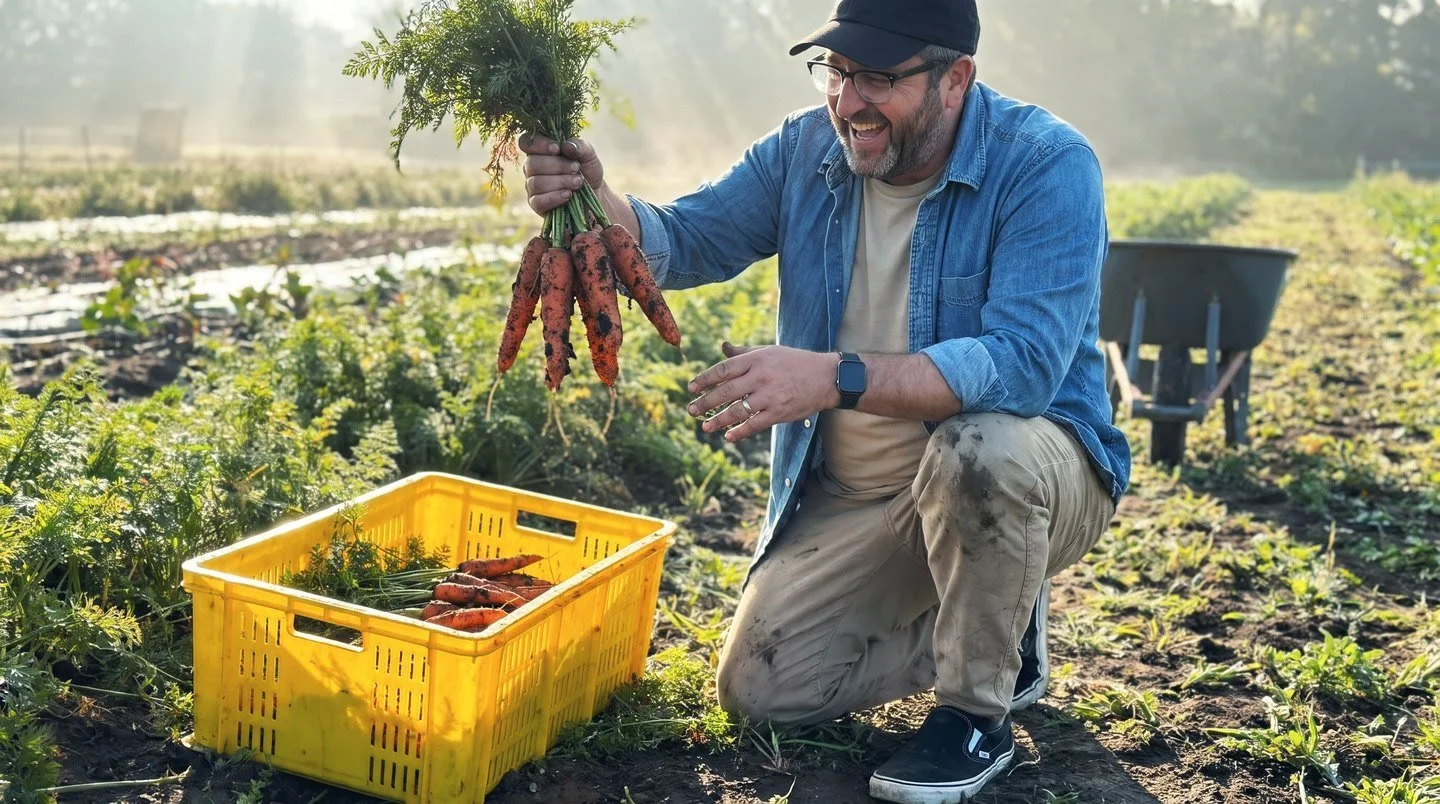
Content creation for clean-label food and beverage brands: film the texture
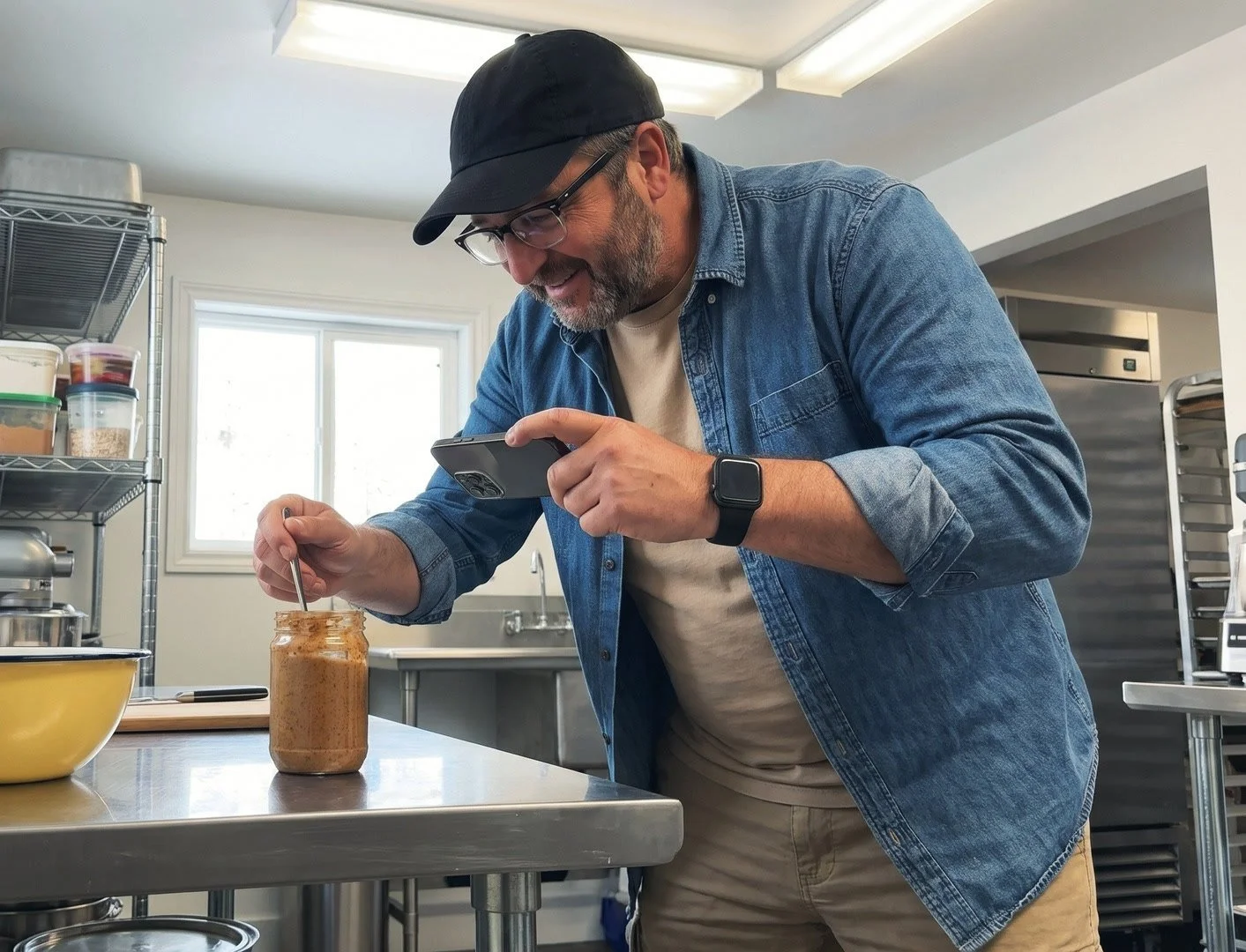
Content creation for clean-label food and beverage brands should sell the eating, because the shopper already read the label. An October 2025 Ingredion report says 88% of consumers would switch brands over texture. So film the pour, the snap, the stir and the settle, show what a short ingredient list does to the food, and say why.
Updated November 6, 2026.
The short version
- Shoppers read the ingredient list on the pack. Your feed doesn't need to read it to them again.
- A shorter list changes how food pours, spreads, settles and breaks. That change is the most honest content a clean-label brand owns.
- Every SKU gets one texture moment, shot macro on a phone with the sound on, and one caption line that names the ingredient you left out.
- Every caption goes through a claims check, because "clean label" has no legal definition and "healthy" now has a strict one.
What does content creation for clean-label food and beverage brands have to prove?
It has to prove the food still eats right with fewer ingredients in it. The label already made the promise. The shopper's worry is what the promise cost.
Ingredion is the Illinois-based ingredient company that sells starches, fibers and texturizers to food and beverage manufacturers, and it publishes consumer research to sell them. Its October 2025 clean-label report puts two numbers side by side: 56% of consumers say they'll pay more for recognizable ingredients, and 88% would switch brands over texture they didn't like. Read those together and you get the whole problem in one breath. People pay a premium for the short list, then walk away if the short list turns gritty.
Innova Market Insights found in March 2025 that nearly 3 in 4 consumers reconsider purchases based on ingredient lists. So the list gets read in the aisle. What the shopper can't do in the aisle is feel the product. That's the gap your content fills, and almost nobody in the category is filling it.
Why does the ingredient list make weak content?
Because it's the same post every clean-label brand runs. Five ingredients on a marble counter, top-down, soft window light, a caption that says "only five ingredients." Cover the logo and you can't tell whose post it is.
I wrote last month about turning spec sheets and lab results into posts, and that paperwork still earns its slot. It proves what's in the bag. Texture proves what the bag is like to eat, and that's the question standing between a first purchase and a second one.
The flat lay also has a quieter flaw. It shows ingredients before they become food. Nobody buys oats, water and sea salt. They buy a drink that has to taste right in coffee at 6 a.m.
What happens to texture when you take the gums out?
It changes. The change is your best material. Gums, stabilizers, emulsifiers, dough conditioners. They're there to keep food from doing what food does on its own. Pull them and the product starts behaving like something from a kitchen.
An oat drink without gellan gum settles in the carton. A nut butter without palm oil or hydrogenated oil gets a layer of oil on top. A salsa without xanthan gum weeps a little water on the plate. Bread without dough conditioners goes firm by day three.
Most brands treat those behaviors like defects to hide. I'd put them on camera. Shake the carton and say why it settled. Stir the jar and name the oil you didn't add. The caption writes itself: this separates because there's nothing in it to stop it.
A shopper who has seen your oat drink settle on your feed doesn't panic when it settles in their fridge. A shopper who hasn't seen it might pour it out and buy something else. One fifteen-second clip did the job of a customer service email you never had to send.
How do you film texture so it reads on a phone screen?
Close, loud, and moving. Texture fights every still frame and hands itself to video, so I quit shooting it as photos. Here's the sequence I run on a clean-label product.
- Pick one texture moment per SKU: the pour, the snap, the spread, the stir, the crumb pull or the scoop. Done when every SKU on your sell sheet has exactly one moment written next to it.
- Shoot it macro on a phone in available light, at 4K and 60 frames per second so you can slow it down in the edit. Done when you have three clean takes of each moment with the product filling at least half the frame.
- Record the sound on its own, close to the food. A chip breaking, a lid popping, a spoon dragging through nut butter. Done when the clip still makes sense with your eyes closed.
- Show the behavior a short list causes, on purpose. The settle, the oil layer, the firm crumb on day three. Done when the caption names the ingredient you left out that would have stopped it.
- Run a claims check on every caption before it goes into the calendar. Done when a second person has read each line against the label and the spec sheet.
- Build the scenes around the texture on your AI production pipeline. The kitchen, the tailgate, the lunchbox, the farmers market table. Done when nobody on your team can pick the generated frames out of the cut.
That last step is where volume comes from. I run an AI-generation-first pipeline because it makes more content per dollar than any shoot day I've booked in 20 years, and I hold every frame to one standard: nobody can tell. The macro texture shot is the product itself, filmed on a phone. The world around it can come off the pipeline.
Marfa in July. A pint of ice cream on the counter gives you about four minutes before the scoop shot is gone. Shoot the texture first, every time. Lifestyle stuff after.
Which texture moments work for which clean-label categories?
Every category has one behavior a short ingredient list changes. You can catch it on camera. Start with these.
| Category | Texture moment to film | What it proves | Shot |
|---|---|---|---|
| Oat, nut and plant drinks | Settle, then shake | No gums holding it together | Carton on its side, then a hard shake and pour |
| Nut and seed butters | Oil layer, then the stir | No added oils or emulsifiers | Lid off, spoon down, slow drag |
| Chips and crackers | The break and the crunch | A short list still holds its snap | Macro break with the sound on |
| Salsas, sauces and dressings | Cling on a chip, the pour speed | No thickeners | Dip and lift, then a slow pour |
| Bread and baked goods | Crumb pull on day one and day three | No dough conditioners | Two hands, tear, same light both days |
| Frozen desserts | The scoop after five minutes out | Fewer stabilizers | Counter scoop, timer in the edit |
If your category isn't on the list, ask your R&D lead or co-packer one question: what did this product do in the test kitchen when you took the stabilizer out? Whatever they describe is your shot.
What should a clean-label brand never say in a caption?
Never say "healthy" unless the product meets FDA's definition, and never let "clean" carry a health claim on its own. The FDA's final rule on the "healthy" claim was published in December 2024, and manufacturers have until February 25, 2028 to comply. "Clean label" has no federal definition at all.
Texture content is safer than claim content because it shows. "Watch it settle" can't be wrong. "Better for you" can, and a competitor's lawyer will be happy to walk you through it. That's why the claims check sits in step five.
"Only five ingredients" used to land as a hook. Now every brand in the aisle says it at once. Cut the word "only" in front of a number.
Should you film this in-house or hire a content team?
Hire it out if nobody on staff can own one texture shoot a month and a claims check on every caption. Keep it in-house if you have that person and they have the time. Most small brands have the person and not the time.
| Option | What you get | Where it breaks |
|---|---|---|
| In-house coordinator | Knows the product, cheap per post | Shoots what's easy, skips the claims check when busy |
| Freelance food photographer | Beautiful stills | Stills don't show texture, and a shoot day yields one batch |
| Full-service agency | Volume and polish | Often films the ingredient flat lay you already have |
| Consultant with an AI pipeline | Strategy, texture shoots and monthly volume | Needs your R&D lead for an hour a month |
I won't quote a price in an article, because SKU count and shoot frequency move the number more than anything else. What I will tell you is what to ask anyone you're thinking of hiring. Ask to see raw texture footage they shot, uncut. Ask who checks the captions against your spec sheet. Ask how many finished pieces they get from one shoot day. And ask what they'd film first for your hero SKU. If the answer is a flat lay, keep looking.
Red flags: stock footage of somebody else's milk pouring, an AI render of your own product up close (the product is the one thing that has to be filmed), and nobody on the team who has read your spec sheet. The content work I do for food and beverage brands starts with the spec sheet for that reason.
For the posting side, proof posts are how these clips get used once they exist, and the older transparency playbook covers how to talk about sourcing without sounding like a press release.
FAQ
How do you create content for a clean-label food or beverage brand?
One texture moment per product. Film it close on a phone with the sound on. One caption line under it. Say what the short ingredient list does to the food. Build lifestyle scenes around those clips on an AI production pipeline for volume. Run every caption past someone who knows the spec sheet before anything posts. Clean-label claims draw scrutiny.
What is the clean label list?
There isn't an official one. No federal agency defines "clean label," so each retailer, certifier and brand writes its own list of ingredients it won't use. Many brands publish a "no" list on the pack. For content, the useful version is your own spec sheet, because every claim in a caption has to match it, and a shopper can check it against the label.
Can AI make content for a clean-label brand?
Yes, and it should carry most of the volume. Use an AI pipeline for scenes, settings and lifestyle frames, held to the standard that nobody can pick them out. Film the product's own texture for real on a phone, because the pour and the snap are the promise you're selling. Never generate the ingredient panel, the label or a close-up of the product itself.
How often should a clean-label brand post texture content?
Plan one texture clip per SKU per month as a floor, then cut each one into three or four versions: a short loop, a slow-motion cut, a sound-first cut and a still for the website or retailer page. A brand with six SKUs gets 18 to 24 pieces from six short shoots. Rotate them so the same product doesn't appear twice in a week.
Why is texture such a big deal for clean-label products?
Because a shorter ingredient list changes how food pours, spreads and holds up, and shoppers notice. Ingredion's October 2025 report says 88% of consumers would switch brands over texture they didn't like. Showing the texture before the first purchase sets the expectation, so a settled drink or an oil layer reads as honest to the shopper.
What should a clean-label brand film this week?
Pull your best-selling SKU and ask your R&D lead what it does without the stabilizer. Film that behavior on a phone tomorrow morning, close, with the sound on. Write one caption line naming the ingredient you left out, have someone check it against the spec sheet, and post it before the weekend.
Then do the next SKU. Six weeks from now your feed shows what the food is like to eat, and the big brands still can't film their way into that without changing the recipe.
If you want texture shoots and a pipeline built around your hero SKU, DM me on LinkedIn.

adage, emmy, telly & webby award-winning digital marketing consultant for purpose-driven food & beverage brands.