Social media for food brands that think their product is boring
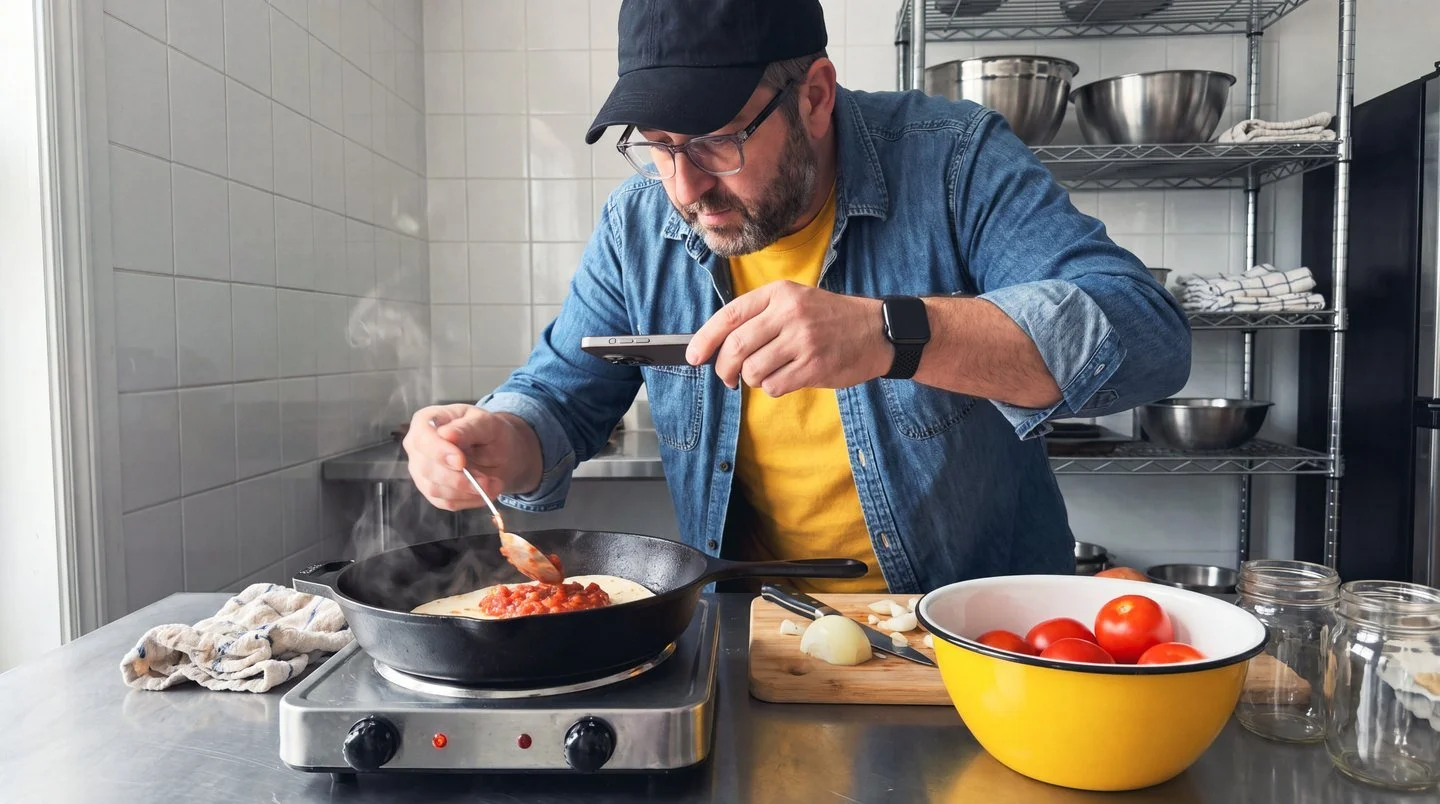
Social media for food brands goes flat when the package is the subject of every post. Shoppers already know what your bottle looks like. Post the hands, the place and the person using it instead. When I ran Topo Chico's US Instagram that way, it went from about 1,000 followers in September 2013 to 142,000.
Updated October 28, 2026.
The top Google result for this phrase right now is a Reddit thread from October 2018. A founder getting ready to launch a food brand looked at Vita Coco (about 61,000 Instagram followers at the time) and Chobani (over 100,000) and saw almost no likes or comments. The conclusion: food and beverage brands are boring on social media. Then the founder asked who wants to see "kraft mac and cheese 5 times a day." Fair question. Nobody does. The thread never got to the answer, so here it is.
The short version
- Your product is a still life. A still life posted five times a week turns into wallpaper, and shoppers scroll past wallpaper.
- The fix is changing the subject of the frame: hands making it, the place it gets eaten, the person who made it, a fan's photo, a recipe.
- I ran Topo Chico's US accounts from zero followers in 2013 on one rule, post like a fan, and the Instagram passed 142,000.
- Usage content gets you seen. It won't fix a price problem or a shipping problem, and I'll show you where it stalled for a maple syrup brand.
Are food brands boring on social media?
No. The packshot is boring, and most food brands post almost nothing else. A bag of chips has two angles, front and back. Once you've posted both, the feed starts repeating itself, and the algorithm and the shopper both notice.
Read that 2018 thread closely and the people who got it right were mostly talking about brands outside food. One commenter described how a water bottle company stopped posting the bottle and started posting the places people carried it: summits, trailheads, truck beds. Another said Red Bull turned "a simple can" into an account with 9 million followers. Both of them won by changing what the photo was about.
Halo Top showed up in the thread too. The founder tallied almost 1 million followers and one giveaway post with 2,300 comments. A giveaway is a person tagging a friend, entering, hoping. The pint just rides along.
Why does the packshot get ignored?
A photo of the front label answers a question nobody asked. The shopper in the aisle needs to know what this is, how to use it, who it's for, and whether somebody like them likes it. That shot covers none of it.
There's a second problem, and it's mechanical. Instagram Reels and the TikTok For You feed put your posts in front of people who don't follow you yet. A stranger who sees your packshot has no reason to stop. A stranger who sees a pair of hands cracking a cold can on a tailgate in October has a reason, because that's their Saturday.
Every packshot in your feed is a post a bigger brand could have made. The independent food brand wins on the stuff a committee at a national company can't sign off on fast enough: the founder's actual kitchen, the farmer by name, the customer who sent a photo from a fishing trip.
What should social media for food brands show instead of the product?
Change the subject of the frame. The product stays in the shot, it just stops being the reason for the shot. These are the five frames I put on a calendar before anything else.
| Frame | What's in it | What it tells the shopper | Buyer pain it answers | |---|---|---|---| | The hands | Someone opening, pouring, cooking, plating | How you use it | Shoppers don't know what it is or how to use it | | The place | Where it gets eaten or drunk: a tailgate, a desk, a campsite | Whether it fits my life | Our content looks like everyone else's | | The maker | The founder or the person running the line, on camera | Who's behind it and why it costs what it costs | Our product costs more and we can't explain why | | The fan | A customer's own photo, used with permission | Somebody like me buys this | Our follower count is flat | | The recipe | One use, start to finish, in under a minute | What to do with it tonight | Our food doesn't look good on camera |
The last row catches people off guard. Food that looks sad as a packshot usually still works in a recipe. The eye goes to the cooking, the steam, and the hands.
If you want the person-on-camera piece without a film crew, I wrote up why a lo-fi founder talking head beats a 4K production for most food brands.
What happened when I stopped posting the bottle?
The accounts grew, and the brand got pulled into places it never paid to be. My kickoff email for Topo Chico, the Mexican mineral water Coca-Cola bought in 2017, is dated June 18, 2013. The US accounts started at zero followers.
The rule I set early was post like a fan, not a marketer. A fan doesn't photograph the bottle on a white sweep. A fan photographs it sweating on a bar top at a show, or sitting next to a plate of tacos, or in somebody's hand in a parking lot. By September 2013 the Instagram had about 1,000 followers. It went on to 142,000.
Two bigger programs grew out of that rule. Coffee Pulse put 30 creators in 15 cities into 10 coffee shops to build one recipe book, and a recipe book is the product in use from cover to cover. And one Instagram story created inbound demand for fridges, which grew into a fridge program.
I've seen the same pattern with a smaller brand. On Biscolata, a Turkish cookie company launching in the US, a consultant on the account called my posts "very sterile." I answered with images from a photographer. When follower growth stalled after the account reached nearly 21,000 in two months, I took the product to influencers and coffee shops, and reach to new people jumped 576 percent.
Where does usage content stop working?
At price and logistics. Usage content gets a stranger to stop. It can't make a $15 bottle of syrup with $15 in shipping feel cheap.
On Crown Maple, the reels reached mostly people who didn't follow the account, which is exactly what you want. Viewers still weren't buying, and the reason was sitting in the checkout cart: $15 for the syrup plus $15 for shipping. Better frames got the attention. They couldn't carry a $30 first order.
So be honest with yourself before you blame the feed. If people are watching and not buying, look at the price, the shipping and where the product is actually sold before you reshoot anything. I made a related case about what social media for food brands gets wrong when it chases reach, and the same rule holds here.
How do you check your own feed for this?
Open the feed and count your last 12 posts. Mark each one packshot or not. If more than half are just the product alone on a surface, you already found the problem.
Mark every non-packshot post with one of the five frames from the table. Watch the maker and fan rows closest. Those two are the hardest for a big brand to fake, so build them first.
My earlier piece on social media for food brands has a full feed scorecard if you want to go further than a 12-post count.
Does this work on TikTok and Instagram both?
Yes, and the frames carry over without much change. TikTok leans harder on the hands and the recipe, because a 20-second cook beats any still. Instagram still rewards the place and the fan photo in a carousel.
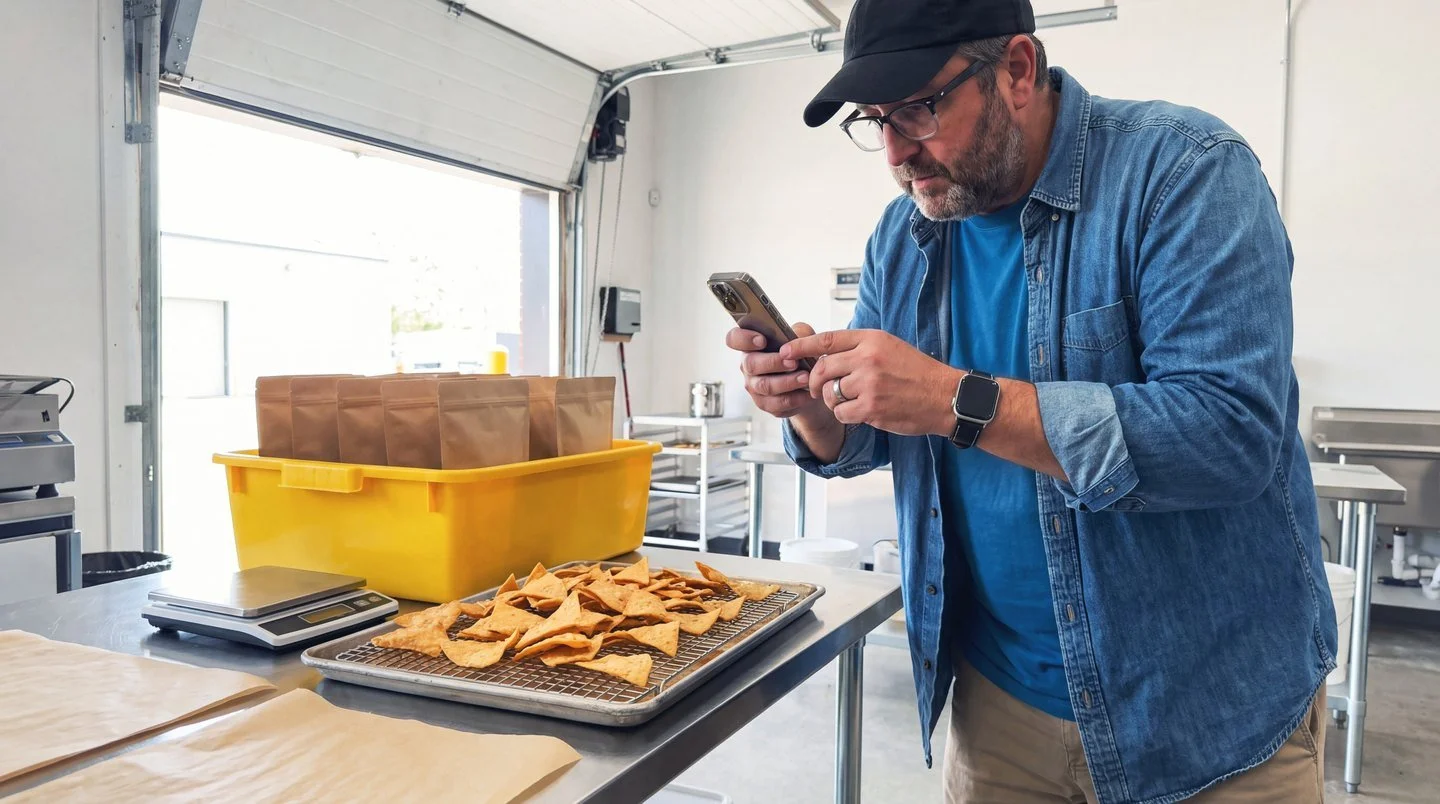
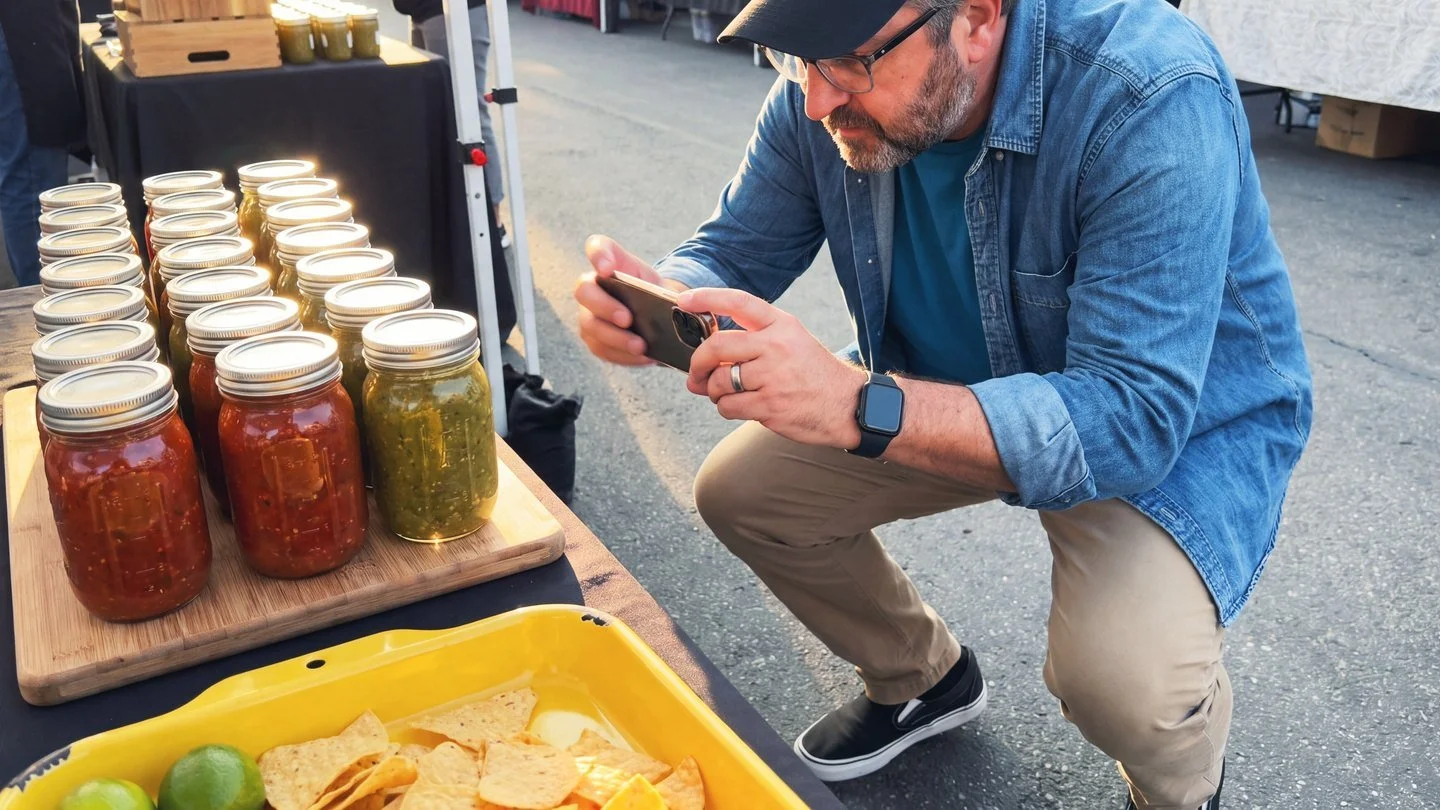
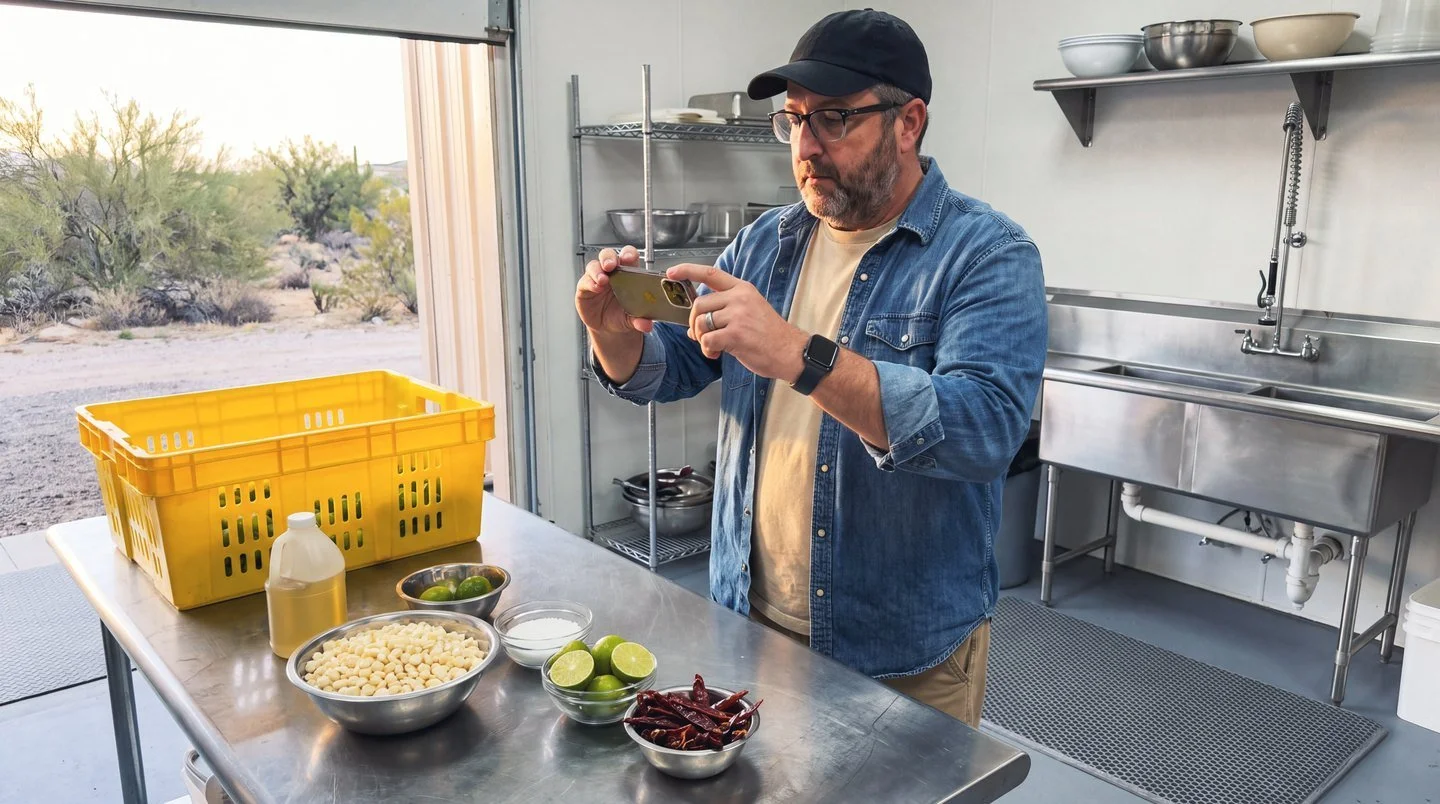
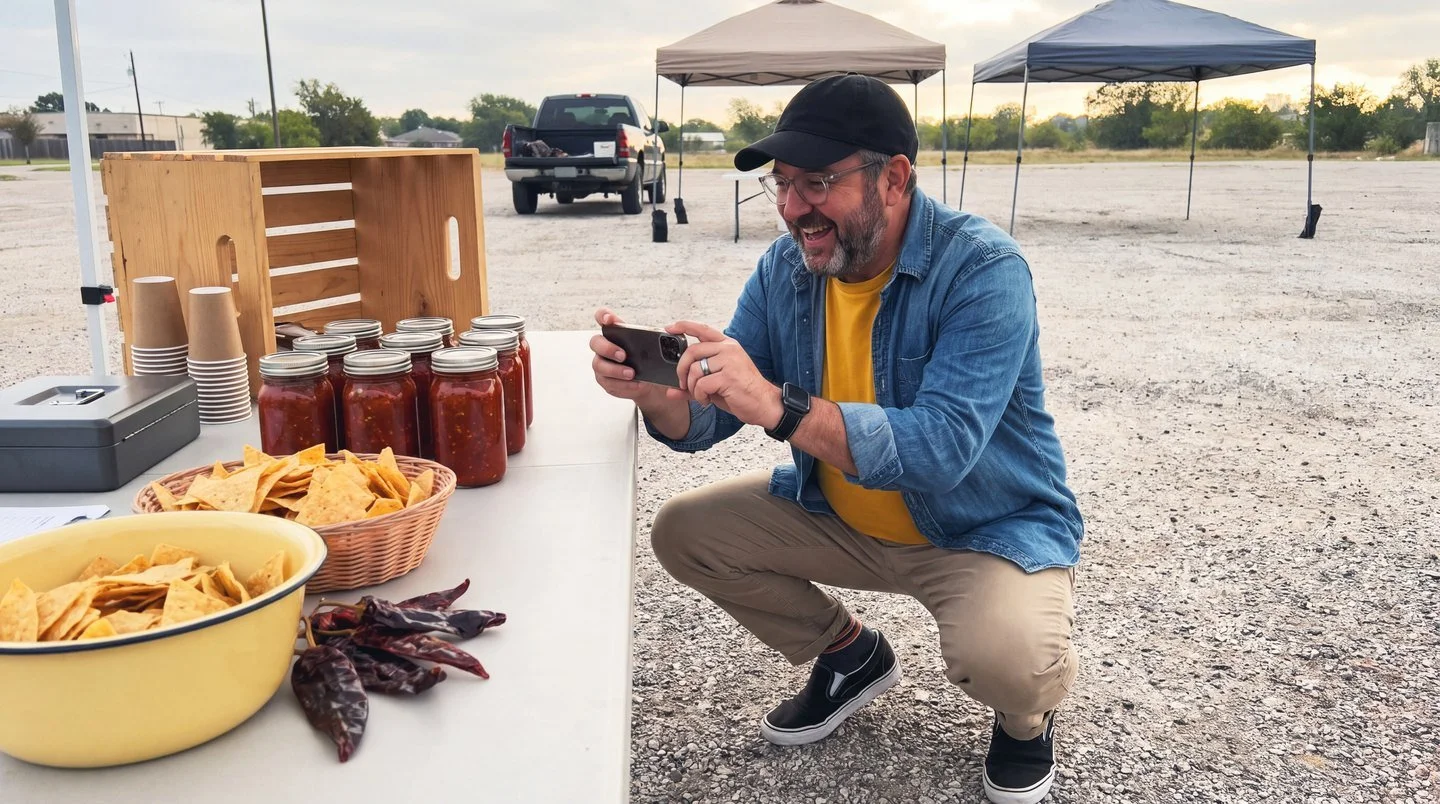
The mistake is making separate content for each app from scratch. Shoot the use once, cut it for both, and spend the saved hours getting fan photos and the founder on camera. I showed how a small brand did this at a salsa stand with no budget.
What does hiring help with this look like?
Somebody who can plan the frames, shoot or direct the shoot, and get permission to use customer photos. That can be in-house, a freelancer or a consultant. I don't quote prices in articles because every brand is different, and anyone who gives you a number before seeing your feed is guessing.
Ask anyone you're thinking about hiring three things. Show me a food brand feed you ran where the product wasn't the subject of most posts. Show me your worst-performing post and tell me why it flopped. Tell me how you get permission to repost a customer's photo. A good answer to the third one names the steps. A bad one says "we just tag them."
If you'd rather see the kind of work I mean before you talk to anybody, my food and beverage social media work is all in one place. And if you're running without ad money, the no ad budget playbook covers how to borrow an audience instead of buying one.
FAQ
What is the 3-3-3 rule for social media?
There isn't one fixed version. One common definition, from LYFE Marketing, is three key messages, three audience segments and three channels. For a small food brand that's a fine starting filter. Just make sure one of your three messages shows the product in use, because a message about the package alone won't get a stranger to stop scrolling.
What is the 5-5-5 rule for social media?
It depends who you ask. Some marketers mean five platforms, five daily actions and five metrics. Others mean liking five posts, commenting on five and answering five messages a day. For a food brand, the engagement version is the useful one. Five real comments a day on posts from your own customers and stockists does more than five more packshots in your feed.
What is the 5-3-1 rule for social media?
The 5-3-1 rule is a daily engagement habit: like five posts, comment on three and follow one new account in your niche. For a food brand, point it at the people who already buy you. Like five customer photos, comment on three from stores carrying you, and follow one local account where your product gets eaten. That's also where your fan frames come from.
Which food brands are good at social media?
The ones people point to usually post the product in use. In that 2018 Reddit thread, commenters named Wendy's, Halo Top, Ben and Jerry's and Red Bull. For an independent brand the better test is your own aisle: find the competitor whose feed shows hands, places and people, and study what they post when they aren't selling anything.
Do food brands need professional photography for social media?
Not for most posts. Professional photos help for your website, Amazon listings and retail sell sheets. On the feed, a phone shot of the product being used in a real place usually beats a studio shot of the product alone. When a consultant called my posts for a cookie brand "very sterile," I answered with images from a photographer, and the account still grew to nearly 21,000 followers in two months.
What should a food brand do this week?
Pull your last 12 posts and count the packshots. Pick the one frame from the table you've never posted, and shoot it this week with a phone: the founder making a batch, a customer's photo you got permission for, or the product in the one place your buyers actually use it. Post it, and post one more next week.
I build feeds like this for a handful of food brands a quarter. If yours is next, message me on LinkedIn.

adage, emmy, telly & webby award-winning digital marketing consultant for purpose-driven food & beverage brands.