Monster Put 30 Grams of Protein on a Can. Your Grams Aren't the Story Anymore.
Three protein drinks made trade news inside two days this week. On October 14, Food Dive reported that Monster will launch a canned protein shake next year with 30 grams of protein, 160 milligrams of caffeine, 2 grams of sugar and 6 grams of prebiotic fiber. Monster has been here before. Muscle Monster launched in 2014 and was gone by 2017.
The next morning Food Dive had Beyond, the company that dropped "Meat" from its name this year, adding 160 milligrams of caffeine to its Beyond Immerse protein drink, along with 20 grams of protein and 5 grams of fiber. The same day, Beverage Industry covered Protein Pop Balance from Rise Wellness, with 15 grams of protein (10 grams of clear whey isolate and 5 of collagen), prebiotics, 5 grams of fiber and zero sugar.
Everybody's can says the same thing now
Lay the three spec sheets side by side and they start to look like one product. Protein, plus fiber, plus a second job. Nestle USA put a name on it in its 2027 trend forecast, calling it "Protein&." The forecast cites Mintel's June 2026 finding that roughly 63 percent of U.S. consumers are still looking for more protein, and Google Trends data showing searches that pair protein with probiotics up 300 percent year over year, with collagen up 190 percent and fiber up 150 percent.
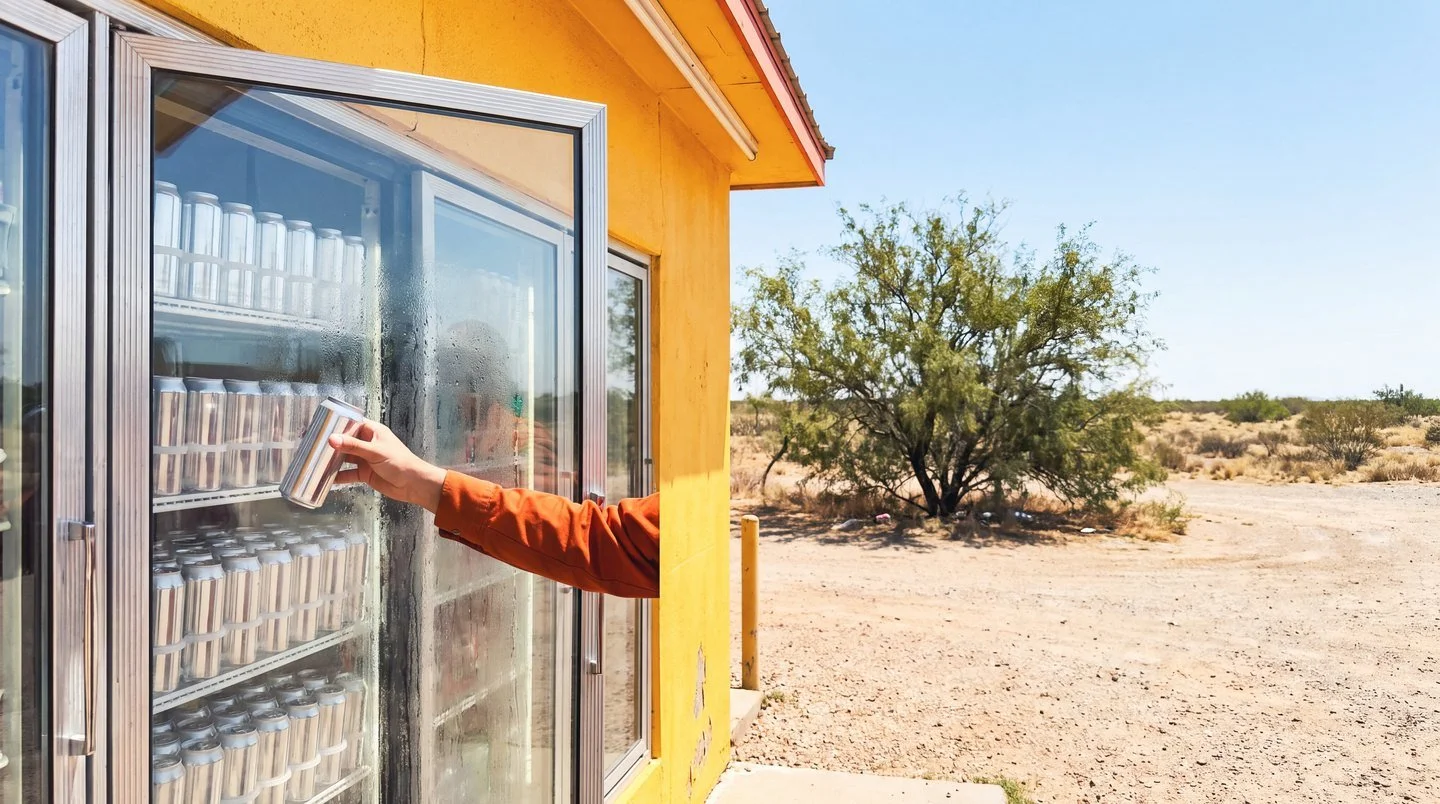
So the demand is there. For an independent, that's the bad news. When demand is this obvious, the incumbents show up with the same claim and a bigger cooler. Food Dive names Beyond's competition as Premier Protein, C4 Energy and Proda, and Monster unveiled its shake at NACS, the convenience store trade show. The target is the gas station cooler, the one you stand in front of on I-10 while the door fogs up.
A number on the front of a can is a spec, and specs get matched. If your drink says 30 grams and Monster's says 30 grams, that's a tie. Ties go to whoever has more distribution and more media money. You won't win that one by printing 31.
I've stood in front of this cooler before
In 2013 I launched Topo Chico's U.S. social media accounts from zero followers. Topo Chico is mineral water, bottled in Monterrey since 1895. Sparkling water doesn't give you much to fight over on a spec sheet. It's water with bubbles in it.
So we didn't fight over the spec sheet. The rule I wrote into my 2015 case study was "post like a fan, not a marketer." We picked one world, music, and stayed in it. We reposted the people who carried the bottle around Texas, and I answered the messages by hand. The Instagram account hit 1,000 followers in September 2013. By May 2023 it was at 142,000. Coca-Cola bought the brand in 2017 for $220 million, and I'd bet the label had very little to do with the price. People asked for it by name.
That's the opening for an independent protein brand right now. Monster's shake is due early next year, and it can match your grams on day one. It can't match where your whey comes from, who started your company, or the regular at your local gym who drinks two a day and tells people why, if you've got one.
What I'd do this quarter
Stop leading with the gram count. Keep it on the panel, where a shopper who cares will find it. The front of the can and the first line of every caption should carry the thing a bigger company can't print, whether that's the farm, the founder, the town or the reason the recipe exists.
Pick your second benefit and prove it. Protein& is coming whether you like the name or not, so if your drink does something besides protein, show it working in somebody's day. Who drinks it at 5 a.m. before a shift, and who drinks it after a long ride. Every number you post is a claim, and your caption makes the same promise as the label. Back up every one.
Think twice before you add caffeine because Monster did. A clean protein drink with 160 milligrams of caffeine is standing in Monster's aisle and playing by Monster's rules.
Use organic social media to build the people who ask for you by name. Repost your customers. Answer every comment like it came from your best account. Put the founder on camera in the kitchen or at the plant. I've written about how the bottle can be the co-star and why snack brands should sell the bite before the benefit. Protein drinks are in the same spot now. The benefit is a tie, so sell the drink and the people who drink it.
If you're paying a beverage marketing agency, ask it to pull up last month's posts and cover the gram count with your thumb. If you can't tell whose drink it is, that content is doing Monster's work for free.
This is the first thing I fix with a beverage brand. If your protein drink is fighting for the cooler door, DM me.

adage, emmy, telly & webby award-winning digital marketing consultant for purpose-driven food & beverage brands.