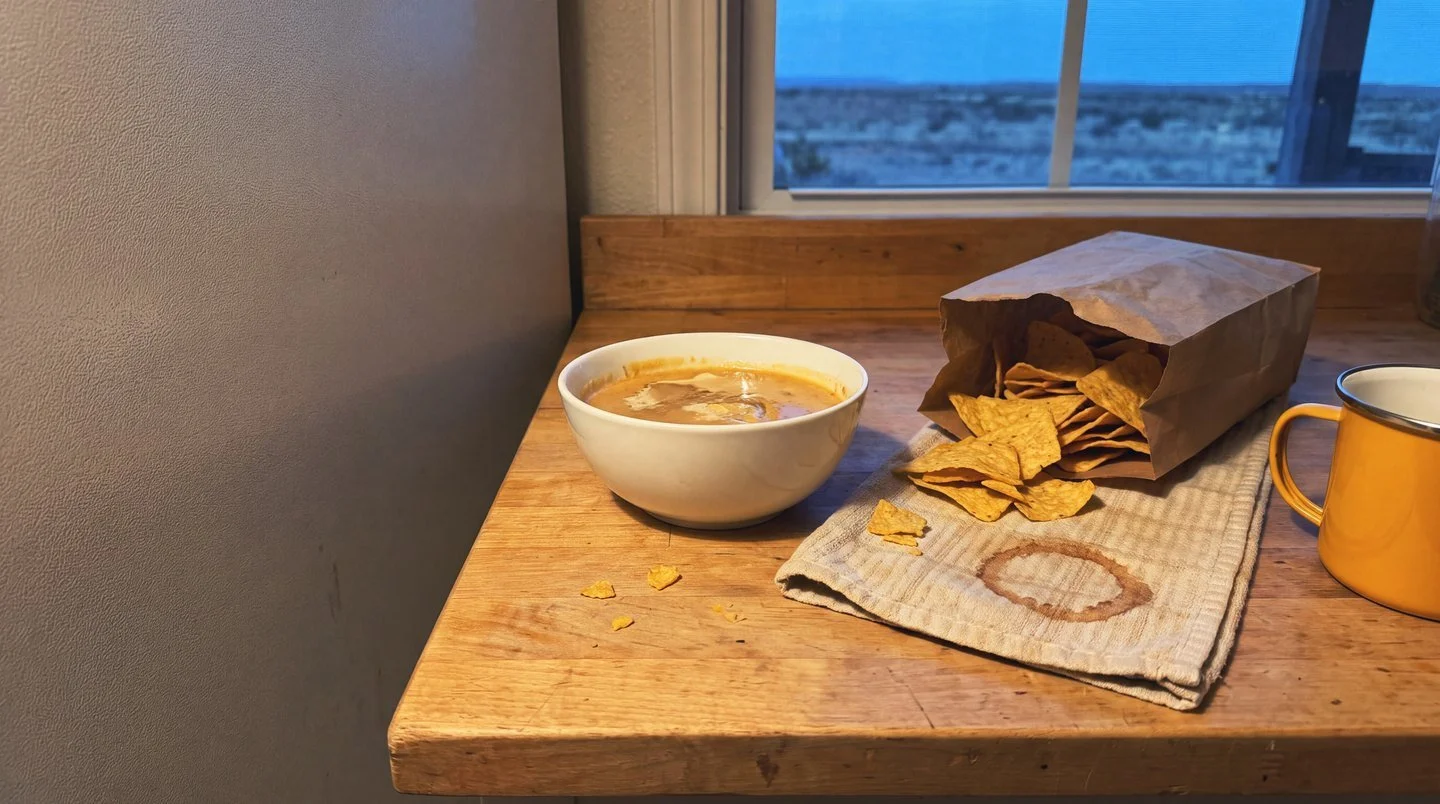
Content creation for better-for-you snack brands: sell the bite before the benefit
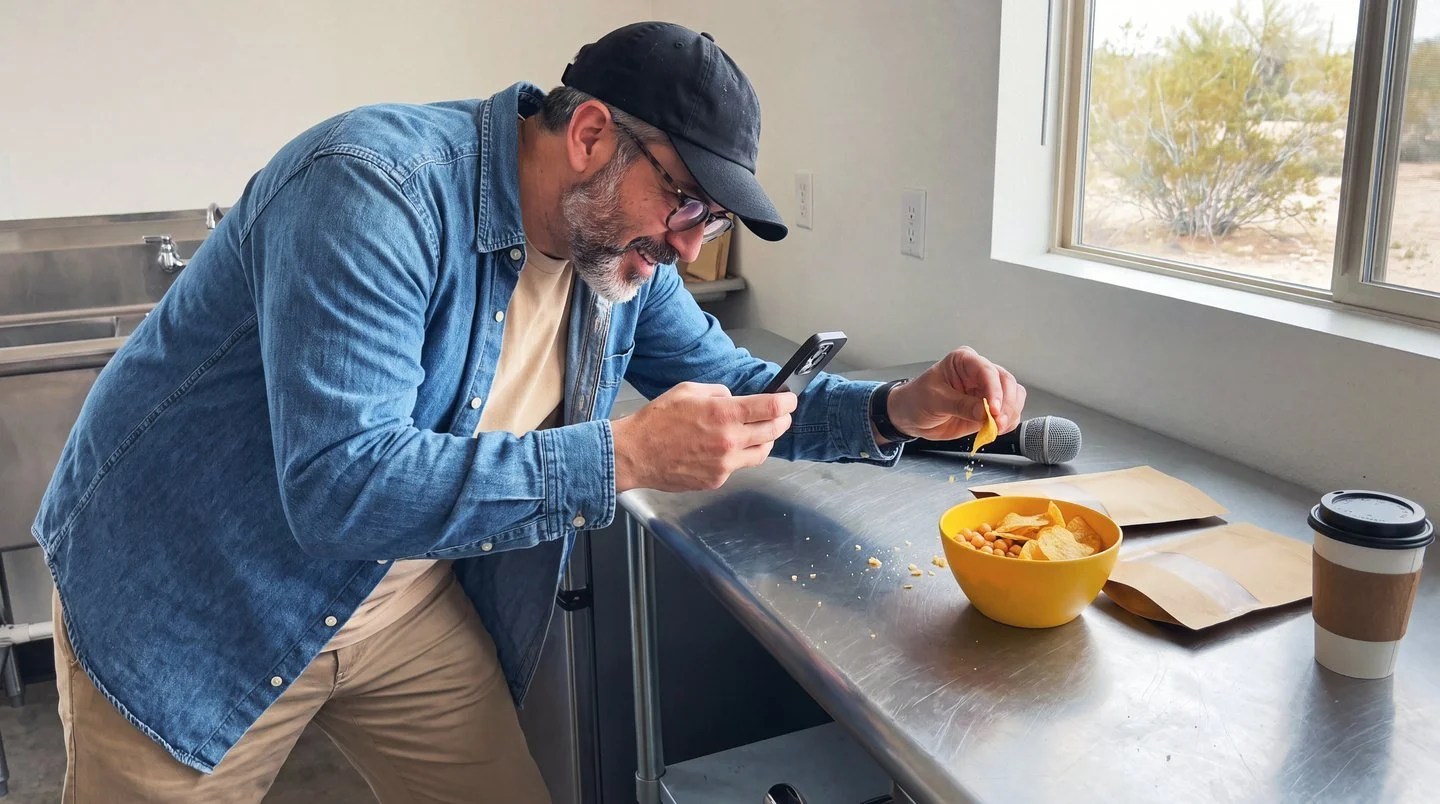
Content creation for better-for-you snack brands works when the first second of every post sells the bite. Show the crunch, the snap, the sour face, with the sound on. Put the protein, the fiber and the short ingredient list in the second beat, as the reason to buy again. Lead with the claim and shoppers file you under diet food.
Key takeaways
- Taste earns the first purchase and the benefit earns the second, so your content should run in that order.
- Snack content wins on sound and texture, which is why short-form video beats the styled beauty shot in this category.
- Every health word on screen is a claim, and "healthy" has an FDA definition your caption has to live with.
- One shoot day a month can feed a full calendar if you plan the cuts around the bite, the people and the proof.
Why does content creation for better-for-you snack brands fail so often?
Most of it opens on the nutrition panel. The shopper already decided if the snack looks good before they hit a single number. Lead with grams of protein and you've told them it's medicine.
I spent six years making content for Frito-Lay. Videographer, editor, the whole stack. Big snack companies don't open a video on a sodium count. They open on the chip breaking. A snack is a sensory buy first. Rational second. The crews running those shoots have known it for years. Nobody in a pickup on the 90 between Marfa and Alpine ever reached into the console because of a nutrition fact.
Independent better-for-you brands lead with the numbers. First frame is a tight macro of the protein count, the sugar grams, the seed oil callout. Founder's proud of the formula. Fair enough. Shopper clocks another diet product and keeps scrolling. They spent months getting the recipe right, then hid the actual food behind a spreadsheet.
SPINS put the same point on the board from the data side in a webinar this summer. 84 percent of Americans said meals are the easiest time to make a healthy choice. Only 16 percent said snacks. Two founders on that panel, Better Sour and Rotten, both said a better-for-you message works best when it isn't the headline. Rotten designs the pack to read as candy first. Better Sour lets the fiber and the lower sugar show up after the buyer already likes the taste.
Most better-for-you snack content has one clear problem. You can get it in two sentences from the people who sell the stuff. If the founders of the brands winning the category won't lead with the benefit, your Reels shouldn't either.
What should better-for-you snack content show first?
Someone takes the bite before they flip the bag. Hands first, then the second it actually gets eaten. The label comes after that. Where the ingredients came from, and who made it. In that order.
The same product, posted two ways:
| Post element | Claim-led post (what most brands ship) | Bite-led post (what sells the snack) | |---|---|---| | First second | Macro graphic or nutrition panel | The crunch, the snap or the sour face, sound on | | Hook text | A protein and sugar callout | A reaction, a craving or a place people eat it | | Who is on screen | Nobody, or the bag on a plain white sweep | A hand, a mouth, the founder, a kid in a car seat | | Where the benefit goes | Headline | Second beat or caption, as the reason to buy again | | What the shopper remembers | It's a diet snack | It looks good and it happens to be better for me | | Claim risk | High, every word on screen reads as a label claim | Lower, the claims sit in one reviewed line |
Texture is why this works. SPINS reported Millennials and Gen Z overindex on crunchy textures. The Rotten founder said sour, spicy, and crunchy products are made for reaction content. A bag of puffs can't win that on a static grid. It wins through a phone speaker at 11 at night.
Bite-led keeps you out of trouble. Let the footage sell and the on-screen copy shrinks to one benefit line somebody already checked against the package. Let the words sell and every adjective turns into a claim. Every claim turns into a comment thread.
How do you build a content system for a better-for-you snack brand?
This is what I'd set up in the first 90 days with a snack brand. One shoot day a month. Cut that day five ways. Every caption runs past a claims check before it hits the feed.
- Shoot the bite first. Macro lens, natural light, sound recorded on its own track. Break it, pour it, bite it, crush it in a hand. Twenty clean seconds of this beat any styled flat lay.
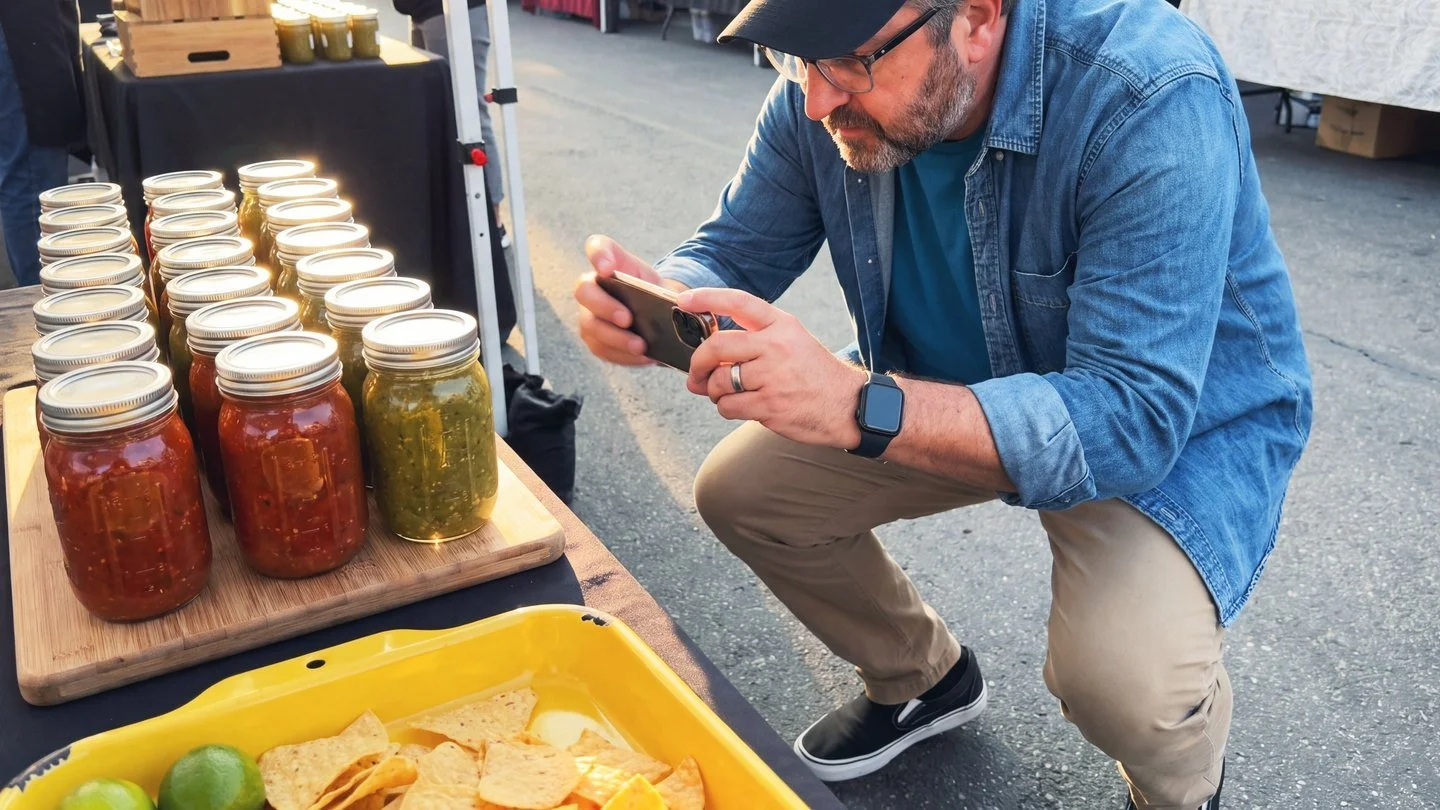
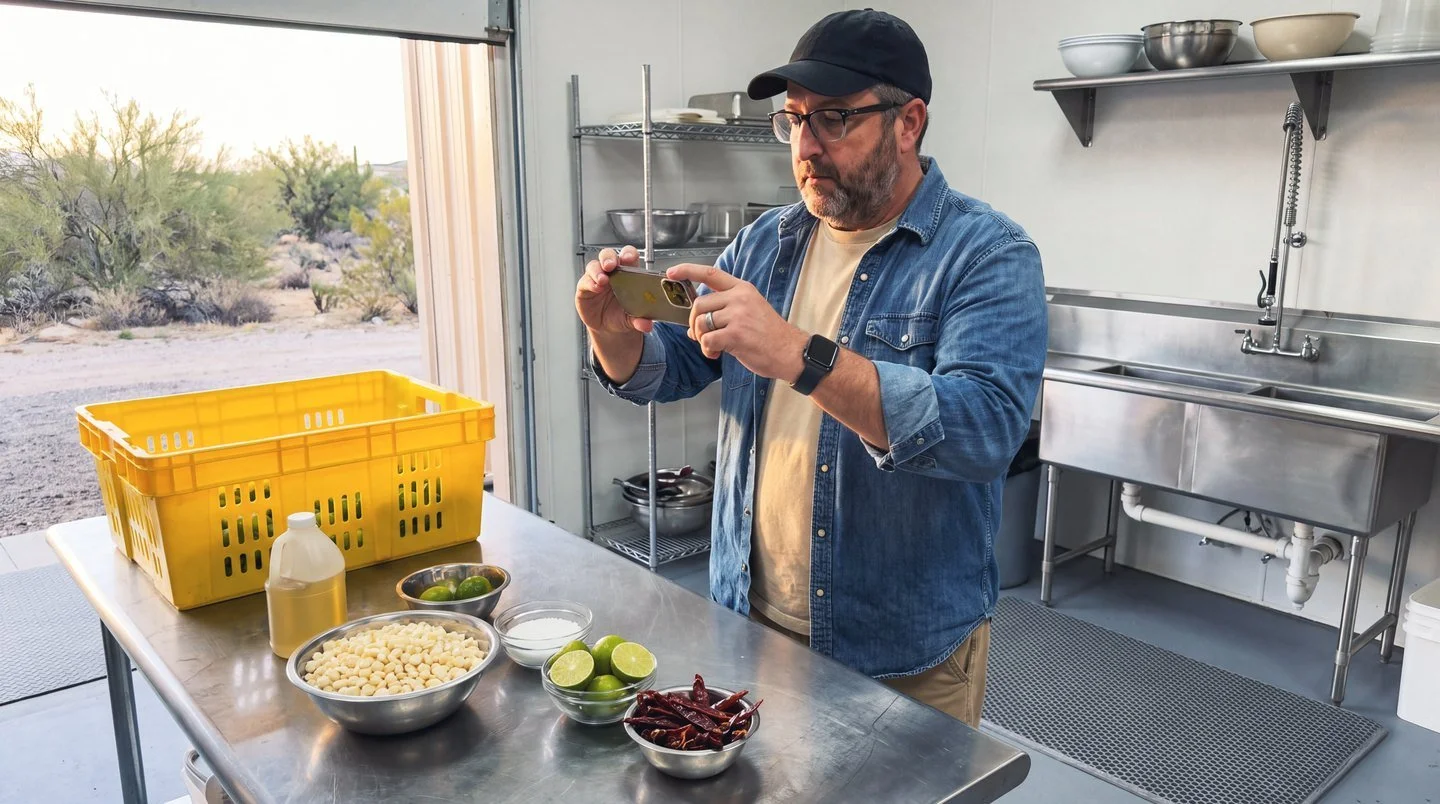
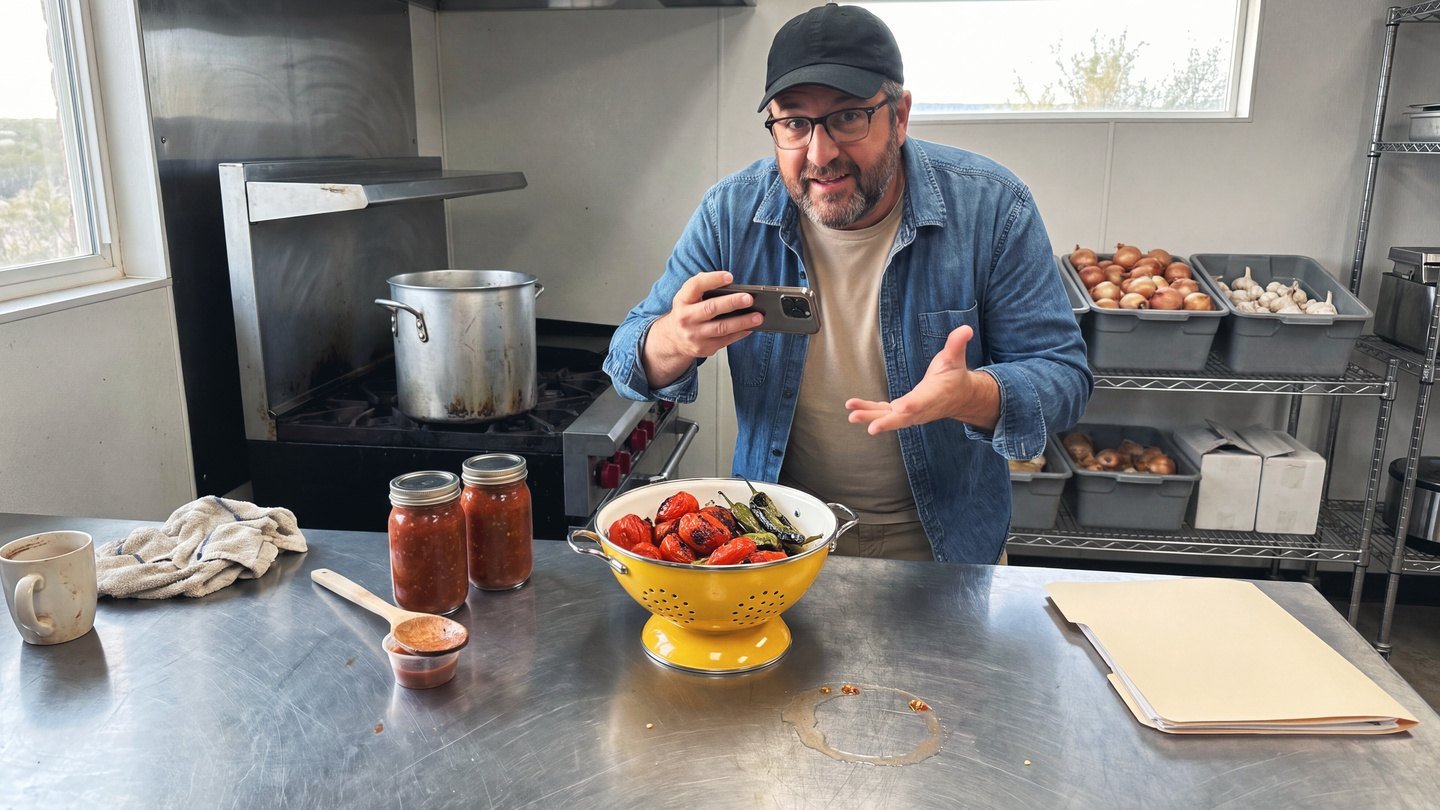
- Shoot the people second. The founder at the test kitchen bench, a line worker at the co-packer, a customer in a parking lot with the bag open. Faces carry trust a logo can't.
- Shoot the proof third. The ingredient that replaced the old one, the supplier letter, the lab result. This is what you post after someone already likes the taste.
- Cut every shoot into five formats: a 7 second sound-on reaction, a 30 second founder story, a carousel that walks through the label, a still for the grid and a raw clip a retailer can repost.
- Run the claims check. Any word with a legal or regulatory meaning (healthy, natural, high protein, low sugar) gets checked against the package before it posts.
Most brands cut corners on step one. It's the step that sells. A snack shot without its sound is half a snack. Record the crunch close and dry, the way a radio engineer would. The viewer hears it on cheap earbuds in a grocery line.
Clean-label brands put more weight on step three. I wrote about that in content creation for clean-label food and beverage brands. The paperwork you already file becomes the post. On a better-for-you snack, steps one and two do most of the selling. Step three closes the second purchase.
Which platforms matter for better-for-you snack brands?
Short-form video on TikTok and Instagram Reels does the discovery. Your Instagram grid and your own site do the reassurance, and LinkedIn does the trade.
TikTok gets most of the credit for snack trial, and it has earned it. Rotten told the SPINS panel it launches some products on TikTok Shop first and moves them into retail once demand is proven. That's a sales channel and a test kitchen in one app. If a flavor can't earn a reaction there, it probably won't earn a facing at a regional grocer either.
Instagram does the second job. A shopper who saw the reaction video goes to your profile to decide whether you're real. That's where the founder, the ingredient story and the proof belong. I covered why founder presence moves conversion in an earlier piece on why better-for-you snack brand content isn't converting.
LinkedIn is for buyers, brokers and distributors, who look you up there before they take the meeting. Post the velocity win, the new door count and the plant visit. Keep the reaction videos on the consumer apps.
Big snack companies have the crunch on camera already, and they have the media budget to put it everywhere. What they can't fake is the person who made yours. A founder standing at a kettle at 5 in the morning is the one shot a national brand can't buy, and it's the reason to put a face in every third post.
How do you talk about health without making claims you can't back up?
One reviewed benefit line in each post. Stop there. Let the footage carry the rest. A regulator and a skeptical shopper both read the words on screen the same way they read the bag.
The FDA finalized its updated "healthy" claim rule on December 19, 2024. If your package can't carry the word, your Reel can't either. "Clean" has no federal definition at all. That makes it risky in a different way, because nobody can tell you you're wrong, so shoppers decide for themselves and the comment section becomes the referee.
Scoring apps put heat on the bag before your content lands. In September I wrote about Perfect Snacks arguing with the food rating apps. A shopper's phone grades the product right there in the aisle. Same answer applies. Show the food. Show who made it. Keep the claims short enough to check standing next to the shelf.
The KFF May 2024 poll put it plain: about one in eight adults have taken a GLP-1 drug. People want different things from a snack now. Your content will feel it. They're eating less and wanting more from each bite. Protein, fiber, portion size. Those claims are fair game when the label supports them. "GLP-1 friendly" is a different animal. You're tying a snack to a prescription drug. That line doesn't belong in a caption until your regulatory counsel has read it.
Should you hire an agency, a consultant or creators for snack content?
Hire for the system first and the footage second. A small better-for-you brand usually needs one strategist who can plan the shoot, write the captions and run the claims check, plus creators who bring reaction footage at volume.
| Option | Good for | Watch out for | |---|---|---| | Full-service agency | Brands with a retail launch and a budget to match | Committee copy that sounds like every other snack brand | | Independent strategist | Founder-led brands that need a plan and a voice | One person's bandwidth, so ask how many brands they run | | Creators and UGC | Reaction footage and trial at volume | Claims you didn't approve and fees nobody can benchmark | | In-house hire | Brands posting daily across three or more platforms | A junior hire with nobody above them checking claims |
Creator pricing is its own mess. When I looked at it in August, the people who run creator agencies were telling Digiday that nobody can price a creator post with any confidence. Budget for creators as a test, measure trial and repeat purchase, and stop paying the ones whose footage doesn't sell the bite.
Before you hire anybody, ask to see a snack post they made where the first second is the food. Ask who checks claims before anything goes live. Ask what they measure in the first 90 days besides views. If the answers come back as a mood board, a shrug and follower growth, keep looking. If you want to see how I run social media strategy and content creation for food brands, it's laid out there.
What does the first 90 days of better-for-you snack content look like?
Content creation for better-for-you snack brands settles into a rhythm over three months. Month one is the shoot and the voice. Month two is volume and testing, and month three is cutting what didn't work and reshooting what did.
- Days 1 to 30: one shoot day, a voice guide the founder signs off on, a claims sheet and the first 20 posts.
- Days 31 to 60: post short-form video daily, test two hooks per flavor and send the best clip to your retail buyer.
- Days 61 to 90: drop the bottom half of formats, reshoot the winners and start a creator test with 3 to 5 people.
The number to watch is repeat purchase. Views tell you the bite looked good. Store data and reorders tell you it tasted the way it looked. If the reaction videos pull views and the store data doesn't move, the bite you're showing isn't the bite people get when they open the bag, and that conversation belongs in the test kitchen.
FAQ
How do you create content for a new snack brand?
Start with one shoot day built around the bite: the crunch, the pour and the first reaction, recorded with clean sound. Add the founder explaining one ingredient decision and a short clip of where the snack gets made. Cut that day into short-form video, a carousel and a few stills. Post daily for 30 days, then keep the formats that earned saves and repeat purchases and drop the rest.
Should a snack brand call itself the healthiest?
No. Healthiest is a comparative claim. You'd need evidence against every competitor on the shelf to defend it. Healthy carries an FDA definition they updated in December 2024. Show the ingredients. Show the protein or fiber number your label already supports. Show the people who make the product. Let shoppers decide it's the better choice. They trust their own conclusion more than your adjective.
What are some creative content ideas for better-for-you snacks?
Try sound-on texture tests, blind taste tests against the snack yours replaces, a founder rejecting a supplier sample on camera, a road-trip snack haul and a flavor built from a restaurant dish. Retailer shelf-reset clips work too. Pick ideas where the snack gets eaten on screen, because every one of these works without a nutrition graphic. Save the benefit for the caption, where one checked line can carry it.
What are 5 examples of food marketing that work for snack brands?
For a better-for-you snack, short-form reaction video and founder storytelling do the most work per dollar. They show the bite. They show the person behind it. The rest of the stack still earns its keep: in-store sampling filmed for social, creator partnerships, retailer co-marketing with shelf talkers and the retailer's own posts. Sampling turns into content as soon as somebody films it.
How much content does a better-for-you snack brand need?
Daily short-form video is a sensible target for discovery, plus three or four grid posts a week for shoppers checking whether you're real. That sounds like a lot until you plan it from one monthly shoot day cut five ways. Volume without the bite on screen won't help, so lock the format first and the posting cadence second.
Should a better-for-you snack brand mention GLP-1 in its content?
Don't put GLP-1 in your content by name until legal has looked at it. KFF found about one in eight adults have taken a GLP-1 drug. People eating less want protein and fiber from each snack. Show the protein and fiber numbers your label already supports. Talk portion size. "GLP-1 friendly" is a health claim tied to a drug. It goes to regulatory counsel first.
What should a better-for-you snack brand do next?
Pull your last 30 posts and look at the first second of each one. Count how many open on food being eaten and how many open on a claim. If the claims win, your next shoot day already has its shot list. Lead with the bite, earn the second purchase with the benefit and let the founder be the reason shoppers believe both.
I build this system for a handful of snack brands a quarter. If your feed opens on a nutrition panel, DM me.

adage, emmy, telly & webby award-winning digital marketing consultant for purpose-driven food & beverage brands.