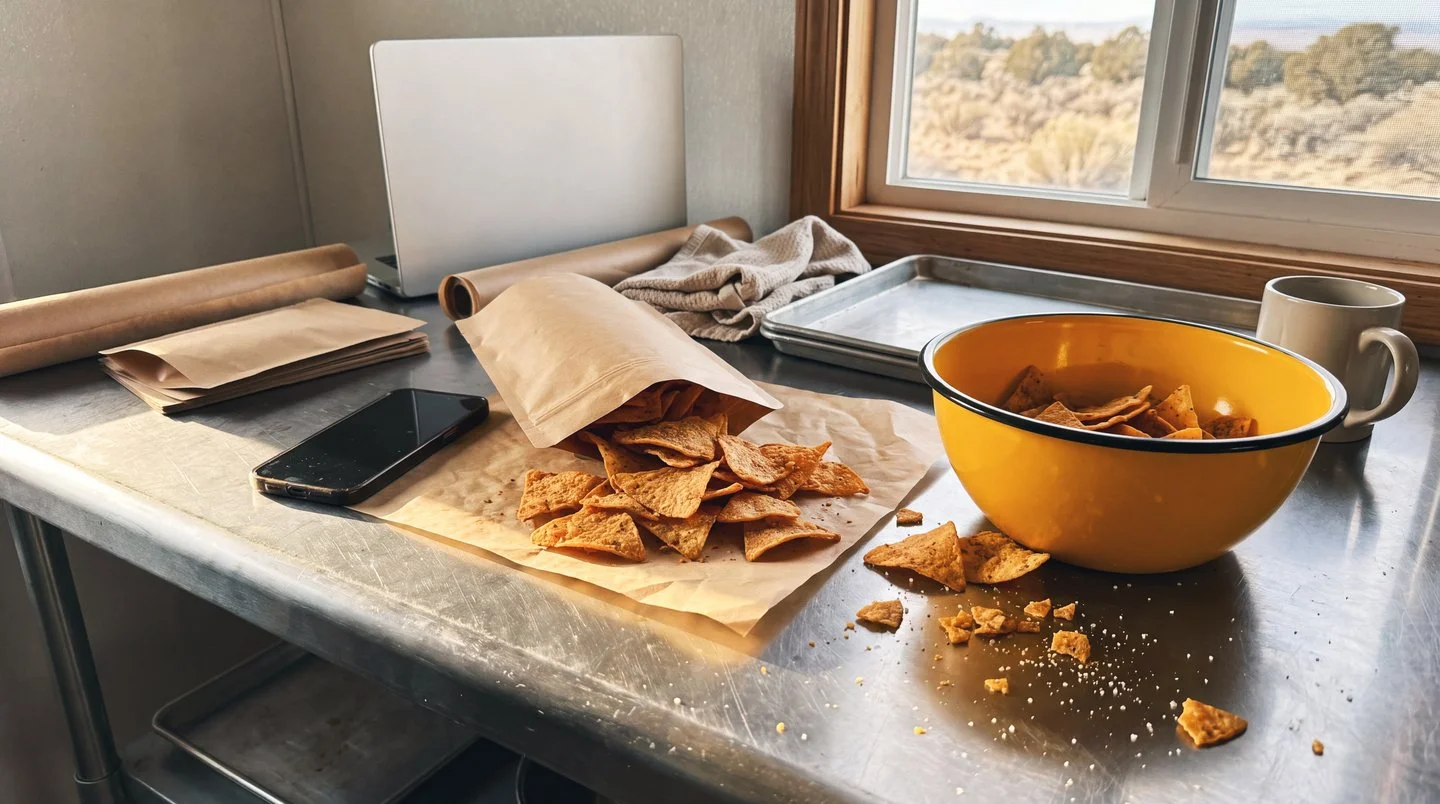
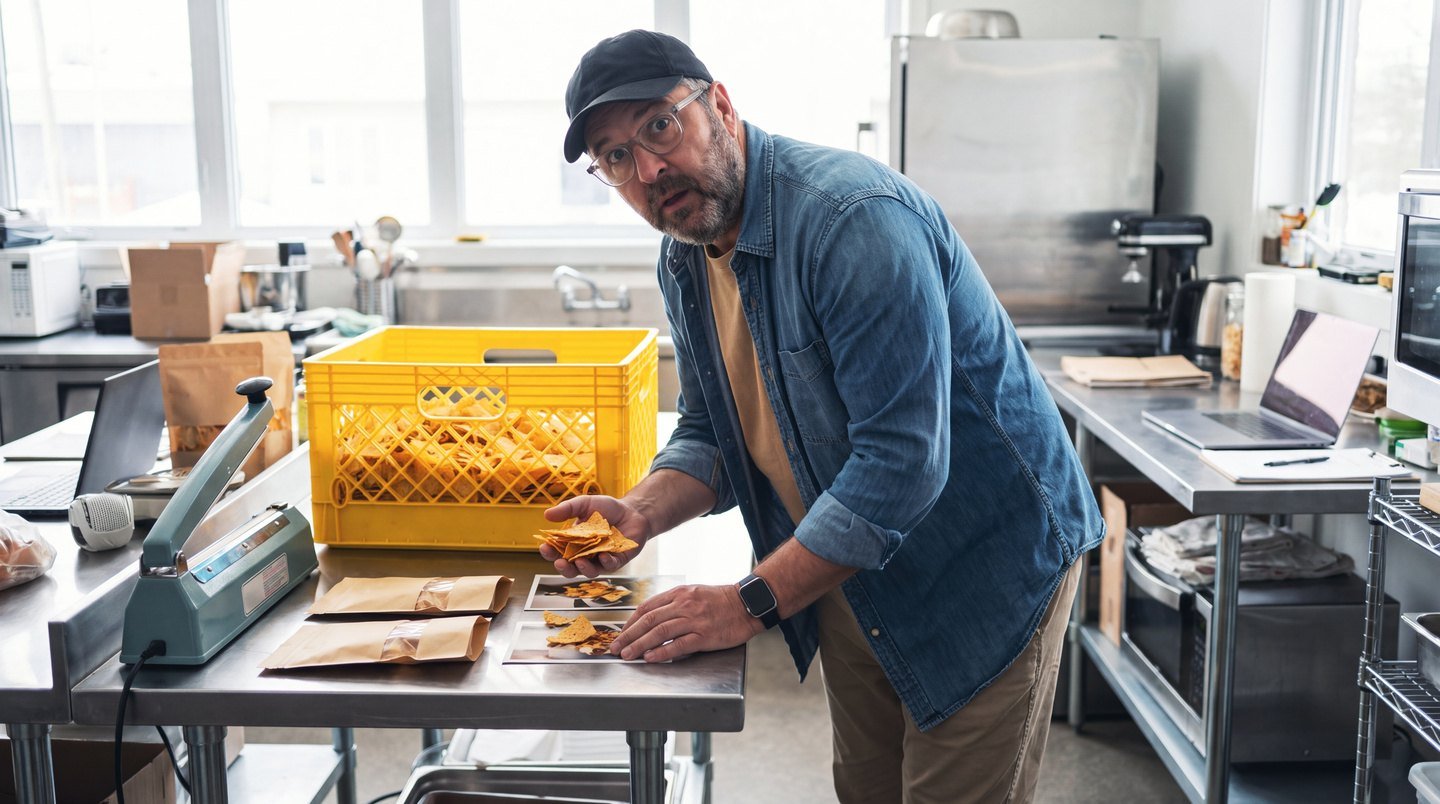
AI strategy for food and beverage brands: hire a night shift, keep the day shift
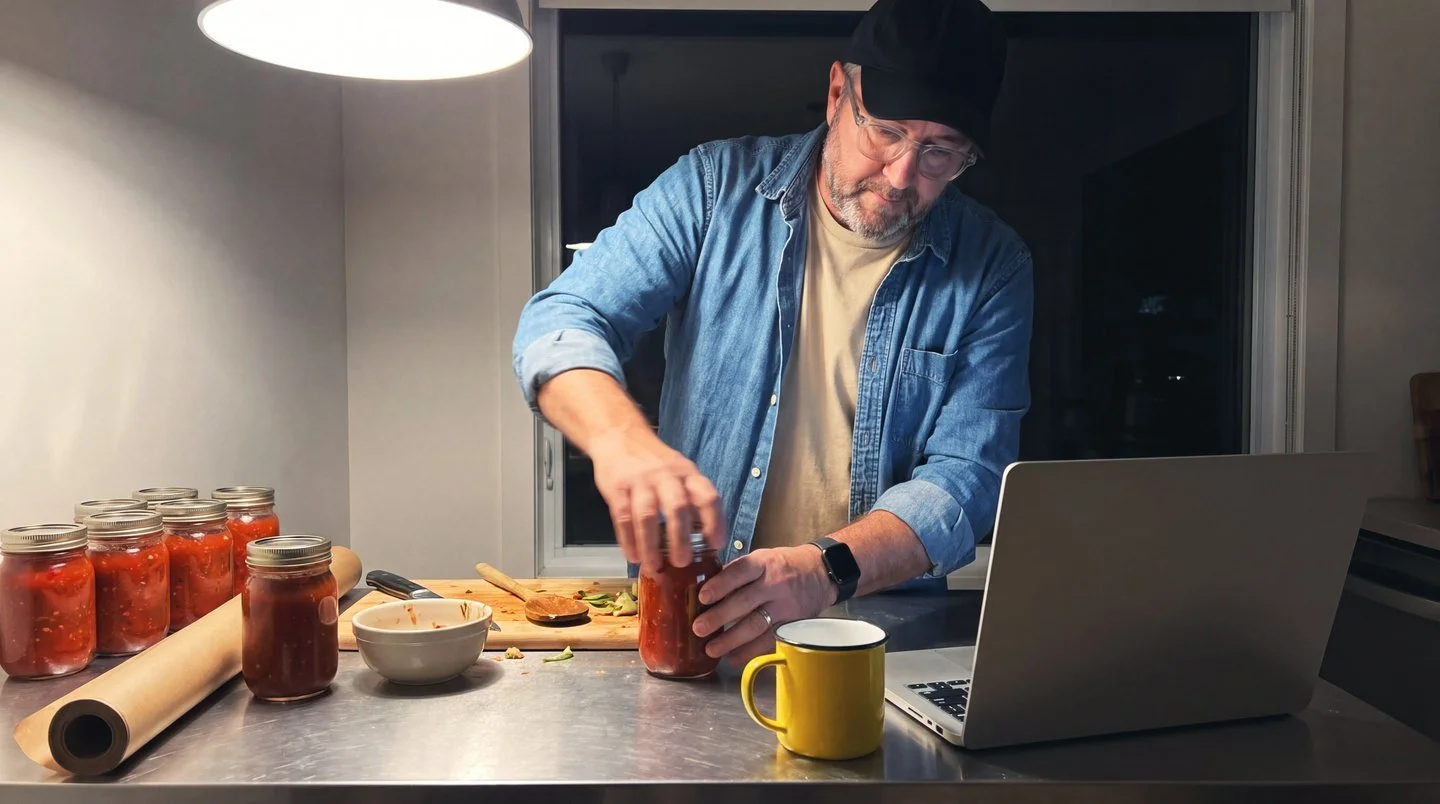
An AI strategy for food and beverage brands is a staffing plan. Give AI the night shift: research, first drafts, file prep and reports that can run while you sleep. Keep people on the day shift: tasting, approving, answering customers and signing off on claims. In 2025, 88 percent of companies used AI somewhere. About 6 percent saw big returns.
Updated November 4, 2026. Every number below links to the survey, company page, or news report it came from. I checked each one this week.
If you only read this part:
- McKinsey's 2025 State of AI survey found 88 percent of organizations use AI in at least one business function, up from 78 percent a year earlier.
- Only about 6 percent of respondents qualified as AI high performers, and they were nearly three times as likely to have redesigned workflows.
- The jobs that belong on the night shift repeat on a schedule, can be checked in under five minutes and cost little when they go wrong.
- Claims, customer replies, recipes and the final yes to publish stay with a person whose name is on the brand.
- Chick-fil-A drew its own line at the drive-thru speaker and kept that conversation human.
Why does Google answer this search with a software company?
Because most of the people typing this phrase are shopping for a tool, and Google knows it. The top result for "AI strategy for food and beverage brands" this week is the homepage of Tastewise, a food and beverage trend-intelligence platform that says it runs on 72 billion food signals and counts Nestlé and Mars as customers.
That's a fine product for a company with an insights department. For the founder of a 40-SKU snack brand or a regional beverage company with six people on payroll, buying a platform answers which tool to use. It leaves the harder question alone: who on the team does what, and when.
The numbers say most companies already learned this the hard way. In McKinsey's November 2025 State of AI survey, 88 percent of respondents said their organization uses AI regularly in at least one business function. Only about 6 percent reported the kind of results McKinsey calls high performance: 5 percent or more of earnings from AI and significant value. What set that group apart was workflow. They were nearly three times as likely as everyone else to say they had fundamentally redesigned how individual jobs get done.
Smaller companies are further behind. The U.S. Census Bureau's Business Trends and Outlook Survey put AI use across all U.S. businesses between 17 and 20 percent from December 2025 to May 2026. Food makers are spending anyway. Augury's 2025 State of Production Health report, as summarized by Consumer Goods Technology in January 2026, found 83 percent of food and beverage manufacturers planned to increase AI investment.
The money's moving faster than the redesign. That gap is where an independent brand gets ahead of a bigger one. A six-person shop can redesign its week in an afternoon.
What is the night shift in an AI strategy for food and beverage brands?
Night shift is every recurring job AI runs unattended on a timer. You check the output the next morning. It's the work nobody on your team will touch at 4 PM on a Friday.
I run my own studio this way. Out of a room in Marfa, Texas, about four dozen scheduled AI jobs fire on one Mac every day. One scans the news for food and beverage stories. One resizes and color grades photos for every platform. One builds the week's social posts. This article came from one of them: it pulled the search results at 9:30 PM, studied the page in first place, drafted, ran a rewrite pass and rendered the photo at the top.
None of it publishes itself. Every post waits in a folder until a person approves it, and a separate job handles publishing on a schedule I set. I've owned gallucci.net since 1996 and there are more than 500 posts on it. I'm not going to let a script put words in my mouth without reading them first.
The machine works overnight. A person opens the store. That's the whole idea.
Which jobs go on the night shift and which stay on the day shift?
Anything that repeats, follows written rules and can be checked fast goes on the night shift. Anything that touches a customer, a claim or a recipe stays on the day shift. Here's how I sort a food or beverage brand's marketing week:
| Job | Night shift (AI, unattended) | Day shift (a person) |
|---|---|---|
| Trend and competitor scan | Daily digest of category news, retailer moves and recalls | Deciding which story is worth a post |
| Social captions and articles | First drafts in your voice, built from your notes | Edits, approval and the final publish |
| Photo and video prep | Resizing, color grading, file naming, metadata | Picking the shot and checking the label is right |
| Reporting | Weekly numbers pulled into one page | Reading it and changing the plan |
| Comments and DMs | Sorting and flagging questions by topic | Every reply a customer will read |
| Ingredient and health claims | Nothing | Checked against the spec sheet and the label |
| Retail buyer pitches | Background research on the buyer and the chain | The email, the call and the samples |
| Recipes and formulas | Nothing | The kitchen, the co-packer and your tongue |
Two rows say "nothing" on purpose. A model can write a confident sentence about protein content that isn't true, and on a food brand that sentence is a regulatory problem with your logo on it.
How do you know a job is ready for the night shift?
Run it through five tests. Fail one and it stays on the day shift until you fix the reason it failed.
- It repeats on a schedule. Done when you can name the day and time it runs, every week, without thinking.
- A person can check the output in under five minutes. Done when someone on your team has reviewed three runs in a row and timed it.
- A mistake is cheap and private. Done when the output lands in a folder or an inbox first, never on a live channel.
- The rules are written down. Done when your voice rules, banned words and claim limits live in one document the AI reads every run.
- A named person owns the morning check. Done when that person's name is in the schedule and they know it.
Most brands slip on the fifth one. They set up a tool and nobody owns the review. Three weeks later a caption goes out with the wrong flavor name on it.
What does Chick-fil-A's drive-thru decision teach a smaller brand?
It shows that a company with money to automate anything still picks where people stay. Chick-fil-A, the Atlanta-based chicken chain with nearly $23.9 billion in 2025 sales, decided its drive-thru speaker stays human while rivals test voice AI ordering.
"From our experience, we really want that hospitality to be human to human," CEO Andrew Cathy told CNBC, as reported by FOX 5 Atlanta.
The same company runs a four-lane drive-thru in McDonough, Georgia, with a conveyor that sends meals to workers every six seconds, per that report. It also tested autonomous delivery robots in the Southeast starting in 2022 and ended the pilot in fall 2024.
Read those three facts together. Machines handle the conveyor. A person handles the guest. A pilot that didn't earn its spot got shut down. That's a night shift and a day shift, drawn by a company that could afford to automate the whole building and chose not to.
Your version is smaller. The customer comment on Instagram asking whether your salsa is too hot for a kid is the drive-thru speaker. A person answers it.
What goes wrong when the night shift runs without a morning check?
The output looks finished. It isn't. That's the risk, and I've watched it happen in my own pipeline more than once.
Image models love to invent packaging. Ask for a grocery aisle and you'll get shelves full of bags with garbled fake lettering that almost reads like a brand name. I reject those by eye and re-render, and I now write "no readable text, no labels" into every scene before it runs.
I've watched a rewrite model smash two list items into one and leave the old count sitting in the line above it. Post promised five steps. Delivered four. My fix compares every heading, list, and number before and after the pass. Any paragraph that dropped something gets thrown out.
Language models invent numbers to fill the holes. If I didn't read the source on that run, the figure stays out. Every number in this piece sits next to a link for that reason.
A person caught every one of those in the morning check, which is why the day shift exists. The decision I made when the process went wrong was always the same one: add a gate, write the rule down, keep the person.
Should you build an AI strategy in-house, buy a platform or hire help?
It depends on who on your team will own the morning check. If nobody will, a tool alone won't work, and that includes the expensive ones.
Three routes for an independent food or beverage brand. Here's how they stack up.
| Route | Best for | What you still have to supply |
|---|---|---|
| In-house with off-the-shelf tools | Brands with one marketer who likes building systems | The rules, the schedule and the review time |
| Enterprise intelligence platform | Companies with an insights or innovation team | Analysts who turn the data into decisions |
| An outside studio or consultant | Founders who want the night shift built and run for them | Approval, product truth and fast answers |
If you hire someone, ask four questions before you sign anything:
- Show me where a person reviews the output before it goes live.
- Who owns the prompts, the files and the voice rules if we part ways?
- Which jobs run unattended, and what happens when one breaks?
- How do you check an ingredient or health claim before it posts?
Anyone who can't answer the first question in one sentence is selling software with a person's name on it. This is the work I do for brands through AI content production for food and beverage brands: the night shift built on my pipeline, the day shift kept with you.
I've written about the money side before, in buy the brain, rent the hands, keep the face, and about what to skip in the AI hype. If your worry is whether shoppers can tell, start with AI content nobody can tell was AI. And if you want proof that AI answer engines already pick brands for buyers, read what happened when AI recommended six agencies and none of them were mine.
FAQ
How is AI being used in the food and beverage industry?
Big companies use AI for trend research, product development, demand planning, quality checks on the line and marketing content. Small brands get the most from it in marketing operations: first drafts of posts, photo prep, weekly reporting and sorting customer messages. In McKinsey's 2025 survey, 88 percent of organizations used AI in at least one business function, but only about 6 percent saw large returns.
Which AI is best for brand strategy?
No single model is best for brand strategy, because strategy is a set of decisions about who you sell to and what you refuse to say. AI is good at the research and the first drafts that feed those decisions. Pick tools by job: one for research, one for writing, one for images. Then keep the brand decisions with a founder or a marketing lead who owns them.
Is Chick-fil-A using AI?
Yes, behind the counter, not at the speaker. CEO Andrew Cathy told CNBC the chain won't use AI to take drive-thru orders because it wants hospitality to stay human to human. The company still uses technology like a conveyor system in its McDonough, Georgia, drive-thru, and it ran an autonomous delivery robot pilot from 2022 until fall 2024.
How much of a food brand's marketing should AI do?
AI can handle most of the repeatable production work, and none of the final decisions. A good split puts research, first drafts, file prep and reporting on the night shift. Customer replies, ingredient and health claims, recipe talk and the final approval to publish stay with a person. If a job can't be checked in under five minutes, it isn't ready to automate yet.
How long does it take to set up an AI night shift?
Start with one job and give it 30 days. Pick something that repeats weekly, like resizing product photos or pulling a social report, and run it with a named person reviewing every output. Once three runs in a row pass review without fixes, add the next job. Most small brands can have three or four jobs running unattended within one quarter.
What should a food or beverage operator do this week?
Write down every marketing task your team did last week, every one, including the boring ones. Mark each one night shift or day shift using the five tests above. Then move the single easiest night-shift job to a schedule, put one person's name on the morning check and leave everything else alone for 30 days.
The brands that win the shelf with AI will be the ones whose posts still sound like the people who make the food.
I build night shifts for a handful of food and beverage brands at a time. Need one for yours? DM me.

adage, emmy, telly & webby award-winning digital marketing consultant for purpose-driven food & beverage brands.